Dixon Technologies reported 21% YoY revenue growth to ₹15,548 crore in Q1 FY27, but the headline number masks significant margin pressure. Adjusted EBITDA margins narrowed 80 basis points to 3.0%, down from 3.8% in Q1 FY26, even as reported margins showed 6.4% boosted by a one-off ₹519 crore gain from its 2.38% stake in Aditya Infotech. This margin compression, coupled with a 28% stock decline over the past year, raises questions about the sustainability of Dixon's growth trajectory and its ambitious goal of reaching the top 5 global EMS rankings. Investor Presentation +2
The Margin Challenge: PLI Phase-Out and Component Integration
The end of benefits under the first mobile PLI scheme in March 2026 has created immediate margin pressure. Management estimates a direct impact of 0.5-0.7% on mobile segment margins, which declined to 2.6% in Q1 FY27 from 3.4% in Q1 FY26. Elevated memory prices, supply chain inflation, and higher selling prices that create optically lower percentage margins have compounded the challenge. Dixon's strategy to restore margins centers on aggressive backward integration—targeting 27% of bill of materials through camera modules, display modules, mechanicals, and other components. Transcript +6
The camera module business through subsidiary Q Tech represents a critical piece of this margin recovery puzzle. While currently contributing to margins, Q Tech hasn't reached full potential due to currency fluctuations and the time required to deepen manufacturing capabilities. Management expects quarter-on-quarter margin improvement as these capabilities mature. The planned capacity expansion from 70 million to 180-190 million units over 15-18 months—a 2.6x increase—signals confidence in demand from captive smartphone volumes. At 80-90% capacity utilization, the display business alone is projected to generate ₹5,500-6,000 crore with double-digit margins, while camera modules target mid-teens margins. Transcript +4
Strategic Joint Ventures: Vivo, Taiwanese Partners, and Regulatory Navigation
Dixon's 51-49 joint venture with Vivo, scheduled to commence operations in Q3 FY27, represents a significant scale-up opportunity. The venture will handle 67% of Vivo's India sales—approximately 18-20 million units annually—adding substantial volume to Dixon's portfolio. However, the structure means Dixon consolidates 100% of revenues but only recognizes 51% of net profit, with 49% recorded as non-controlling interest. Management expects Vivo JV margins to be "optically lower" than the existing portfolio but offset by better selling prices and realizations. Transcript +4
The successful Press Note 3 approval for the Vivo JV, received in July 2026 after an 18-24 month process, establishes a regulatory precedent that reduces perceived risk for other potential Chinese partners. Dixon is actively pursuing multiple partnerships, including a 74:26 JV with Longcheer (one of the largest ODMs globally) and partnerships with HKC for display module manufacturing. These joint ventures serve dual purposes: securing volume commitments and accessing advanced manufacturing technology that would take years to develop organically. Transcript +3
Diversification Beyond Mobile: IT Hardware and Data Centre Equipment
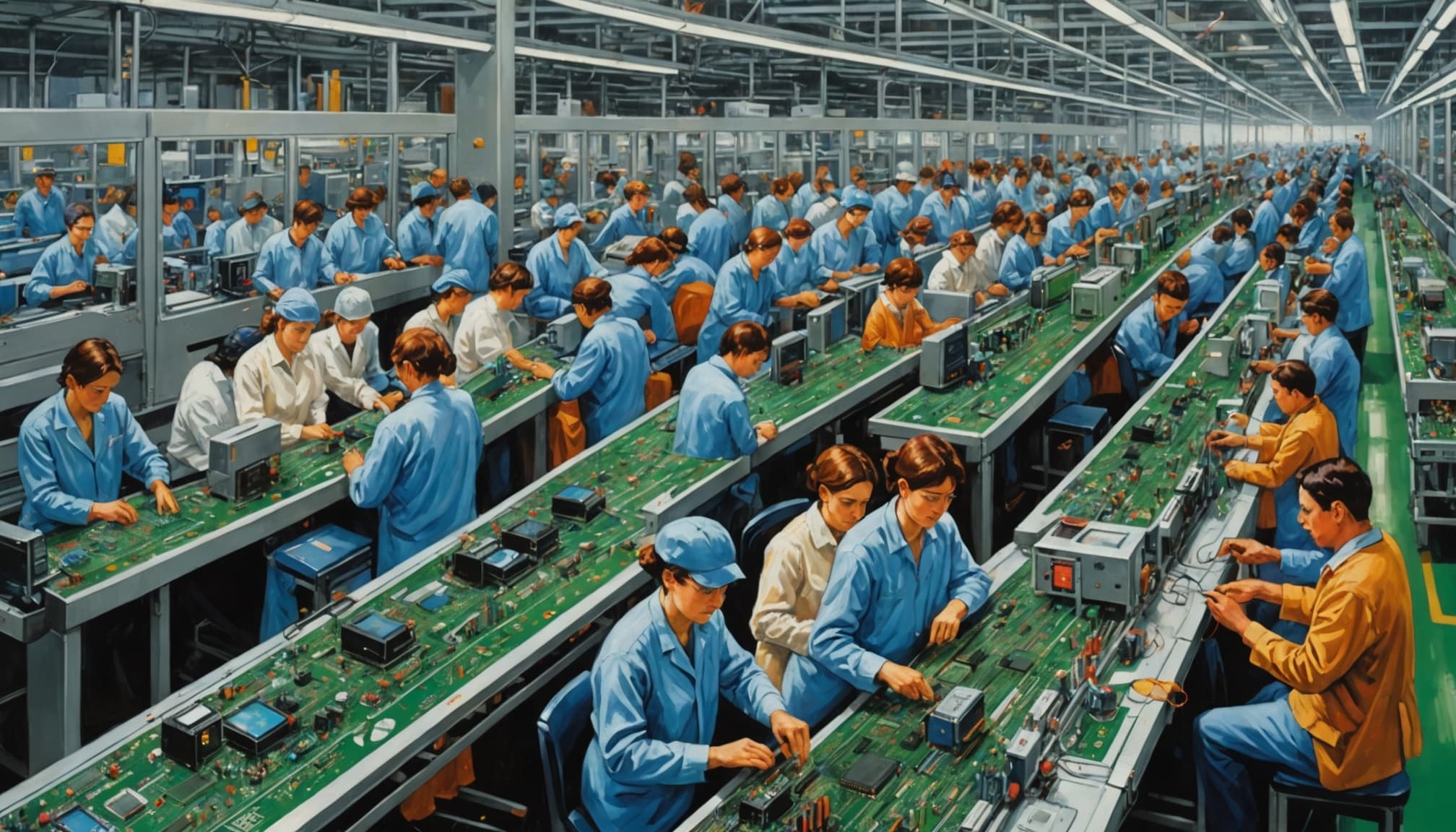
Dixon's entry into IT hardware and data centre equipment represents its most significant diversification effort. The Chennai campus is rapidly evolving into India's largest IT hardware manufacturing campus with capacity for approximately 2 million units covering laptops, desktops, All-in-Ones, and tablets. A new facility adjacent to the existing Chennai plant, developed as a 60:40 JV with Inventec Corporation (one of the top 5 global ODMs), is expected to become operational by Q4 FY27. Transcript +2
The financial impact has been immediate—Q1 FY27 IT hardware revenue of approximately ₹1,300 crore equaled the entire previous year's revenue. Management targets ₹4,000-5,000 crore in IT hardware business over the next two years, positioning it as the second-largest growth driver after mobile phones. However, IT hardware margins are slightly lower than the mobile segment, creating near-term margin pressure even as revenue growth accelerates. Transcript +1
Capital Allocation and Funding Strategy
Dixon is financing its expansion through a mix of internal accruals, government support, and strategic borrowings. The company maintains a net debt-free status with strong free cash generation—₹700+ crores while executing ₹1,058 crores capex. Government support through PLI schemes and the ISM 2.0 policy for display manufacturing provides significant subsidy support, reducing the capital burden. Transcript +3
Capital allocation discipline remains tight, with target EBITDA payback periods of not more than 4.5 years for new projects and 2 years for backward integration initiatives. The company targets pre-tax ROCE of 30%+ and post-tax ROE of 23% for capital commitments. Recent performance shows strong execution—ROCE reached 48.5% in FY25, up from 38.0% in FY24, representing a 1,050 basis point improvement. Annual Report +1
Competitive Positioning: The Gap to Global EMS Leaders
Despite impressive progress, Dixon faces significant constraints in competing with global EMS leaders like Foxconn. Currently ranked #35 globally and #13 in Indian EMS, Dixon's scale remains a limiting factor. The company produces 28-30 million smartphones annually (excluding Samsung), compared to Foxconn's hundreds of millions. Building an 860,000 square foot facility takes 2-2.5 years, creating a timeline disadvantage in rapidly scaling to meet the requirements of large global contracts. Annual Report +3
Critical gaps exist in proprietary design and technology depth, AI-grade manufacturing capabilities, advanced materials and specialty chemistry, precision engineering, and server/data center manufacturing.
Foxconn, by contrast, generates over 40% of revenue from data center-driven servers and has established global R&D networks and proprietary technology portfolios. Transcript
The Noida Advantage and Domestic Foundation
Dixon's Noida-based manufacturing base provides competitive advantages against China and Taiwan-based providers. India offers lower labor costs, strong government policy support through PLI schemes and Make in India initiatives, and benefits from the global China+1 supply chain diversification strategy. The large domestic market—with the lowest penetration rates across consumer durables—provides stability and growth opportunities not available to Taiwan-based manufacturers. Transcript +3
Three decades of domestic experience have created deep relationships with global brands including Motorola (over 1 million units monthly with export orders to North America), Transsion Group (fourth largest brand globally, with 80% market share in some African regions), Samsung, Xiaomi, HP, and ASUS. These relationships serve as validation and launchpad for global expansion, providing proven execution track records that large global contracts require. Transcript +3
Valuation Compression and the Path Forward
Dixon's stock has experienced significant valuation compression, currently trading at ₹13,220 with a P/E ratio of 38.46x and EV/EBITDA of 42.14x. This represents a substantial premium to global EMS peers—Foxconn trades at 14.7x P/E and 7.9-9.5x EV/EBITDA—despite Dixon's lower current margins (3.0% adjusted EBITDA vs. Foxconn's 5%).
To reverse this multiple compression, Dixon needs to demonstrate sustained margin expansion to 4-5%+ levels through successful backward integration and JV execution. The company targets margin recovery from FY27-28, with 40-50 basis points expansion expected once component strategies are fully deployed. Key triggers include display module mass production from Q4 FY27, camera module capacity ramp-up, and successful operationalization of multiple joint ventures. Transcript +2
The path to top 5 global EMS ranking requires closing significant gaps in scale, technology, and proprietary capabilities. Dixon's strategy—leveraging domestic experience, building strategic joint ventures, investing in deep sciences through academic partnerships, and pursuing aggressive backward integration—provides a roadmap, but execution risk remains high. The next 18-24 months, marked by the Vivo JV operationalization, display facility mass production, and camera module capacity expansion, will be critical in determining whether Dixon can transform from India's EMS champion into a genuine global competitor.