Dalmia Bharat has executed a Business Transfer Agreement to acquire cement assets from Jaiprakash Associates Limited (JAL), which was recently acquired by the Adani Group under the Insolvency and Bankruptcy Code (IBC).
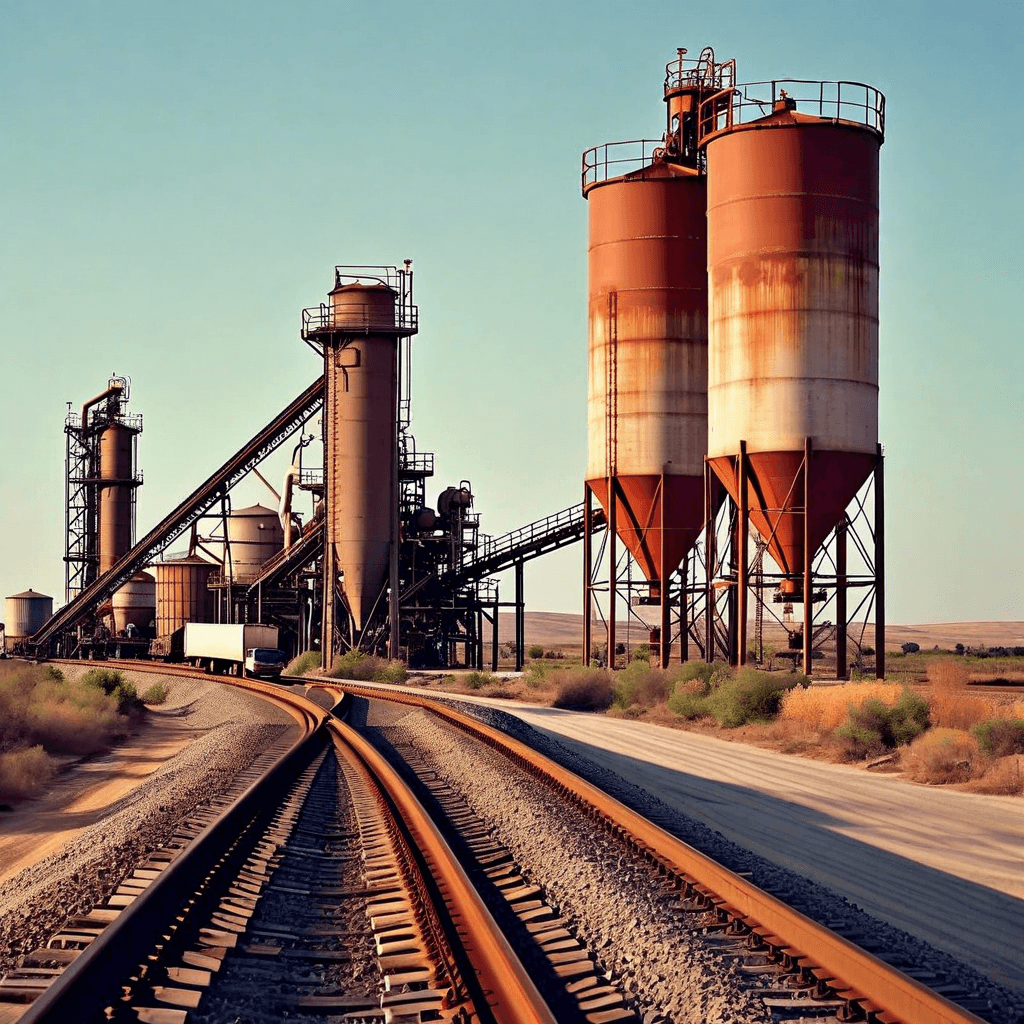
The deal also encompasses 99 MW of thermal power capacity and dedicated railway sidings at Rewa, Chunar, and a common siding at Churk. This acquisition marks Dalmia's third attempt to secure these assets, following a collapsed December 2022 agreement and a failed bid during JAL's insolvency process that Adani ultimately won with a ₹14,535 crore resolution plan.
Why Acquisition Over Greenfield in Central India
The decision to acquire rather than develop greenfield capacity in Central India is driven by compelling economic and strategic factors. Greenfield cement projects typically require 4-5 years for land acquisition, environmental clearances, construction, and commissioning, with capital costs ranging from ₹5,000-6,000 per tonne of capacity.
The transaction accelerates Dalmia's capacity expansion timeline significantly, taking the company from 49.5 MTPA to 54.7 MTPA almost instantly, compared to the multi-year wait for greenfield projects.
The acquisition also provides established market access that greenfield projects cannot match. Through prior tolling arrangements with JAL, Dalmia had already built relationships with approximately 1,000 dealers who had shifted from Jaypee to Dalmia, creating an immediate distribution network that would take years to build organically. This established dealer base, combined with existing brand recognition in the region, provides Dalmia with instant market presence without the competitive disruption that greenfield entry typically causes in established markets. Transcripts
Geographic Proximity to Captive Mines: Cost Structure Impact
The acquired plants' strategic location near captive limestone mines provides significant cost structure advantages. Dalmia maintains its position as one of the lowest-cost cement producers in the industry, having achieved the lowest quarterly total cost per ton in five years (₹3,790 in Q4 FY26) and reducing costs by ₹183 per ton from Q1 FY25 to Q4 FY26. The proximity to raw materials is critical, as limestone constitutes 60-70% of cement production costs. The acquired assets come with limestone mines having an average life of 20+ years, ensuring long-term raw material security and cost stability. Transcripts
The integrated infrastructure further enhances cost competitiveness. The 99 MW captive thermal power capacity provides energy security and cost predictability, as captive power typically costs ₹3-4/unit compared to grid power at ₹5-7/unit, potentially saving ₹15-25/ton of cement production. The dedicated railway sidings enable direct rail loading, reducing secondary transportation costs by ₹30-50/ton compared to road transport, while expanding economic market radius through cost-effective access to distant markets in UP, MP, and neighboring states. Combined, these infrastructure assets are expected to generate annual cost savings of ₹310-365 crore, representing an EBITDA margin uplift of 2.0-2.5% on the acquired capacity.
Return Metrics and EBITDA Enhancement
Based on Dalmia's current EBITDA per ton of ₹1,027, the acquisition implies an EBITDA multiple of approximately 5.3x, with potential annual EBITDA addition of ~₹534 crore. The company expects the assets to be EBITDA accretive through access to newer markets, stronger pricing environments, and operational efficiencies stemming from its cost leadership strategy. Transcripts
Dalmia's current return metrics show room for improvement. The company reported ROCE (Cement Core) of 12.1% in FY26, up from 9.9% in FY25, while ROCE (Group) stood at 8.2%. The acquisition is expected to enhance overall returns due to Dalmia's proven cost leadership and the close proximity of acquired assets to captive mines. Analysts project potential ROIC of 18-22% assuming operational improvements and cost synergies, with the company targeting to reach 72-75 MTPA by FY28 through this acquisition combined with ongoing organic expansions at Belgaum, Pune, and Kadapa. Transcripts
Capacity Expansion Trajectory
The causal relationship between the JAL acquisition and Dalmia's capacity targets is direct and significant. The immediate addition of 5.2 MTPA takes capacity from 49.5 MTPA to 54.7 MTPA—a 10.5% increase within two weeks of transaction closing. This serves as a foundation for reaching 66.7 MTPA by Q2-Q3 FY28 when combined with ongoing organic expansions: Belgaum (+3.0 MTPA), Pune (+3.0 MTPA), and Kadapa (+6.0 MTPA). The acquisition thus provides approximately 78% of the capacity growth needed to reach the FY28 target, with organic projects contributing the remainder.
This accelerated capacity expansion is particularly strategic given India's cement demand outlook. The country's installed cement capacity currently stands at 720 MTPA, with UltraTech Cement leading at 200 MTPA, followed by Adani Cement (including Ambuja, ACC) at 109 MTPA, and Shree Cement at 65.8 MTPA. Dalmia's expansion to 66.7 MTPA by FY28 strengthens its position as the fourth-largest player while establishing a pan-India footprint that was previously lacking.
IBC Framework and Transaction Structure Evolution
The IBC process fundamentally altered the transaction pathway, transforming a complex, uncertain deal into a focused, efficiently structured acquisition. Adani Group's ₹14,535 crore acquisition of JAL under IBC, approved by NCLT in March 2026, provided clean title to assets free from previous encumbrances and creditor claims. This regulatory certainty was absent in the original 2022 transaction structure, which required approvals from 35 banks and multiple regulatory bodies.
The original December 2022 framework agreement had been significantly larger—₹5,666 crore for 9.4 MTPA capacity—but collapsed due to JAL's insolvency proceedings in June 2024. The collapse was caused by multi-lender approval complexity, JAL's financial deterioration (defaulting on ₹57,185 crore of loans), regulatory hurdles, and Supreme Court dependency on pending YEIDA matters. Dalmia had even provided ₹113 crores in Q1 FY25 for potential losses on amounts recoverable from JAL due to the insolvency uncertainty. Transcripts
The IBC framework enabled asset carve-out flexibility, allowing Adani to sell specific cement assets while retaining other business lines, creating a focused transaction aligned with Dalmia's strategic needs. The process also provided a structured framework for settling all outstanding disputes, including pending legal proceedings and arbitral awards, which was absent in the original transaction structure.
Dispute Resolution and Market Reaction
The acquisition comprehensively resolves long-standing disputes between Dalmia and JAL, most notably the Long-term clinker supply agreement valid until July 2041. JAL had provided irregular and short supply of clinker, with supplies completely stopping from April 2018, leading Dalmia to challenge the unilateral termination in arbitration proceedings. While the Arbitral Tribunal gave an award in favor of Dalmia during FY23, JAL had challenged it before the Delhi High Court, leaving the award pending final disposal. The May 21, 2026 agreement provides comprehensive settlement of all outstanding disputes, potentially enabling Dalmia to reverse the ₹113 crore provision made in Q1 FY25. Transcripts
This positive reaction reflects the market's recognition of attractive valuation relative to replacement cost, strategic value of immediate Central India market entry, cost leadership reinforcement through infrastructure synergies, and dispute resolution benefits. However, broader underperformance reflects deeper structural concerns including weak return metrics (ROE of 6.63% vs. peers at 10-14%) and rising competitive intensity in East India markets.
Operational Integration Strategy
Dalmia Bharat plans to leverage its proven cost leadership capabilities to integrate the acquired JAL plants systematically.
This includes the "Safety – Dalmia Way of Life" program developed with Ernst & Young, digital transformation initiatives including Transportation Management Systems and SAP Ariba, renewable energy integration (39% share in FY25, targeting 50% by FY26), and a disciplined ₹150-200 per ton cost reduction program over three years. Transcripts
The integration faces plant-specific challenges and opportunities. The Rewa plant (3.0 MTPA), established in 1986 as Jaypee's flagship, requires significant modernization but offers the greatest synergy potential due to its scale and dedicated railway siding. The UP plants (Churk 2.5 MTPA, Chunar 2.5 MTPA, Sadwa 0.6 MTPA) offer cluster synergies through shared technical resources, centralized procurement, and workforce mobility, though they require careful market coordination to avoid redundancy. The two-week transaction closure timeline significantly accelerates value realization by enabling immediate operational control, faster synergy capture, and earlier EBITDA contribution compared to traditional 3-6 month acquisition closing periods.