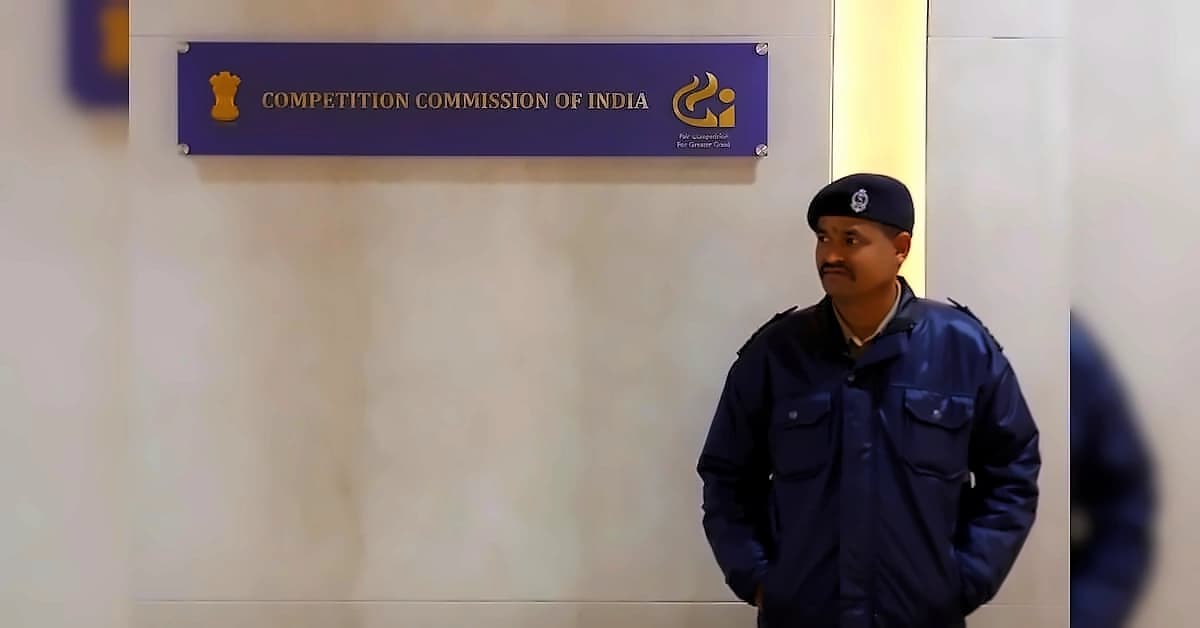
The Competition Commission of India (CCI) recently dismissed a complaint against Eternal Limited, the parent company of Zomato, finding no prima facie evidence of abuse of dominance or anti-competitive conduct related to platform fees and pricing practices. The case stemmed from an individual consumer who alleged that a food item costing ₹105 when purchased directly from a restaurant rose to ₹198 when ordered through Zomato—a nearly 89% premium. The complainant argued this difference resulted from inflated menu prices, delivery charges, platform fees, and taxes, claiming restaurants were compelled to inflate prices due to commissions charged by the platform.
In rejecting these allegations, the CCI made a crucial distinction: online food delivery involves additional services such as platform access and doorstep delivery, making direct price comparisons with restaurant purchases inappropriate. The regulator noted that consumers who opt for online food delivery knowingly pay additional charges for convenience, and that restaurants and online platforms operate under fundamentally different business models. On the specific allegation of "drip pricing"—where charges are revealed gradually during checkout—the CCI found that platform fees, delivery charges, and taxes relate to identifiable services provided, and consumers retain the option to accept or reject orders until the final stage. "Thus, drip pricing does not raise any competition issue, as such," the anti-trust watchdog concluded.
Eternal's Multi-Sided Revenue Model
Eternal's profitability rests on a sophisticated three-sided marketplace capturing value from consumers, restaurants, and delivery partners. The primary revenue stream comes from restaurant commissions, which range from 18% to 30% of order value—though some restaurants report effective costs reaching 33-40% when including GST on commissions and promotional expenses. For a typical ₹400 order, Zomato earns ₹72-120 in commission, with a net contribution margin of 6-7% per order after subtracting delivery partner payouts and platform costs.
The platform fee has emerged as a particularly powerful lever.
This fee, charged on a pre-GST basis, applies regardless of membership status and has become a key high-margin revenue stream. Combined with delivery charges (variable based on distance and demand) and advertising revenue from sponsored listings, Eternal's food delivery segment achieved a record 5.4% adjusted EBITDA margin in Q3 FY26, demonstrating the model's profitability at scale.
Why Restaurants Shift Costs to Consumers
Restaurants face a structural compulsion to inflate menu prices on Eternal's platform rather than absorb commission costs. The math is unforgiving: while restaurants typically operate on 10-20% net margins in dine-in formats, platform commissions of 25-33% create immediate margin inversion. When factoring in GST on commissions (4.5-6%), packaging costs (5-8%), and promotional spending (5-15%), the total effective cost can reach 40-55% of order value, leaving minimal room for profit.
This explains why restaurants typically need to increase menu prices by 20-35% on delivery platforms just to maintain the same profit margins as dine-in. The CCI case example showing an 88.6% price premium (₹198 vs ₹105) reflects this margin preservation strategy in action. Restaurants are caught in a bind: they rely on platforms for revenue—delivery now represents 28.8% of average restaurant revenue, rising to 33% for smaller establishments—but the economics of participation are increasingly strained.
The Visibility-Compulsion Complex
Beyond commissions, restaurants face another pressure: the compulsion to spend on advertising to maintain visibility. Eternal's advertising model charges restaurants approximately ₹6 per click regardless of whether the customer places an order.
For restaurants with weekly sales as low as ₹2,500, this represents an unsustainable 720-800% of revenue.
The platform's discovery algorithm changes every 5-6 months, preventing restaurants from planning long-term strategies and creating continuous uncertainty. This system forces restaurants into a vicious cycle: spend more on ads to maintain visibility, which further erodes margins, making it even harder to compete on price. The result is a structural imbalance where restaurant margins are systematically transferred to platform profitability through both explicit commissions and implicit visibility costs.
Consumer Perception and the Convenience Premium
Despite these cost pressures, consumers demonstrate nuanced price sensitivity. A LocalCircles survey of 79,000 respondents found that 55% recognize food prices on aggregator apps are higher than restaurant prices, and 75% flag pricing as a concern. Yet the market continues to grow, projected to expand from $9.1 billion in 2024 to $27 billion by 2030 at a 19% CAGR.
The explanation lies in the convenience value proposition. Urban millennials and Gen Z consumers, who drive 60% of weekly delivery orders, prioritize time savings, variety access, and seamless experience over cost savings. The ability to order from diverse cuisines without leaving home, combined with AI-powered personalization and reliable delivery, creates value that many consumers willingly pay for. Subscription models like Zomato Gold further enhance this perception, with subscribers showing 30% higher order frequency due to perceived value extraction from membership fees.
Transparency plays a crucial role in maintaining trust. The CCI's validation that fees relate to identifiable services and that consumers can abandon orders until final checkout provides regulatory backing for Eternal's disclosure practices. However, 87% of consumers still demand that platforms display both dine-in and delivery prices for informed decision-making, suggesting room for improvement in transparency.
Competitive Implications and Market Structure
The CCI's ruling provides regulatory validation for the multi-sided fee model across the industry, creating immediate competitive implications.
This reinforces the duopoly structure where Eternal and Swiggy control over 90% of the market share.
For restaurant partners, the ruling reduces regulatory pressure on platforms to modify commission structures, potentially accelerating the shift toward alternative models. The Open Network for Digital Commerce (ONDC) and zero-commission platforms like Ownly are positioning themselves as alternatives with transparent pricing and lower commissions. Ownly, for instance, separates food costs from delivery costs to reduce overall prices, directly addressing the consumer complaint that motivated the original CCI case.
The regulatory clarity creates a favorable investment environment for existing platforms while raising barriers for new entrants. Established players benefit from validated revenue models, network effects, and significant infrastructure investments that create high fixed costs for competitors. New entrants must pursue business model innovation—zero-commission approaches, subscription-first models, or hyper-local specialization—to differentiate themselves in a market where the duopoly's economics have regulatory approval.