Bharat Petroleum Corporation reported a consolidated net profit of ₹4,863 crore in Q2 FY27, down 21.5% from ₹6,191 crore a year earlier. Revenue rose 29.8% to ₹1.58 lakh crore, but costs grew faster, squeezing margins. The company attributed the decline mainly to suppressed marketing margins on petrol, diesel, and LPG, partially offset by higher refining margins. This wasn't just a bad quarter—it was a textbook case of how crude oil volatility and government pricing policy can collide, leaving even a well-run refiner exposed.
The Crude Conundrum: Margins Up, But Timing Matters
Refining margins actually improved in Q2.
Even after accounting for the Special Additional Excise Duty on exports, margins remained healthy at an estimated $19–25 per barrel. Higher refining spreads typically boost profitability, but here's the catch: refining margins reflect the difference between crude oil costs and product selling prices. When crude prices spike, the absolute value of those margins can look impressive, but the cost of running the business rises too.
Brent crude crossed $100 per barrel in September, ending the month around $103.50. That's roughly a 14% jump for the month. For a refiner, this creates a mixed bag. On one hand, higher crude prices can lift the value of inventory held in storage—this is called an inventory gain. In Q1 FY27, BPCL recorded a marketing inventory gain of ₹3,134 crore, compared to a loss the previous year. Analysts expected similar gains in Q2 as prices rose. On the other hand, purchasing crude at elevated prices increases working capital needs and interest costs. BPCL's debt excluding leases rose 18% to ₹51,218 crore in six months, and its debt-to-equity ratio stood at 0.50. Higher debt means higher interest costs, which eat into profits.
Did the timing of crude purchases cause the profit decline? It's unlikely to be the main culprit. The evidence points elsewhere. The refining and marketing segment result fell only 13% to ₹7,067 crore, suggesting refining held up reasonably well. The bigger story lies in what happened after the crude left the refinery.
Fuel Pricing: The Real Margin Killer
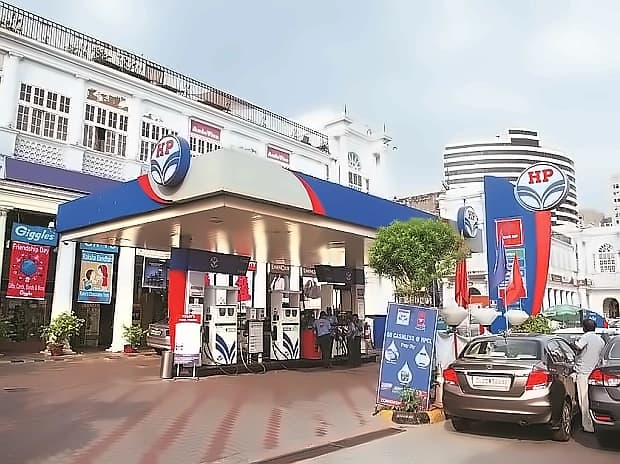
Here's where the story gets interesting. BPCL's marketing margins—the difference between the cost of buying fuel and the price at which it's sold to consumers—were under severe pressure. Public sector oil marketing companies sold petrol, diesel, and LPG below market rates to shield consumers from West Asia-related volatility. This isn't new. OMCs often absorb losses when crude prices spike and retail prices are held steady. But the scale this time was significant.
LPG under-recoveries were around ₹200 per cylinder. These are losses, not profits. Compare this to typical auto-fuel margins of about ₹3.5 per litre, and you see the problem.
The company said revenue had not been recognized to this extent, meaning these losses were sitting on the books, waiting for compensation.
The government did step in. In May, OMCs raised petrol and diesel prices four times, increasing petrol by ₹7.38 per litre and diesel by ₹7.52 per litre. This helped BPCL return to profitability in Q2 after a ₹1,873 crore loss in Q1. But that hike was a one-time adjustment. By September, crude prices had risen again, and retail prices remained largely frozen. The excise duty cut of ₹10 per litre in March also helped offset under-recoveries, but it wasn't passed on to consumers as a price cut—it was used to reduce OMC losses. The net effect? Marketing margins remained deeply negative, dragging down overall profitability despite strong refining performance.
Operational Resilience and Cost Pressures
BPCL's operations showed resilience. Refinery throughput increased 6% to 10.41 million tonnes, and domestic sales rose 6% to 13.47 million tonnes. Exports jumped 64% to 0.59 million tonnes. Higher throughput allowed BPCL to capture elevated refining margins, and running above nameplate capacity (implied utilization around 118%) helped maximize returns from available infrastructure. But volume growth alone couldn't fix the margin problem.
Costs rose faster than revenue. Total expenses increased 32.5% year-on-year, outpacing revenue growth of 29.8%. Raw material costs surged 44.2%, and costs associated with purchasing stock-in-trade rose 41%. Excise duty paid fell to ₹8,738 crore from ₹16,658 crore a year earlier, providing some relief, but this was more than offset by higher input costs. Operating margins slipped to 3.94% from 6.09% a year ago.
Working capital requirements also intensified. Higher crude prices increase the rupee value of inventory and receivables, forcing companies to borrow more to fund operations. BPCL's interest cost in Q1 was ₹627 crore, and with debt rising, this burden likely increased in Q2. Delayed LPG compensation adds to the strain, as the company must finance these under-recoveries until reimbursement arrives. The net effect is a squeeze on cash flows and net profit margins.
Peer Comparison and Strategic Shifts
How does BPCL compare to its peers? Hindustan Petroleum Corporation reported a 6.1% decline in Q2 profit to ₹3,625 crore, with GRM rising to $32.15 per barrel. HPCL's pre-tax profit actually increased 32.9%, but a 151% jump in tax expenses pulled net profit down. BPCL's steeper profit decline reflects its specific exposure to marketing margins and LPG under-recoveries. Indian Oil Corporation reports Q2 results on October 30, but its Q1 loss of ₹1,141 crore suggests similar pressures across the sector.
Looking ahead, BPCL is pursuing strategic initiatives to reduce sensitivity to crude swings and fuel pricing constraints. The company is expanding its Bina refinery and adding petrochemical capacity, aiming to raise Bina's refining capacity to 11 million tonnes and add roughly 3 million tonnes of petrochemical output. A greenfield refinery and petrochemical complex at Ramayapatnam in Andhra Pradesh is also in the works, with land acquisition completed and environmental clearance expected. BPCL is also growing its renewables portfolio, targeting 2 GW of capacity by 2030, and expanding its city gas distribution business.
These moves diversify earnings away from pure fuel marketing. Petrochemicals and renewables earn on product spreads and long-term contracts, not on regulated retail prices. Over time, this should make BPCL's earnings less volatile. But these are long-term plays. The Bina expansion and Andhra Pradesh project are 5–7 year initiatives, and they require significant capital expenditure. Brokerage analysts expect lower return ratios in FY28 as capex rises before benefits kick in.
The Bottom Line
BPCL's Q2 FY27 results highlight a fundamental tension in the oil marketing business. Strong refining margins and operational efficiency can't fully offset the impact of suppressed fuel prices and policy-driven under-recoveries. The 21.5% profit decline wasn't caused by poor execution—it was the result of a structural mismatch between rising crude costs and regulated retail prices.
For investors, the key takeaway is this: BPCL's near-term earnings will remain hostage to crude oil prices and government pricing decisions. Monitoring crude trends, retail price adjustments, and compensation mechanisms for under-recoveries is critical. The company's strategic shift toward petrochemicals and renewables offers hope for more stable earnings in the future, but that's a story for the next decade, not the next quarter. For now, BPCL remains a high-beta play on crude oil volatility, with profitability swinging on the whims of global markets and domestic policy.