India is going underground, and fast. Road Transport and Highways Minister Nitin Gadkari has said the country aims to invest up to $9.6 billion in tunneling projects over the next five years. This isn't just about city metros. Strategic road and railway projects along the Himalayan frontier with China, where difficult terrain demands extensive tunneling, are adding to the demand.
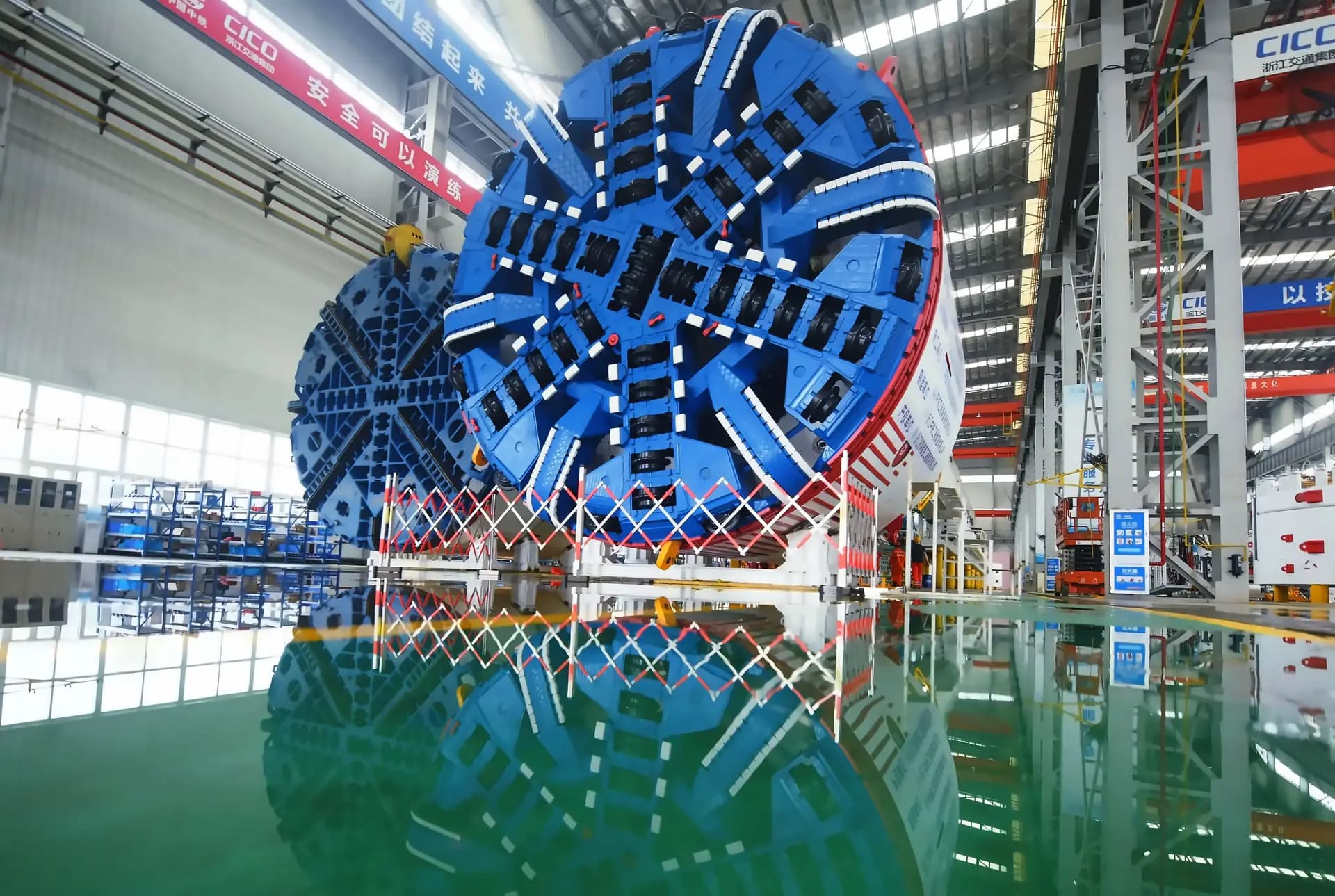
BEML, the state-owned defence and engineering company, sees a massive opening. Chairman and Managing Director Shantanu Roy estimates India's tunnel-boring machine (TBM) market could grow about 12% annually over the next seven to eight years—roughly twice the pace of the global market. Management has sized the domestic requirement at about $5 billion over the next decade. Transcript
The numbers are staggering. India's metro network, now the world's third-largest, spans over 1,013 km across 23 cities. The Centre's budget for metro projects in 2025-26 jumped to Rs 34,807 crore, more than six times the 2013-14 level. This infrastructure surge is the engine driving BEML's TBM ambitions.
Policy Push: From Mandates to Incentives
The government is pulling multiple levers to reduce import dependence, particularly from China. The Ministry of Housing and Urban Affairs (MoHUA) is actively encouraging indigenous TBM production, given the surge in metro rail projects. In June 2025, MoHUA officials met BEML to review its proposal for TBMs ranging from 6m to 15m in diameter.
More significantly, the Centre is reportedly close to clearing a $1.2 billion incentive package for domestic manufacturers of TBMs, fire-fighting equipment, and high-rise elevators. The scheme, expected to run over seven years, aims to attract $1.8 billion in fresh investment and set local value-addition targets for machines currently imported fully assembled.
However, BEML's management has struck a cautious note. In earnings calls, they said they do not expect subsidies or Production Linked Incentive (PLI) support for TBMs. Instead, they hope for a development contract model, similar to what Coal India used for BEML's rope shovel and motor grader. The reported incentive scheme would mark a shift if notified, but as of August 2026, it remained "close to clearance" rather than finalized. Transcript +1
The China Challenge: Price, Speed, and Scale
BEML isn't entering an empty field. Chinese manufacturers are estimated to control about 70% of the global TBM market. In 2025, China exported roughly $793 million worth of tunnelling machinery—about seven times the US figure.
The advantages are stark.
Delivery windows are 6 to 9 months, versus 14 to 24 months for European and Japanese OEMs. Switching to non-Chinese suppliers can stretch lead times to 18-24 months, threatening liquidated damages and completion delays on infrastructure contracts.
Even Western brands like Germany's Herrenknecht and Australia's Terratec operate primary fabrication facilities within mainland China. Key components—cutterhead disc assemblies, hydraulic drives, and structural shields—often originate from Chinese factories, making them vulnerable to export controls.
BEML's plan to start with smaller TBMs (3.5 to 6.5 meters in diameter) for metro and utility projects is a pragmatic entry point. But these represent a smaller segment of the market. The big-ticket projects, like the Mumbai-Ahmedabad bullet train's 13.6-meter diameter machines, require capabilities BEML hasn't yet developed.
BEML's Differentiation Strategy: Indigenous IP and Service
Roy has been clear: BEML aims to develop proprietary technology rather than assemble imported kits.
This focus on intellectual property ownership is central to BEML's value proposition.
The company is onboarding a global design consultant and has floated an Expression of Interest (EoI) for partners with proven track records in designing TBMs ranging from 6 to 16.5 meters in diameter. The EoI explicitly requires the selected firm to transfer sole ownership of Intellectual Property Rights to BEML for all technologies developed under the collaboration.
BEML also plans to leverage its nationwide service network for after-sales support, a critical factor in project uptime. The tender document emphasizes designs tailored to Indian conditions—mixed-face geology, high groundwater pressure, dense urban environments—with features to minimize settlement, reduce noise and vibration, and offer tight turning radius capability.
Financials: High Hopes, Long Wait
The financial reality is sobering. BEML's Q2 FY27 net profit was Rs 32.93 crore on sales of Rs 1,191.61 crore, following a Q1 loss of Rs 27.01 crore. EBITDA margin contracted to about 6.7% in Q2 FY27, though management expects a return to at least 13%[stock data]. Transcript
The TBM program is a long-term bet.
Roy expects about 22 months to deliver the first machine after winning a contract. Some call remarks suggest at least 3-5 years before meaningful revenue materializes. Transcript +2
The potential is significant. Management has linked maritime cranes and TBMs to roughly Rs 5,000 crore of annual revenue at full potential. But this is aspirational, not guidance. For context, BEML's entire FY26 revenue was Rs 4,350.5 crore. The company's current order book is around Rs 16,000 crore, mostly from rail and metro projects, with zero TBM orders. Transcript +2
Capex and R&D are at record levels, but no TBM-specific breakdown has been disclosed. FY26 R&D spend was about Rs 251 crore, with FY27 guidance at around 7% of revenue. The board has approved a Rs 1,500 crore rail manufacturing facility near Bhopal, but this is for rolling stock, not TBMs. Transcript +3
Geopolitics: The Strategic Imperative
The urgency isn't just economic—it's strategic.
The controls cover full-face TBMs, specially designed parts, and remanufacturing technologies, requiring licenses for exports to "sensitive countries and regions".
India has faced customs clearance delays for Chinese TBMs since 2024, affecting projects like the Mumbai-Ahmedabad High-Speed Rail Corridor. While flagship border tunnels like Zojila, Sela, and Sonamarg were built using the New Austrian Tunnelling Method (NATM) rather than TBMs, the broader infrastructure program is deeply exposed.
Domestic TBM production would insulate India from supply chain coercion. It would ensure schedule protection for critical projects and secure access to spares and servicing. A defence analyst has argued that tunnelling technology deserves the same long-term strategic attention India has given to nuclear submarine technology.
The Road Ahead: Risks and Catalysts
The path is fraught with risks. BEML's 2009 TBM tie-up with France's NFM Technologies stalled in 2018 after NFM was acquired by a German firm. Management has flagged a domestic challenge in machining TBMs above 12 meters—a constraint for large-diameter projects. Transcript
The company faces execution risk in developing reliable machines from scratch. Early costs for design, consultants, and prototypes will weigh on margins before any sales arrive. Competitive pressure from Chinese pricing and established players like Herrenknecht, which has a Chennai facility, remains intense.
Key catalysts to watch include the naming of a design consultant and the terms of any technology agreement, notification of the $1.2 billion incentive scheme, and—most critically—a first order, potentially from Delhi Metro Rail Corporation.
BEML's TBM gamble is a bold move aligned with India's infrastructure and national security goals. But turning strategic necessity into commercial success will require years of disciplined execution, technological mastery, and policy support. The tunnel ahead is long, but the destination could redefine India's industrial landscape.