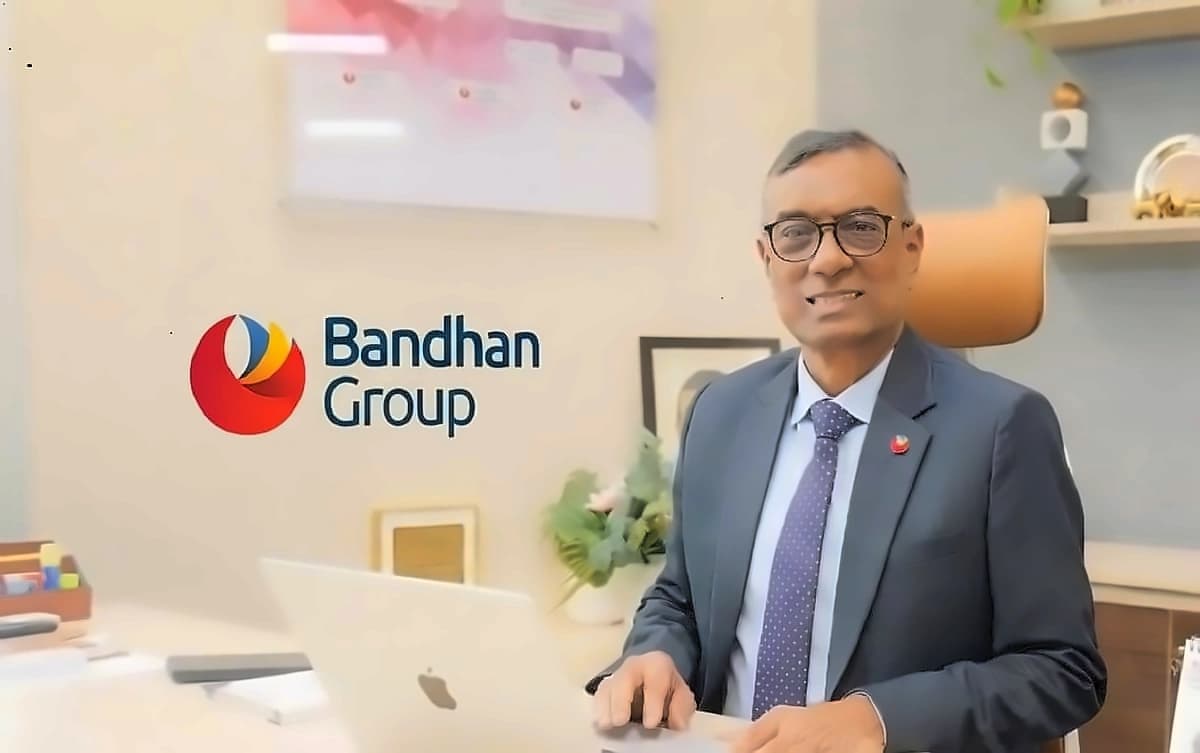
Bandhan Financial Holdings, the promoter of Bandhan Bank, faces a hard deadline.
That's an 11.5 percentage point reduction, roughly 2-3 percentage points annually over the next four years. The bank has already missed one deadline—cutting to 40% by August 2018—and paid a ₹1 crore penalty for it. This history makes compliance non-negotiable this time around. Annual Report +1
The urgency isn't just regulatory. The promoter's voting rights are already capped at 26% in general meetings, meaning control influence is already constrained regardless of shareholding. The remaining gap is about ownership structure, not operational control.
This approach minimizes market shock but requires disciplined execution over several years. Other
The $500-600 Million Exit
Singapore's sovereign wealth fund GIC and the World Bank's International Finance Corporation (IFC) are ready to move on. Together, they hold 30.3% of Bandhan Financial Services (BFSL), the holding company above the bank. They've been investors since around 2014, and sources say they're seeking a full or partial exit. Their stake alone is valued at an estimated $500-600 million.
Here's where the math gets interesting. BFSL's 37.5% stake in Bandhan Bank is worth roughly ₹9,500 crore at the bank's current market capitalization of about ₹25,376 crore. GIC and IFC's 30.3% slice of BFSL would therefore be worth around ₹2,900 crore, or $320-340 million at current exchange rates. The reported $500-600 million valuation suggests a premium—likely reflecting BFSL's other assets: 59.98% of Bandhan AMC (managing ₹1.97 lakh crore) and 97.16% of Bandhan Life Insurance.
The timing is delicate. Bandhan Bank's stock has had a rough ride, falling about 15% after the company cut its FY27 return on assets guidance from 1.6-1.8% to 1.2-1.4%. The bank also trimmed its net interest margin outlook to 6.2% and moved loan growth guidance to the lower end of 14-15%. A lower share price makes the stake cheaper for buyers but could widen the gap between what sellers want and what buyers will pay.
Gulf Investors Circle
Abu Dhabi's International Holding Company (IHC) is in early-stage discussions to buy into BFSL. This isn't IHC's first rodeo in Indian financial services—it recently committed $1 billion for a controlling 41.5% stake in Sammaan Capital, a mortgage-focused NBFC. That deal, structured through preferential allotment and warrants, would make IHC the promoter with board control rights. A Bandhan investment would be different: a minority stake in a holding company, not direct control of a bank.
First Abu Dhabi Bank (FAB) is also reportedly interested, though it declined to comment. FAB's approach contrasts with Emirates NBD's $2.75 billion investment in RBL Bank, which was a direct majority stake in a listed bank. FAB's reported interest in BFSL suggests a partnership model rather than outright control. The regulatory path is also different—RBI's approval for foreign bank ownership of an Indian bank is well-trodden, but foreign ownership of a non-operative financial holding company like BFSL is less common terrain.
The broader context helps. UAE investments in India total $25 billion, making it the seventh-largest source of foreign direct investment. Commerce Minister Piyush Goyal has said the UAE aims to take this to $100 billion. Financial services are a natural focus, especially after Emirates NBD's RBL deal and IHC's Sammaan investment.
Technology as a Door Opener
Bandhan Technologies, formerly Genisys Group, is playing a subtle but potentially important role. The company recently opened an office in Abu Dhabi and signed a strategic partnership with KMK Group, a subsidiary of the Khalid Al Hamed Group. Bandhan Technologies focuses on AI-led decision intelligence and enterprise technology services, with operations across India, the US, the UK, and the Middle East.
This presence builds local relationships and credibility. It also aligns with reported Gulf interest in lending and financial-technology firms. While the technology arm is likely a small part of BFSL's overall value compared with the bank, AMC, and insurance, it demonstrates the group's broader capabilities beyond traditional microfinance lending.
The Cross-Sell Opportunity
Bandhan Bank's 31.8 million customers and 1,988 branches represent a massive distribution network. The bank's third-party distribution income grew 47% year-on-year in Q1 FY27, reaching ₹1,235 crore. Management attributes this to better customer penetration and stronger cross-sell execution. However, the bank doesn't break out how much of this comes from its own subsidiaries—Bandhan AMC and Bandhan Life—versus third-party products. Transcript +1
The theoretical cross-sell opportunity is significant. Many of the bank's microfinance borrowers have limited access to insurance and investment products. Systematic investment plans and term insurance could be natural fits. But execution is challenging given the income levels of the customer base and the bank's cautious approach to borrower stress. The bank's microfinance loan book stands at ₹35,000 crore, about 22% of its total ₹1.56 lakh crore loan book. Deposits are at ₹1.65 lakh crore, with a credit-to-deposit ratio of 94%, indicating loans have outpaced deposit growth.
Capital Adequacy and Timing
Bandhan Bank's capital adequacy ratio stands at a comfortable 18.2%, with common equity tier 1 at 17.5%. Secondary market stake sales by the promoter don't directly affect these ratios—the money goes to the seller, not the bank. However, the timing of sales can indirectly impact capital planning. Heavy selling pressure can depress the share price, making future equity raises more expensive if the bank needs capital later. Conversely, a well-structured sale to strategic investors could strengthen the bank's position and potentially improve its cost of funds over time. Investor Presentation
The presence of other investors in Bandhan AMC adds complexity. GIC and ChrysCapital each hold 20% of the AMC, alongside BFSL's 60%. GIC therefore has two separate positions—directly in BFSL and directly in the AMC. A BFSL-level stake sale wouldn't automatically remove GIC from the AMC. Shareholder agreements may include rights like consent, first refusal, or tag-along provisions that could influence deal structuring. None of this is publicly disclosed, but it's a factor sophisticated investors would consider.
What Lies Ahead
The restructuring process is at an early stage with no guarantee of a transaction. Discussions are "picking up momentum," but contours are evolving. The regulatory view will be critical—RBI's stance on who can hold BFSL and how much could make or break the deal. For Bandhan, the goal is clear: meet the 2030 deadline while bringing in strategic partners who can support the group's broader financial services ambitions.
For investors, the story is about valuation versus growth potential. The guidance cuts and microfinance headwinds have tempered near-term earnings expectations. But the bank's strong capital position, improving asset quality (gross NPA at 3.1%, net NPA at 0.9%), and diversified loan mix (non-microfinance loans grew 27% year-on-year) provide a foundation. The AMC and insurance subsidiaries add fee-based income streams that could justify premium valuations if cross-sell execution improves.
The next few months will be telling. Quarterly filings will show the promoter's actual stake reductions, and any exchange disclosures will confirm completed transactions. Until then, the market will watch for signs of progress—or lack thereof—in what is one of the most complex ownership restructurings in Indian banking.