Ather Energy is facing a problem most companies would kill for: too many customers, not enough scooters. In Q2 FY27, customer enquiries jumped 109% year-on-year to about 10 lakh, while pre-orders more than doubled to 1.80 lakh. Demand, measured as pre-orders plus registrations and international dispatch, grew roughly 108% to 180,300 units. Yet the company only sold 93,211 units, up 42%. The gap isn't lack of interest—it's lack of factory space. Investor Presentation
What's driving this surge? Partly it's the tide lifting all boats. India's electric two-wheeler registrations hit a record 5.98 lakh units in the quarter, up 82% year-on-year. Penetration climbed to 11.2% from 7.8% a year ago, touching 11.6% in September 2026. But Ather's demand grew faster than the industry's registrations, suggesting company-specific factors are at play too. The launch of Konarc, its first scooter on the new EL platform, broadened the portfolio to three product lines (450, Rizta, and Konarc) with 15 variants. New software features like TrueHealth and AtherNode, plus a 94% attach rate for AtherStack Pro, are making the ecosystem stickier.
The Hosur Bottleneck
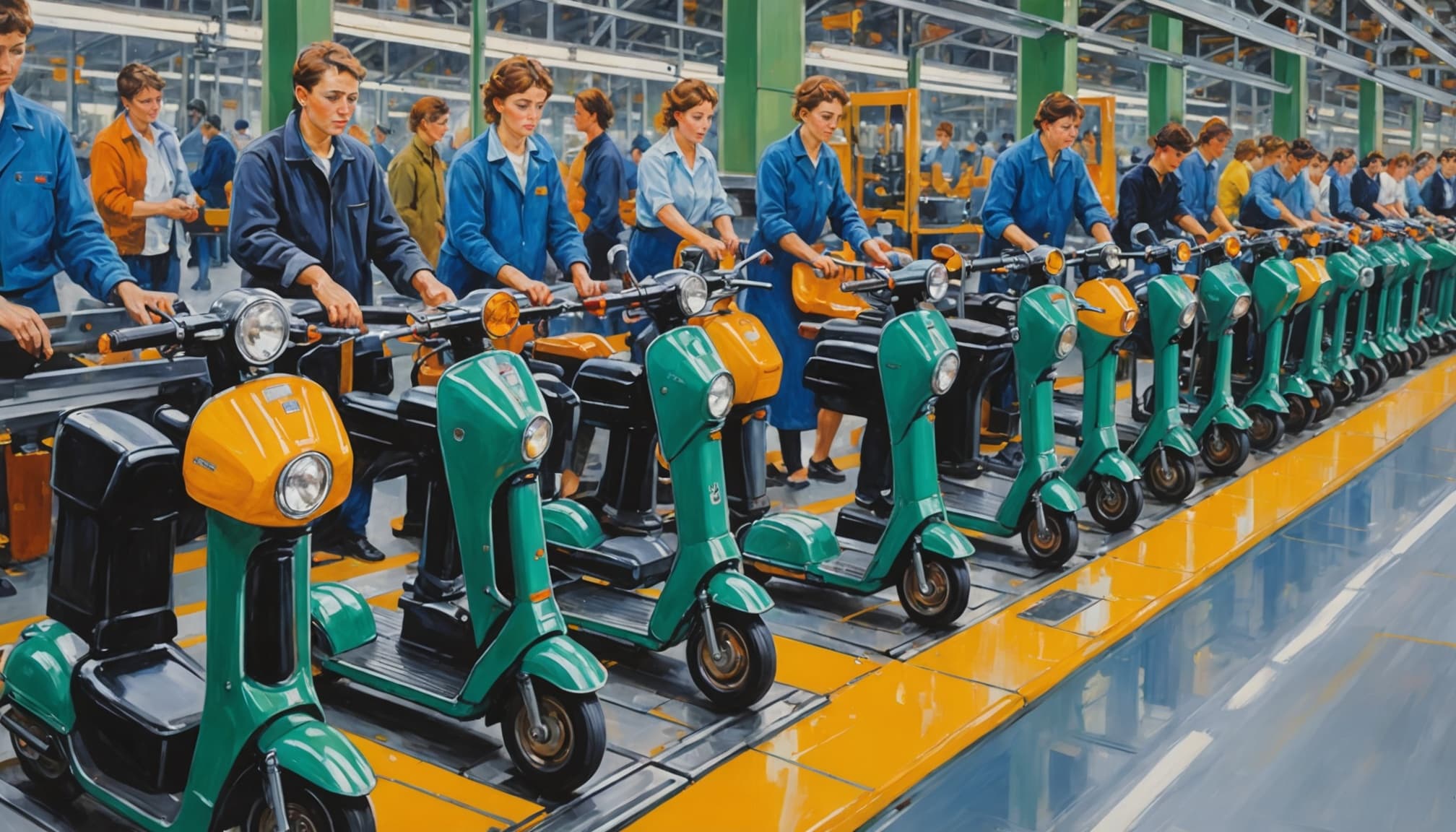
Here's the rub: the Hosur facility in Tamil Nadu is maxed out. During peak production in Q2 FY27, it operated at 98% capacity utilisation. Monthly averages point to about 94%, but the message is clear—there's no headroom. Hosur's current capacity is 4.2 lakh units annually, and it's already producing about 33,000 units a month against a monthly capacity of roughly 35,000. Demand is running at about 60,000 pre-orders a month, against production of roughly 31,000 units. Investor Presentation +1
This constraint shows up in the numbers.
The company simply couldn't build enough scooters to convert all that interest into registrations. Dealer inventory has collapsed to just 3 days, or about 30,000 units, leaving no buffer. Waiting times have stretched to two months or more, and at one point the company paused new pre-orders entirely. Investor Presentation +2
The ₹122 Crore Expansion Plan
To break this bottleneck, Ather is investing about ₹122 crore across two facilities. Hosur gets a ₹58 crore boost to add 75,000 units of annual capacity, taking it from 4.2 lakh to 4.95 lakh units by December 2026. That's a brownfield debottlenecking—quick, low-risk, but limited in scale. Investor Presentation
The real game-changer is the new AURIC facility in Chhatrapati Sambhajinagar, Maharashtra. Phase 1 will add 5 lakh units of annual capacity, with phased commercial production starting December 2026. A further expansion to 6.5 lakh units is expected by Q2 FY28. Together, these moves will take combined installed capacity to approximately 11.4 lakh units by Q2 FY28. The incremental capex works out to roughly ₹5,400 per unit of new annual capacity—a modest sum against an average income per vehicle of about ₹1.64 lakh in Q2 FY27.
Unit Economics and Trade-offs
How does this affect unit economics? The ₹122 crore is incremental spend, not the full cost of AURIC. The Phase 1 land alone required a 95-year lease with an upfront payment of ₹95.51 crore. So the all-in cost is higher. But assuming a 10-year asset life, depreciation from the incremental capex would be only about ₹540 per vehicle at full utilisation—roughly 0.3% of revenue per unit. The main lever is utilisation. Q2 FY27 sales annualise to about 3.7 lakh units against 11.4 lakh of planned capacity. Fixed costs will only spread thin if volumes fill that new capacity. Annual Report
The trade-off between Hosur and AURIC is about speed versus scale. Hosur's expansion is cheap and fast, but it's a tweak. AURIC provides the step-change from 4.2 lakh to 9.2 lakh units, but it brings higher execution risk and upfront costs.
The site sits in a supplier ecosystem, enabling vertical integration in battery packs, transmission, and electronics, which should help unit economics over time. Transcript +1
Konarc and the Portfolio Play
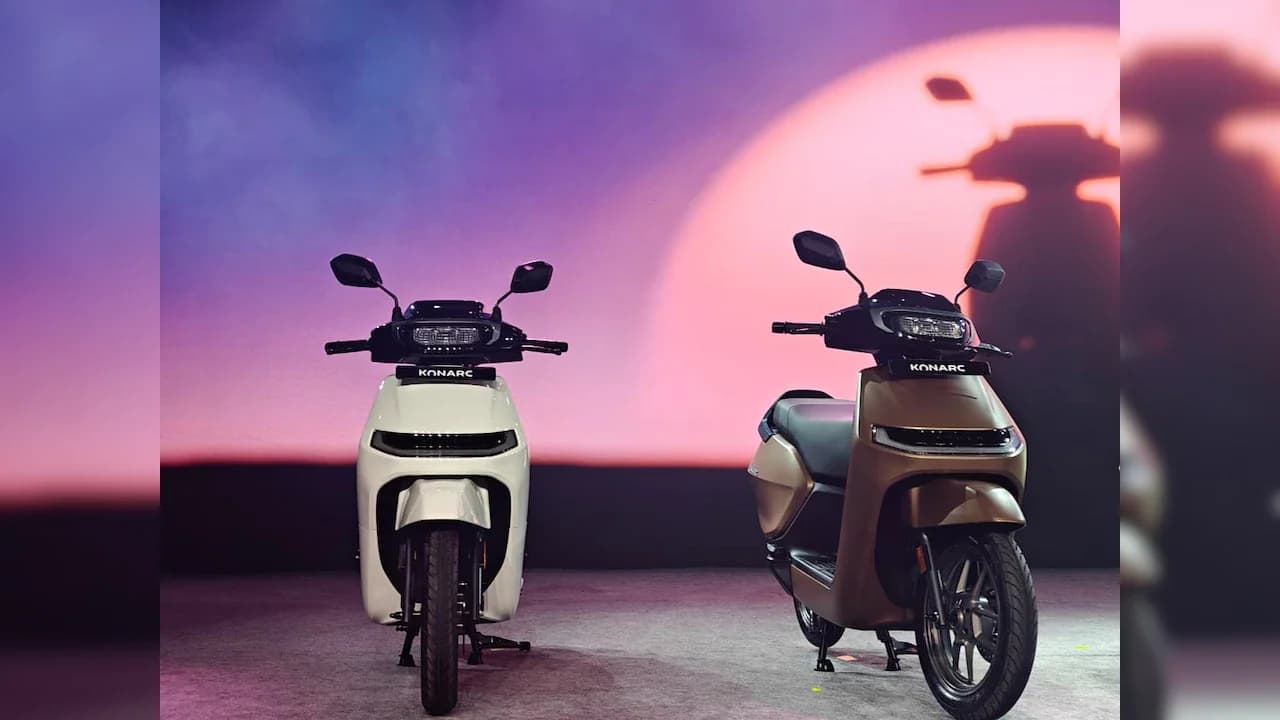
Konarc is central to this scaling story. Launched on August 29, 2026, it's Ather's most affordable scooter yet, with prices starting at ₹99,999 ex-showroom. It targets mainstream riders still waiting to switch to electric, with a focus on comfort, stability, and range. Management expects early sales to be heavily weighted to northern and middle India. The 1.80 lakh pre-orders in Q2 can't be credited mainly to Konarc—it was on sale for only part of the quarter—but it sets the stage for the next phase of growth. Other +2
The warranty and servicing story is a double-edged sword. Konarc offers a 10-year or 1,00,000 km battery warranty with a 70% state-of-health guarantee. However, Ather's FAQ suggests the 10-year cover is an optional paid extension, not standard. Either way, a long warranty reduces perceived battery risk for first-time EV buyers, potentially improving conversion and lowering customer acquisition cost. But it also creates a long-term liability. The service interval doubles to 10,000 km or about once a year, reducing ownership burden but also potentially slowing service revenue growth. Other
Geographic Diversification
Ather's manufacturing footprint is evolving to match demand patterns. South India, where Hosur is located, remains a stronghold with a 23.5% market share in Q4 FY26. But growth is broad-based: industry registrations rose 85% in South India, 82% in the Rest of India, and 79% in Middle India in Q2 FY27. Ather's share in Middle India has surged to 17.3% in Q4 FY26 from 4.1% in Q1 FY25, while Rest of India reached 12.1% from 3.8%. Investor Presentation +1
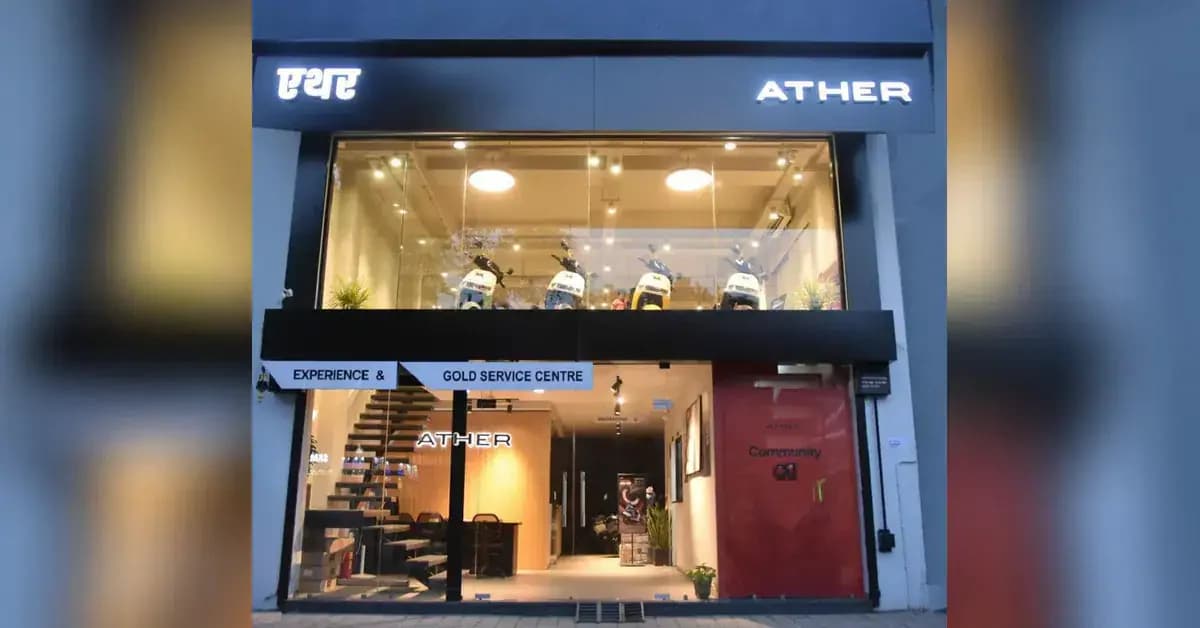
The AURIC plant in Maharashtra is a strategic response. Management says it will reduce logistics costs for Middle and North India, which are expected to be the largest markets. Experience Centres have doubled to 700, with the highest growth in Middle India. Geographic diversification reduces single-plant disruption risk and better matches production to regional demand. But it also introduces new dependencies on Maharashtra's infrastructure and policy environment. Transcript +1
Execution Risks and What Could Go Wrong
The plan is bold, but the risks are real. AURIC's timeline has already slipped—from Q3 FY27 to Q4 FY27 in earlier presentations, and now to phased production from December 2026. Management targets reliable daily output from January and full ramp-up by March, but acknowledges it could spill into early FY28. Equipment installation was still ongoing in August, with the paint shop in trial and warehouse under construction. Investor Presentation +4
Commodity inflation adds pressure. From Q4 FY25 to Q1 FY27, aluminium rose 60%, copper 43%, plastics 25%, and lithium hydroxide 131%.
About 15–20% of Q1 vehicles were sold without subsidy, and PM E-DRIVE expiry looms as a risk. Investor Presentation
What if AURIC delays? Monthly unmet demand is estimated at 13,000–15,000 units in Q1 and about 20,000 in Q2. A one-quarter delay could defer or lose roughly 60,000 units—about ₹980 crore of revenue at Q2 income per unit. That's an upper bound, but it illustrates the stakes. Prolonged supply constraints could further erode market share, which is already slipping despite industry growth. Transcript +1
The Bottom Line
But the story now shifts from proving demand to proving it can build enough scooters. The ₹122 crore expansion, the Konarc launch, and the AURIC plant are the pieces of that puzzle. If execution goes to plan, Ather is poised to ride India's EV wave. If not, the very demand it has worked so hard to create could slip through its fingers.