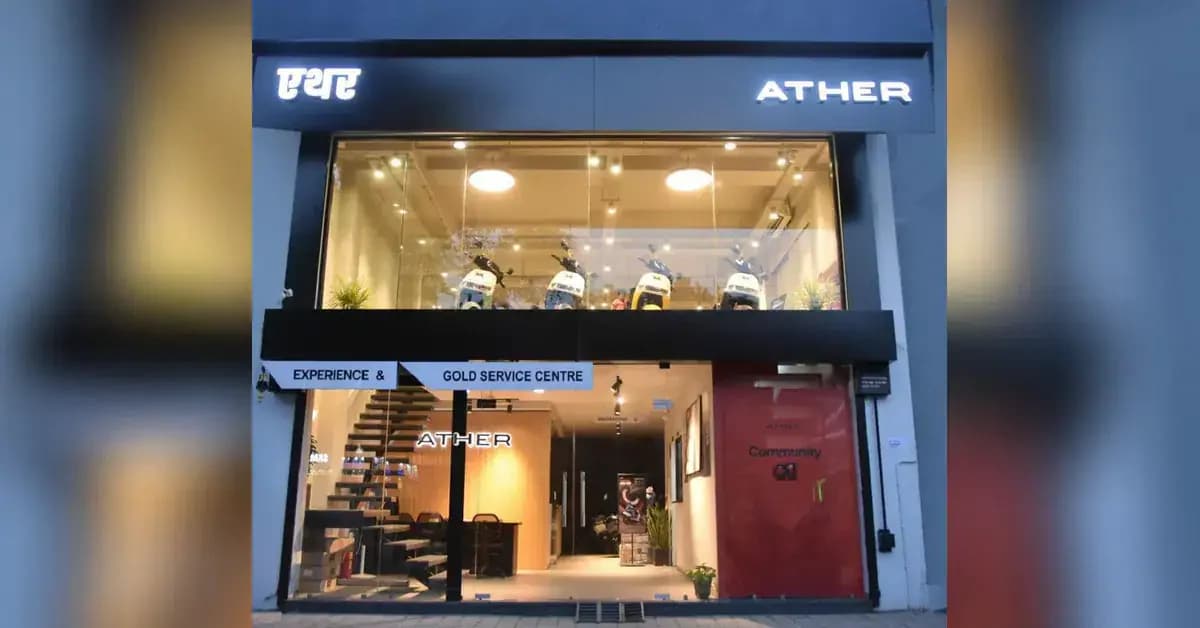
Electric two-wheeler maker Ather Energy is facing a significant supply-demand gap that will persist for 3-4 quarters despite aggressive manufacturing expansion plans. According to CEO Tarun Mehta's latest statements to Business Standard, the company currently has monthly demand of more than 50,000 units, while present supply capacity is around 35,000 scooters per month. As reported by Business Standard, even after Phase 1 of the Aurangabad facility becomes operational by end of 2026, demand is expected to continue outstripping supply for possibly one year. Mehta emphasized that dealer inventory remains "hand-to-mouth" and will stay that way for the foreseeable future, with the company having slowed new store openings to prevent dealers from investing in outlets that Ather cannot adequately supply.
Electric two-wheeler maker Ather Energy has invested over ₹400-500 crore to develop its latest scooter platform EL and its first mass-market e-scooter Monarc. According to reports from Rediff Moneynews, this represents the largest investment to date on a new product for the company. As reported by PTI, Ather Energy co-founder and CEO Tarun Mehta stated that this would be an easy ₹400-500 crore investment between the platform and the product, likely more. The company had originally started thinking about this platform in 2019, but decided to wait and picked it up again around 2024, taking roughly two years for development. As reported by Rediff Moneynews, Mehta emphasized that platform investments precede the product investments, and the product investments still require a lot, highlighting the comprehensive nature of the development process.
The company launched Monarc at a starting price of ₹99,999 (ex-showroom Bengaluru) in three variants, S100, S125 and S160, with deliveries commencing from September. According to Rediff Moneynews, the latest vehicle architecture has been designed around lower costs, simpler servicing, easier charging and everyday usability rather than merely chasing performance. The EL platform adds latest features like onboard charging, AeBS and 10,000km service intervals. As reported by Business Standard, CEO Tarun Mehta stated that Konarc is expected to perform well, particularly in North and Central India, citing a lot of feedback from northern markets during the design and development process. The company also announced that a 200 km version of Ather S and a feature-loaded Z version with a 125 km IDC (Indian Driving Cycle) range are also in the pipeline.
According to Rediff Moneynews, Ather Energy is setting up a ₹2,000-crore electric scooter manufacturing plant in Aurangabad Industrial City (AURIC) in central Maharashtra's Chhatrapati Sambhajinagar district with a capacity to produce up to one million units of vehicles and battery packs annually. As reported by Business Standard, the company expects to take this capacity to a maximum of 77,000 units per month once Phase 1 of its Aurangabad facility is operational, alongside its existing Hosur plant. In the short term, the company has supply constraints, with supplies starting to ramp up from the December quarter of this fiscal year onwards. The new factory will have greater vertical integration, with painting, transmission assembly and electronics box builds planned to be done in-house.
According to Business Standard, Monarc is positioned below the existing range comprising Ather 450 series and Rizta, making Konarc Ather's most affordable electric scooter in the domestic market. CEO Tarun Mehta noted that this investment is just in the product development side, as go-to-market and marketing investments are in addition to the R&D and testing costs. The company has combined its motor controller and charger into a single unit, while the new platform replaces the aluminium frame used in previous lines with a steel frame and enclosed gearbox transmission. Mehta expects some cannibalisation between models, particularly for Rizta, but anticipates Konarc to have a bigger role in northern India while Rizta should remain strong in southern and western markets. The company also announced an extension of its battery warranty to 10 years with 70% range guarantee, addressing concerns among petrol-scooter buyers about battery life.