The entry comes through a partnership with Axis Bank, making India one of the last major economies to get the service. But this isn't a story about Apple conquering a new market overnight. It's a calculated, phased rollout that reveals as much about India's unique payments landscape as it does about Apple's global strategy.
The Fee Standoff
The most immediate question is why India's largest banks are sitting this out. HDFC Bank, ICICI Bank, and SBI Card are conspicuously absent from the launch party. The reason boils down to money.
This isn't just haggling over pennies. India's payments layer offers roughly 40-50 basis points of total margin. Apple's 20 basis point ask would consume nearly half of that. For context, India's blended rate for credit card payments hovers around 5 basis points, while UPI transactions are essentially free. Apple's global standard pricing simply doesn't fit India's cost structure.
Axis Bank's Strategic Bet
Axis Bank's decision to partner with Apple despite these terms reveals its strategic calculus. As India's fourth-largest credit card issuer with 16.26 million active cards and roughly 13% market share, Axis trails HDFC, SBI Card, and ICICI Bank. Being first to offer Apple Pay gives Axis a shot at differentiating itself in a crowded market. The bank recorded about ₹23,825 crore of credit card spending in July 2026. If even 20% of that moves through Apple Pay, we're talking meaningful incremental revenue. But more importantly, Axis gets access to iPhone users who tend to be more affluent and more likely to use premium credit cards. These are exactly the customers banks fight over.
The trade-off banks are weighing is straightforward. Accept Apple's fee demands and gain access to premium iPhone users, or hold the line on margins and risk losing high-value customers to competitors. Larger banks like HDFC and ICICI have the market power to wait. They can afford to see if Apple softens its stance or if the market dynamics shift. Axis, playing catch-up, decided the customer acquisition potential outweighs the margin compression.
The UPI Dominance Problem
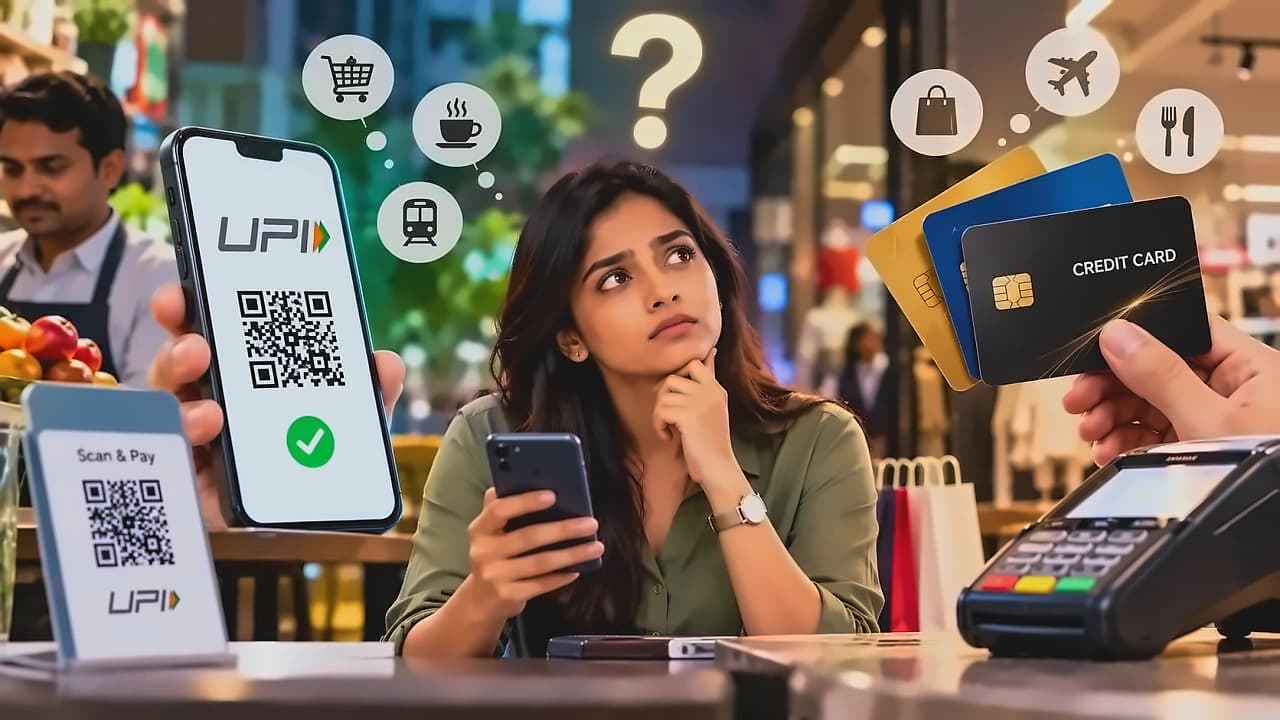
But here's the bigger problem: Apple Pay is entering a market that looks nothing like the card-heavy U.S. or Europe. India's digital payments revolution has been driven by UPI, the state-backed instant payment system.
The system works through QR codes that are everywhere from luxury malls to street vendors. It's free for most person-to-merchant transactions. Apple Pay, by contrast, is card-based, requires NFC terminals, and comes with card network fees.
The structural mismatch creates real adoption barriers. Apple Pay only works with Visa and Mastercard credit cards from Axis Bank at launch. No RuPay, no debit cards, and critically, no UPI support. This exclusion of RuPay is particularly significant. RuPay cards dominate government financial inclusion programs and are widely issued by public sector banks. By not supporting RuPay, Apple Pay immediately excludes a massive segment of Indian consumers and merchants who primarily use the domestic network.
Fragmented Acceptance
Then there's the acceptance problem. Apple Pay requires NFC-enabled POS terminals. While these are becoming more common in urban areas, they're far from universal. UPI QR codes, on the other hand, work on any smartphone and require no specialized hardware. An Axis Bank customer with Apple Pay might find their payment works at a premium mall but fails at the neighborhood grocery store. This fragmented acceptance creates unpredictable user experiences that undermine adoption. When you can't be sure your payment will work, you carry a backup. And if you're carrying a backup, Apple Pay becomes secondary rather than primary.
The operational complexity is staggering. Unlike UPI, where banks integrate once with NPCI and gain access to the entire network, Apple Pay requires individual integration from every participant. Each issuing bank must implement tokenization, integrate with Apple Wallet APIs, establish secure communication channels, and handle token lifecycle management. Each acquiring bank must enable token acceptance, update authorization systems, and adapt fraud detection. Payment gateways and processors need their own integrations. This is a linear scaling problem where every new participant requires months of work. UPI scales through network effects—once you're in, you're connected to everyone.
The Strategic Value Proposition
So why is Apple bothering? The direct revenue from India won't move the needle for a company with $466.8 billion in trailing revenue. Even optimistic projections put Apple Pay's India revenue at $20-50 million annually in the near term. That's rounding error for Apple. But the strategic value lies elsewhere.
This means Apple captures the most valuable customers—the affluent segment that spends more and buys more services. Apple Pay strengthens ecosystem lock-in for these premium users. Every service that makes iPhones stickier reduces churn and extends customer lifetime value.
More importantly, Apple Pay fits into a much broader India strategy. Apple's smartphone market share has doubled to 8% over the past four years, making India its fastest-growing iPhone market globally.
Apple is expanding its retail footprint with owned stores and reseller networks. Apple Pay isn't a standalone product—it's part of an ecosystem play. Locally manufactured iPhones can be optimized for local payment infrastructure. Apple Stores can showcase Apple Pay functionality. Manufacturing investments strengthen relationships with regulators and banks.
The Long Game
The long-term bet is that India's premium segment will grow large enough to justify the investment. As iPhone penetration increases and more users enter the affluent class, Apple's addressable market expands. The company is also positioning for potential UPI integration in the future, which would dramatically expand its reach. For now, Apple is playing a niche game—capturing the premium urban segment while UPI dominates the mass market.
The success of this strategy won't be measured in transaction revenue alone. Investors should watch ecosystem retention rates, services attach rates, and customer lifetime value among iPhone users. The real question isn't whether Apple Pay can beat UPI at scale—it can't, and it doesn't need to. The question is whether Apple Pay can make iPhones stickier for the customers who matter most, while strengthening Apple's broader position in a market that will soon produce a third of all iPhones globally.
That's the gamble Apple is making in India. It's not about winning the payments war. It's about fortifying the ecosystem for the long game.