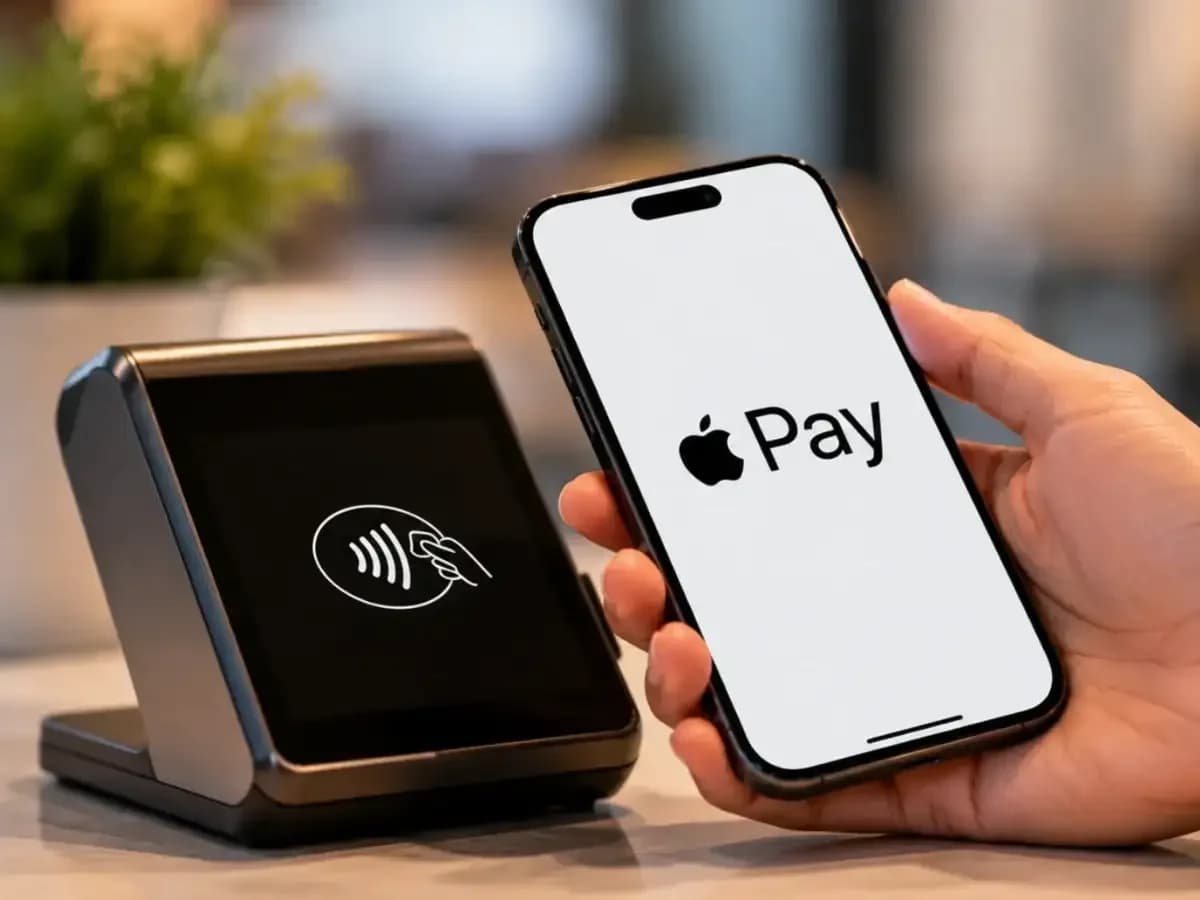
Let's clear up a common misconception right away. Apple Pay has not launched in India yet, and contrary to popular belief, Apple isn't partnering exclusively with Axis Bank.
The initial phase will focus on Visa and Mastercard credit card-based contactless payments, with UPI integration expected later pending regulatory approvals.
So why is everyone talking about Axis Bank? Because this partnership represents a strategic masterstroke for both players. For Apple, it's about cracking a market that has 450 million monthly active UPI users. For Axis Bank, it's about cementing its position as a digital-first innovator in India's fiercely competitive private banking landscape.
Strategic Alignment with Axis Bank's Digital Vision
Axis Mobile boasts over 16 million monthly active users with a 4.8 rating on both app stores. More impressively, Axis Bank commands approximately 38% market share in UPI payments by volume.
This digital-first DNA makes Axis Bank the natural fit for Apple Pay. The partnership aligns perfectly with Axis Bank's strategy to acquire premium customers through digital channels. Consider this: iPhone users in the US earn around $85,000 annually compared to $61,000 for Android users. In India, iPhone users represent the affluent, premium segment that Axis Bank has been aggressively pursuing through its Burgundy Private Banking and premium credit card offerings.
The bank's "open by Axis Bank" mobile-first digital banking platform, with over 300 services accessible anytime, anywhere, provides the ideal foundation for Apple Pay integration. This isn't just about adding a payment method—it's about embedding Apple Pay into a comprehensive digital ecosystem that already serves millions of digitally-savvy customers.
Financial Impact: Beyond the Headlines
Let's talk money, because that's what ultimately matters. Apple Pay's global revenue-sharing model varies by market, but here's what we know: In Switzerland, Apple charges between 27% and 39% of the credit card issuer's interchange income. In the US, Apple reportedly receives 0.15% of transaction value.
Here's where it gets interesting for Axis Bank. The bank currently processes around ₹8,357 crores in quarterly credit card spends with approximately 11.3% market share. Even a conservative 15% increase in transaction volumes from Apple Pay adoption could generate substantial additional revenue. But here's the catch—Apple's revenue share means Axis Bank's net interchange income might remain flat despite higher volumes. The break-even point appears around 25% volume increase assuming a 20% revenue share.
The real financial upside comes from customer acquisition costs. Traditional credit card customer acquisition costs range from ₹1,500 to ₹2,500 per card. Apple Pay's self-selection model—where iPhone users actively seek out the service—could reduce these costs by 40-55%. With Axis Bank acquiring approximately 0.9 million cards per quarter, even modest efficiency gains translate into significant savings.
Competitive Dynamics: The First-Mover Myth
Here's another reality check:
SBI Cards holds 18.8% of cards in force. Axis Bank ranks fourth with approximately 13.4% market share. The idea that Apple Pay alone will dramatically shift these market dynamics is overstated.
However, the premium segment tells a different story. HDFC Bank has traditionally dominated this space with cards like Infinia and Diners Black. Axis Bank's partnership with Apple Pay provides a credible differentiator in this battleground. iPhone users represent a concentrated premium demographic that competitors covet. If Axis Bank can convert even 5-10% of India's estimated 10-12 million iPhone users, it could gain 2-3 percentage points in premium segment market share.
Competitors won't sit idle. HDFC Bank will likely leverage its existing relationships with Visa and Mastercard, while ICICI Bank might deepen its Amazon Pay partnership. SBI Cards could focus on its massive distribution network through SBI branches. The real competitive advantage for Axis Bank isn't just being first—it's integrating Apple Pay into a broader digital ecosystem that includes UPI leadership (38% market share by volume), merchant acquiring strength (22.1% market share), and innovative products like the Google Pay Axis Bank Flex co-branded card.
Technology Integration: The Hidden Complexity
Beneath the sleek Apple Pay interface lies a complex technology integration challenge. Apple Pay uses the EMV Payment Tokenization Specification, which requires Axis Bank to implement several critical components: a Token Service Provider integration, Device Account Number generation, secure token vaults, provisioning APIs, and modified authorization flows.
The security implications are profound. Tokenization replaces sensitive card details with unique tokens that hold no intrinsic value. According to Visa data, 4 billion network tokens have resulted in a 28% reduction in fraud rates and a 3% increase in approvals. For Axis Bank, this could translate to fraud cost savings of ₹63-87 crores annually.
Axis Bank's existing digital infrastructure provides a strong foundation. The bank has invested heavily in cloud-native architecture with 150+ applications deployed on cloud, 480 APIs enabling seamless integration, and a dedicated technology team of 2,600+ professionals. The bank was also the first in India to receive ISO certification for cloud security on both AWS and Azure platforms.
The projected ROI is compelling—485-691% over three years with a payback period of 8-14 months. But these numbers assume successful execution and market adoption, both of which carry significant risk.
Regulatory Compliance: The Invisible Hand
RBI regulations will fundamentally shape Apple Pay's India operations. The April 2018 data localization directive requires all payment system data to be stored only in India. This means Apple's global infrastructure must route data to Indian data centers within 24 hours of processing—a significant architectural challenge for a company accustomed to global data flows.
The April 2026 banking rules introduce additional complexity. Mandatory two-factor authentication for all digital payments means Apple Pay's biometric authentication must integrate seamlessly with India's regulatory framework. The new digital fraud compensation framework shifts liability timelines sharply in favor of customers, requiring robust real-time fraud detection systems.
Axis Bank is well-positioned to navigate this landscape. The bank has implemented robust data localization measures with data centers in Mumbai and Bengaluru, secured Aadhaar data in a dedicated vault, and maintains an extensive cybersecurity framework aligned with NIST and ISO27001 standards. The bank's experience as RBI's preferred partner for CBDC initiatives, with over 0.65 million registered customers and 6 million transactions, demonstrates its regulatory credibility.
Looking ahead, RBI's Payments Vision 2028 emphasizes trust, resilience, and AI-led innovation. The UPI market share cap of 30% for third-party apps, extended to December 2026, creates an opportunity for Apple Pay's eventual UPI integration. Cross-border payment liberalization and CBDC integration present additional expansion possibilities beyond the initial credit card partnership.
The Verdict
The Apple Pay and Axis Bank partnership represents a calculated bet on India's digital payments future. It's not about exclusivity—it's about strategic alignment. Axis Bank brings digital infrastructure, regulatory credibility, and a growing premium customer base. Apple brings global expertise, brand appeal, and a seamless user experience.
The success of this partnership will depend on execution. Technology integration must be flawless. Regulatory compliance must be absolute. Customer adoption must be rapid. Competitors will respond aggressively. But if Axis Bank can navigate these challenges, the partnership could accelerate its transformation from a traditional private sector bank to a digital-first financial services platform.
The real story isn't about Apple Pay selecting Axis Bank. It's about Axis Bank positioning itself to thrive in India's evolving digital payments landscape—where success depends not on size alone, but on innovation, customer experience, and the ability to turn regulatory complexity into competitive advantage.