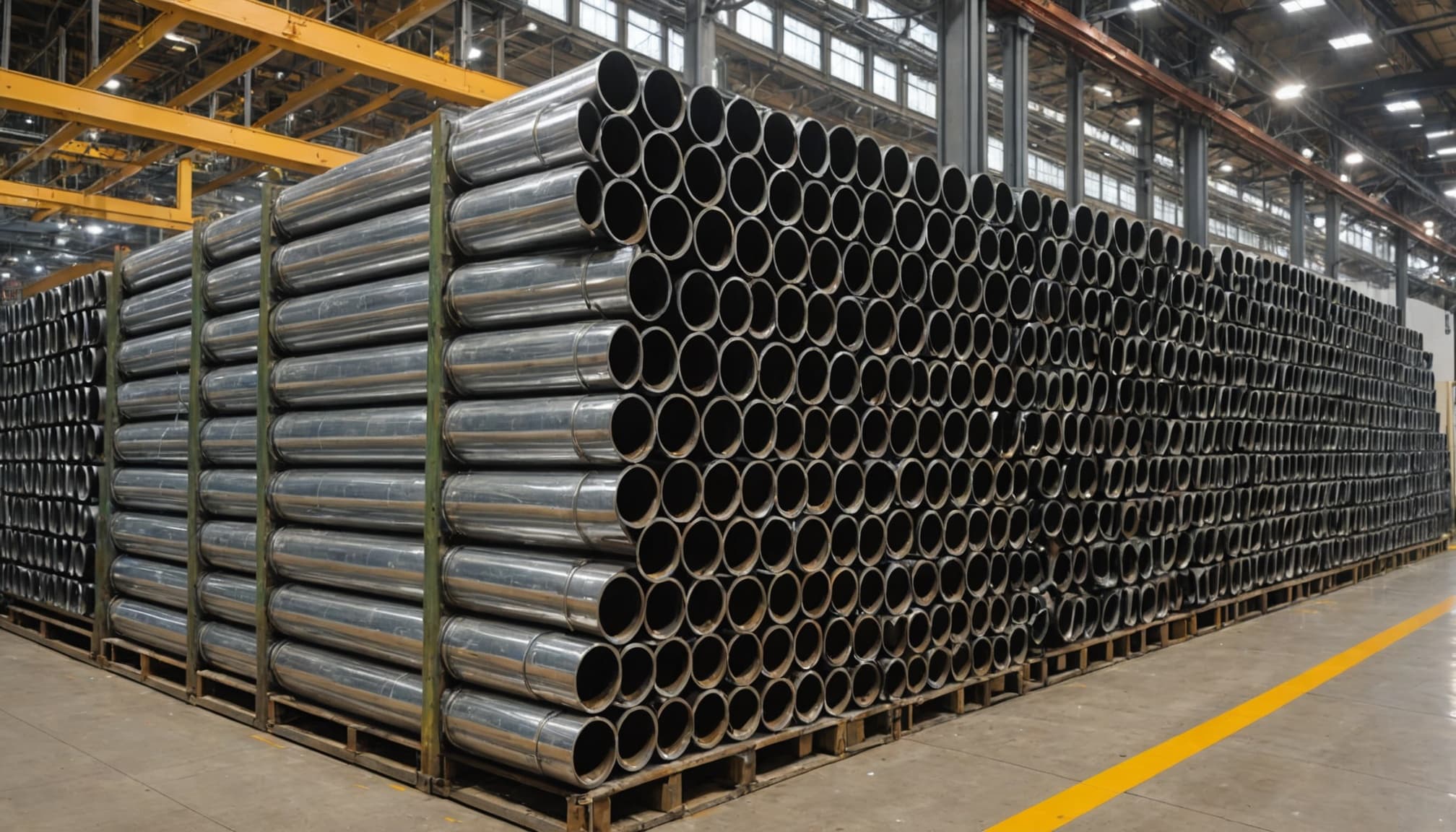
APL Apollo Tubes has approved a massive ₹28,000 crore acquisition to buy Tata Steel's Tubes Business and its entire stake in Tata Steel Colors Private Limited (TSCL). The deal involves two interdependent transactions: a slump sale of the Tubes Business for up to ₹11,700 crore and a share purchase for TSCL worth ₹16,300 crore. Both are expected to close simultaneously by March 31, 2028, subject to regulatory approvals.
This isn't just a routine purchase. The consideration represents a significant premium over the assets' book value. The Tubes Business, with a net worth of ₹3,274 crore, is being bought at roughly 3.6 times that figure. TSCL is the real head-scratcher—valued at about 16 times its ₹1,016 crore net worth and a staggering 192 times its FY26 Profit After Tax (PAT) of ₹85 crore. Clearly, APL Apollo isn't paying for today's earnings. It's paying for tomorrow's market power.
Valuation: Betting on the Future
The combined consideration of ₹28,000 crore is about 1.74 times the total turnover of the acquired businesses (₹16,055 crore). For context, Tata Steel's entire enterprise value trades at roughly 1.3 times its sales. APL Apollo is effectively paying a premium to take these assets off Tata Steel's hands.
Why the premium? The logic seems rooted in strategic positioning rather than current profitability. TSCL's ₹85 crore PAT on a ₹4,680 crore turnover implies a wafer-thin 1.8% net margin. The valuation suggests APL Apollo sees immense potential in TSCL's asset base—its color-coated steel facilities at Jamshedpur, Khopoli, Angul, and Sahibabad—and its market position. The company likely believes it can turn these assets around, leveraging its own operational expertise and distribution network to drive margins far higher than Tata Steel managed.
For the Tubes Business, the math is slightly more grounded. At 3.6 times net worth and roughly 1 times sales, the price reflects the value of Tata's established brands (Tata Structura, Tata Pipes) and its manufacturing footprint.
This consolidation could give it pricing power in a fragmented market.
The Financing Puzzle
Here's where things get tricky. APL Apollo is currently a net cash company with about ₹1,600 crore in net cash and a debt-to-equity ratio of just 0.12. Its interest coverage is a healthy 12.5 times. But ₹28,000 crore is a different beast—it's about 5.3 times the company's net worth and 15.5 times its FY26 EBITDA. Transcript
An all-debt scenario would be disastrous, pushing leverage to over 5 times net worth and crushing interest coverage below 1 times. Even a 50:50 debt-equity split would leave leverage around 0.7 times, a dramatic shift from its current net cash position. Transcript
This trade-off is critical. Debt is cheaper but adds significant risk, especially in a cyclical industry like steel. Equity dilutes earnings per share and promoter holding (currently around 28%) but preserves financial flexibility. Given the company's existing expansion plans—targeting 8 million tonnes of capacity with its own capex of ₹1,400–1,500 crore—taking on excessive debt could choke its growth ambitions. Transcript
Synergies: The Promise and the Peril
APL Apollo's stated rationale is clear: enhance scale, distribution networks, and product range. The company plans to bring similar businesses under one roof to create a stronger entity. On paper, the synergies are compelling.
The Tubes Business adds about 1.3 million tonnes of capacity across four plants (Jamshedpur, Hosur, Khopoli, Sahibabad) to APL Apollo's existing 5 million tonnes. This fills geographical gaps, particularly in the East, where APL Apollo is already planning new plants. The combined entity would have a pan-India footprint that smaller competitors simply can't match. Annual Report
Then there's the distribution overlap. APL Apollo boasts a network of over 800 distributors. Integrating Tata's dealer network could significantly expand its reach, especially in institutional and project segments where Tata has traditionally been strong. Cross-selling opportunities abound—APL Apollo's structural tubes could find their way into Tata's project pipelines, while Tata's conveyance pipes could leverage APL Apollo's retail distribution. Other
But integration is where deals go to die. The two companies have very different business models. APL Apollo runs a tight, cash-and-carry operation with negative working capital. Tata's channels likely offer credit and service for large projects. Merging these cultures without alienating customers or dealers will be a delicate balancing act.
Then there's the asset-light question. Tata Steel was targeting 4 million tonnes of tubes capacity through an asset-light model. APL Apollo is now buying those very assets. The company will need to rationalize overlapping capacity, decide which plants to keep, and manage the associated one-time costs. Investor Presentation
The Regulatory Hurdle
The Competition Commission of India (CCI) looms large over this deal. The combination of the market leader (APL Apollo) and a strong competitor (Tata) in a concentrated segment is textbook Phase II material. The CCI has 30 days to form a prima facie view and a total of 150 days to complete its review, though information requests can pause the clock.
Divestiture conditions are a real possibility. The CCI might require APL Apollo to sell overlapping capacity or license brands like Tata Structura or Tata Pipes to address competition concerns. This could dilute the very synergies APL Apollo is paying for.
The long-stop date of March 31, 2028, provides a buffer, but it also means a long wait. The deal is interdependent—if the CCI blocks or modifies the Tubes Business transfer, the TSCL share sale falls through too. This "weakest link" risk adds significant uncertainty.
Tata Steel's Rationale: Unlocking Value
For Tata Steel, the deal is about focus. The Tubes Business and TSCL represent only about 6.9% of consolidated turnover but fetch a premium valuation. Selling them allows Tata Steel to monetize non-core assets at a price its own earnings couldn't justify.
The ₹28,000 crore proceeds could be a game-changer for Tata Steel's balance sheet. The company currently has a net debt of around ₹84,000 crore and a net debt-to-EBITDA ratio of 2.3 times.
This would free up significant headroom for its massive capex plans, including the ₹33,873 crore Neelachal expansion. Investor Presentation
However, the logic isn't without contradictions.
Selling the entire entity for ₹16,300 crore less than a year later is a sharp pivot. Similarly, the company was actively promoting its tubes expansion plans just months ago. The reversal suggests a strategic rethink, but the company hasn't explained the shift. Investor Presentation
The Road Ahead
This deal is a high-stakes gamble for both companies. For APL Apollo, it's a bet that it can extract synergies and improve margins enough to justify the steep price. For Tata Steel, it's a chance to clean up its portfolio and shore up its balance sheet.
The next 16 months will be crucial. APL Apollo needs to articulate a clear funding plan and synergy roadmap. Tata Steel needs to manage the transition without losing value in the assets it's selling. And both need to navigate the CCI review without significant divestitures.
If it works, APL Apollo will cement its dominance in the steel downstream sector. If it doesn't, the company could be saddled with debt and integration headaches for years to come. As always in big M&A, the devil is in the execution.