Let's get one thing straight right away. The story you might have heard about Amara Raja Energy & Mobility shifting from an 80% EV/20% BESS mix to a two-thirds EV/one-third BESS allocation doesn't quite match what the company's official disclosures show. In fact, the current reality is flipped—BESS and stationary applications are driving the New Energy business right now, not the other way around.
The company's New Energy business hit ₹200 crores in Q3 FY26, its strongest quarter yet. But here's the kicker: telecom lithium packs alone crossed 1 GWh cumulative supply by Q4 FY26, with 300+ MWh shipped in that single quarter. That's 80%+ capacity utilization of their stationary capacity. Meanwhile, EV applications?
So what's really going on? It's not a pivot away from EV—it's a strategic bet on where the money is flowing right now, while keeping long-term EV ambitions intact.
But that's the long game. InvestorPresentations
The BESS Opportunity: Why It's Heating Up
India's energy transition is creating a massive opening for battery storage, and Amara Raja is positioning itself to catch this wave. The numbers tell the story: the BESS market is expected to explode from roughly 1 GWh in FY26 to 25-30 GWh by FY31. That's not growth—that's a 25-30x expansion in five years. InvestorPresentations +1
What's driving this? Three big forces.
First, renewable energy. India's targeting 500 GW of renewable capacity by 2030. Solar and wind are great, but they're intermittent. You need storage to make them reliable round-the-clock power sources. This isn't just nice-to-have—it's becoming mandatory through Energy Storage Obligation (ESO) requirements and Viability Gap Funding. InvestorPresentations +1
Second, data centers. These power-hungry facilities are migrating from lead-acid to lithium chemistry for their UPS systems. Amara Raja sees this trend clearly, even though they're not yet supplying lithium UPS batteries directly—they're developing those solutions now. Transcripts +1
Third, telecom infrastructure. This is the immediate growth engine. Lithium telecom packs have surged from 100 MW in Q1 FY26 to 150 MW in Q2 to 250 MW in Q3. The company maintains over 50% market share here, even as the industry shifts from lead-acid to lithium. This migration is expected to continue for 2-3 years if lithium prices stay stable. Transcripts +3
The Capital Efficiency Game: BESS Wins on ROI
Here's where the strategy gets really interesting. Compare the two major projects on Amara Raja's plate.
The BESS facility is targeting commercial production by end-FY27. The giga cell factory's first phase (2 GWh) is scheduled for H1 calendar year 2027. But here's the thing—the BESS business model expects asset turnover ratios of 9-10x because it's selling solution architecture, not just components. Even with lower percentage margins initially, the ROCE looks attractive. Transcripts +2
Management estimates that ₹280 crore BESS investment could generate ₹2,700-2,800 crores in revenue at current cell prices. That's the kind of capital efficiency that gets CFOs excited. Transcripts
The Supply Chain Reality: Why EV Scaling Is Harder
This is the uncomfortable truth that doesn't get enough attention. India's entire lithium battery supply chain—cathode materials, anode materials, electrolyte—comes from China. There aren't enough cost-effective alternatives right now. Transcripts
For Amara Raja, this creates a fundamental constraint. Cell manufacturing is incredibly capital intensive, and you need serious scale to justify the investment. Management pointed out that even if the entire telecom segment converted to cell demand, it wouldn't cross 3 GWh. That's not enough scale for standalone cell manufacturing. Transcripts +1
This disadvantage should gradually reduce over 5-10 years as the local ecosystem develops, vendors emerge, and their own capacity ramps with improved efficiency. But in the near term? It's a headwind. Transcripts +1
This supply chain challenge affects EV and BESS differently. BESS solutions can leverage government-mandated domestic content requirements and policy support like Viability Gap Funding. The policy environment is actively pushing localization. EV applications face more technology uncertainty—OEMs are already asking to shift from NMC to LFP chemistry due to cost advantages. When your customers can't agree on the technology, committing billions to specific capacity becomes risky. Transcripts +2
The Competitive Moat: Leveraging Existing Strengths
Amara Raja isn't starting from scratch in the storage game. They hold 55-60% market share in telecom energy packs (combined lead-acid and lithium). They've already proven they can consolidate a fragmented market against intense competition. That experience matters. Transcripts +2
The company also has an EPC business in solar generating stations. This might seem unrelated, but it's actually a significant advantage. It means they can participate effectively in private tenders and supply comprehensive solutions, not just components. In the BESS world, where government and private tenders drive demand, this EPC capability is gold. Transcripts +1
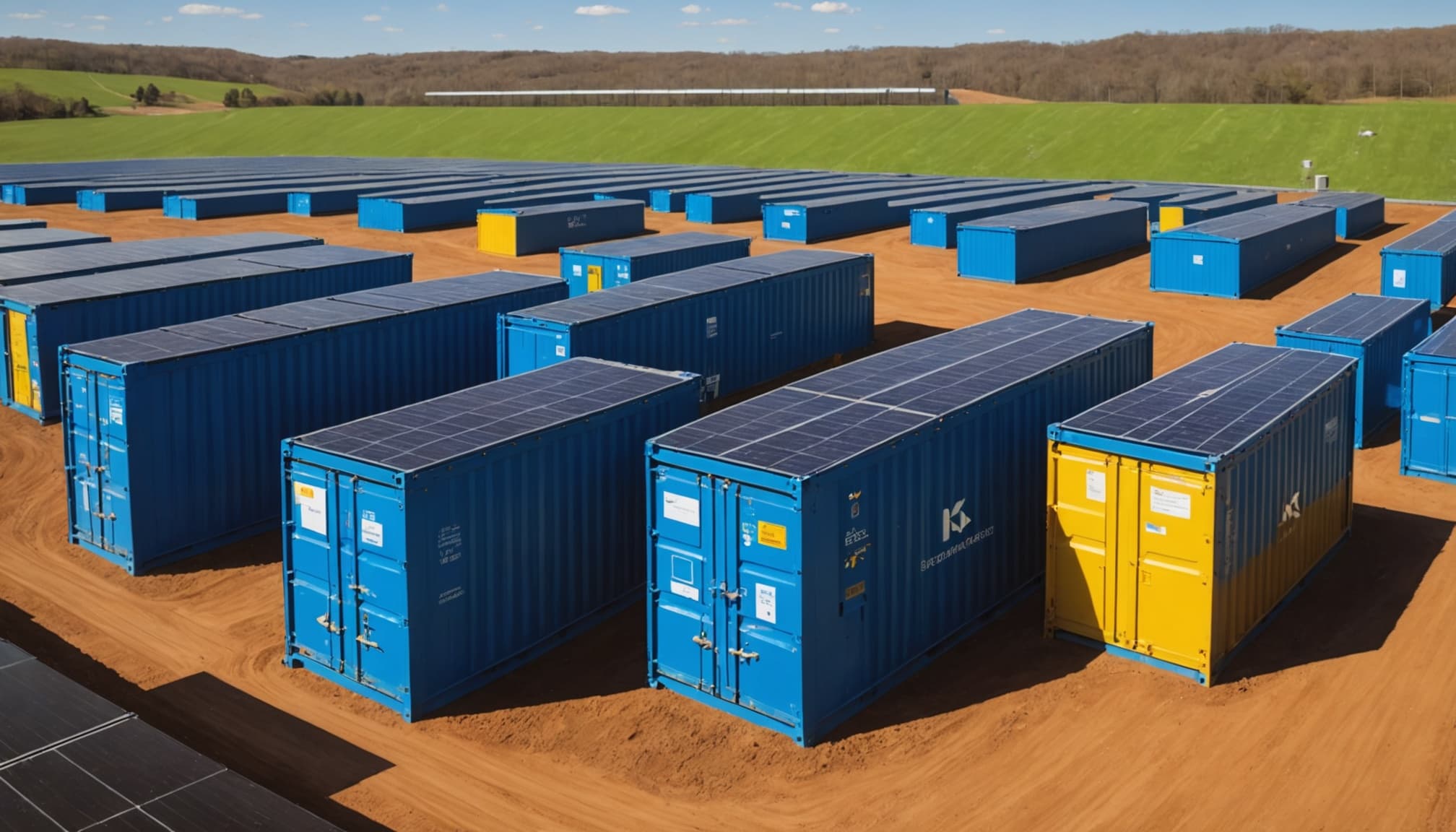
Their systems integration approach—offering containerized solutions with lithium batteries, DC blocks, and other components—creates differentiation. They're selling solution architecture, which commands better economics than component trading. Transcripts
The Technology Strategy: Dual Chemistry, Dual Focus
This brings us to how Amara Raja Advanced Cell Technologies (ARACT) is approaching the chemistry challenge. They're not putting all their eggs in one basket.
For BESS applications, the focus is LFP (Lithium Iron Phosphate) chemistry. It's safer and more cost-effective for stationary storage. Current cells are around 300Ah rating, with plans to establish LFP cell factories specifically for storage. Transcripts
The beauty of their approach? They've designed their manufacturing with flexibility. Migrating production lines from NMC to LFP "is not going to be from a capital point of view, very taxing," according to management. This gives them option value as technology preferences evolve. Transcripts
The Lead-Aid Bridge: Not Dead, Just Evolving
While everyone focuses on lithium, Amara Raja hasn't abandoned lead-acid. Far from it. They project the Indian lead-acid battery market will grow from $4.6 billion to $5.8 billion over five years—a 5% CAGR. Their own lead-acid business? They expect 8-10% annual growth through international expansion and market share gains. Transcripts +1
Lead-acid still dominates automotive applications, and that's not changing overnight. The company is investing in advanced lead-acid technologies, including a partnership with Gridtential Energy for bipolar batteries. These could extend lead-acid's relevance in premium applications requiring better cycle life and efficiency. Transcripts
This dual-technology approach—lead-acid for cash flow and stability, lithium for growth—is smart. It funds the transition while maintaining market position.
The Timeline Reality: What Happens When
So what does this all mean for the next few years?
Near-term (FY27-FY28): The 5 GWh BESS facility drives revenue growth. Even with slow initial ramp-up, the high asset turnover model should generate meaningful returns. The giga cell's first phase comes online but faces margin pressure from that 15-20% cost disadvantage. Transcripts +1
Medium-term (FY28-FY30): The BESS market expands toward that 25-30 GWh target. Amara Raja targets 15% market share. The giga cell scales toward the 8-10 GWh threshold where meaningful profitability kicks in. Localization progress starts reducing that cost penalty. Transcripts +2
Long-term (beyond FY30): Full vertical integration with 16 GWh cell capacity plus 5 GWh BESS integration. Cost parity with mature markets achieved through scale and ecosystem development. Market leadership across both stationary storage and mobility segments. InvestorPresentations
The Bottom Line
Amara Raja isn't abandoning EV—they're being pragmatic about where the near-term opportunity lies. The BESS market offers clearer demand drivers, stronger policy support, better capital efficiency, and lower technology risk. EV will be huge eventually—management projects 70-75% of lithium demand will come from mobility by 2031. But "eventually" doesn't pay the bills today. InvestorPresentations
By prioritizing stationary storage now while building long-term cell manufacturing capabilities, Amara Raja is optimizing for risk-adjusted returns across the battery value chain. It's not a pivot away from EV—it's a strategic sequence that captures immediate opportunities while positioning for the long game.
In a world where everyone's rushing into EV manufacturing, sometimes the smartest move is to focus on where the customers are actually buying today. For Amara Raja, that's stationary storage. The EV revolution will come—but they'll be ready with cash flow, market position, and proven capabilities when it does.