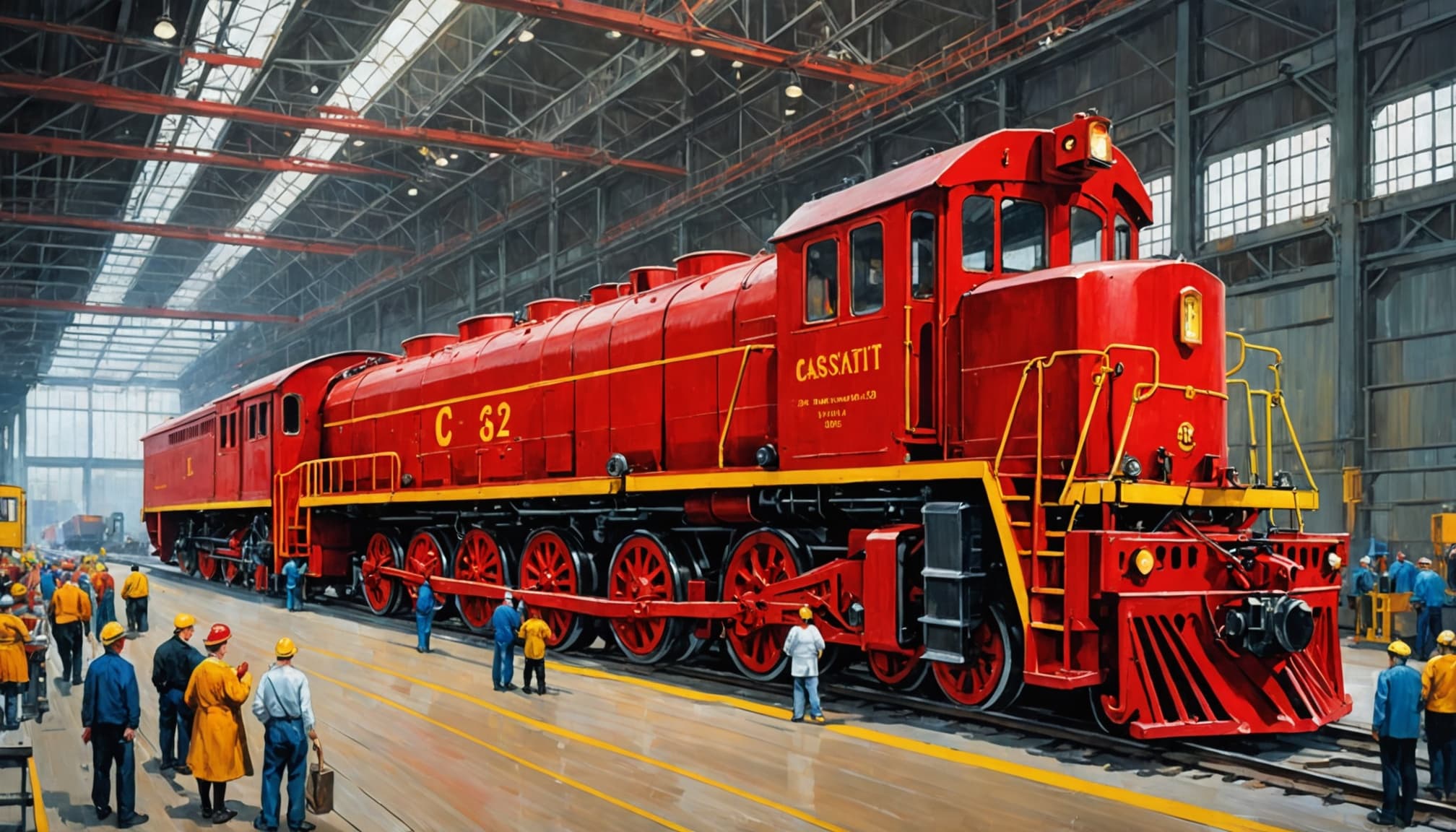
In the heart of Bihar, a 250-acre facility represents one of Indian Railways' largest foreign direct investment projects.
As of August 2026, the facility has delivered 650 locomotives toward the 800-locomotive target, with completion scheduled for March 2028.
The numbers tell an impressive story. The plant operates at 120 locomotives per year capacity, has achieved 90% localisation, and supports over 10,000 direct and indirect jobs. In FY24 alone, MELPL contributed 1% of Bihar's total GST collections and 4.6% of Madhepura's district GDP. This isn't just manufacturing—it's economic transformation. But here's the thing: all this progress faces a critical test in the coming months.
The 200-Locomotive Decision
This isn't optional speculation—the contract explicitly includes a provision for this extension. The timing matters immensely. With 150 locomotives remaining to complete the initial order, the plant will operate above its designed capacity through FY27 and FY28.
The math is straightforward. The 200-locomotive order would provide approximately 1.7 years of production at current capacity levels, extending manufacturing operations through FY30. More importantly, it would trigger a cascade of supply chain investments. Currently, nearly 90% of the locomotive is locally sourced, with only wheels and axles still imported. Alstom is already in discussions with Ramkrishna Forgings for domestic wheel supplies, but this investment is contingent on the additional order volume. Without it, localisation stalls at 90%, and India continues importing these critical components.
The 35-Year Lease Dilemma
Here's where the strategic complexity deepens. The land parcel at Madhepura has been leased to Alstom for 35 years, taking the commitment through 2048-49. This creates substantial fixed cost obligations that must be covered regardless of manufacturing activity. The maintenance contract for the 800 locomotives provides some baseline revenue—estimated at ₹300-400 crore annually—but this alone may be insufficient to cover fixed costs and maintain optimal workforce levels.
The wheel and axle replacement cycles offer additional long-term service revenue potential. With 6,400 wheels and 3,200 axles across the fleet, replacement cycles create recurring revenue estimated at ₹125-165 crore annually. Over the 13-year maintenance contract, this represents ₹1,235-2,145 crore in lifecycle service revenue. However, maintenance revenue alone cannot justify the facility's full capacity utilisation or support the extensive workforce and supply chain ecosystem that has been built.
Localisation's Cost Advantage
The 90% localisation achievement has fundamentally altered MELPL's cost structure. Domestic procurement in INR eliminates foreign exchange conversion costs and hedging expenses, typically saving 2-3% on material costs. Add to this duty avoidance on imported components (typically 10-15% basic customs duty), volume economies from domestic suppliers (5-8% cost benefits), and significantly reduced logistics costs (40-60% reduction compared to international shipping). The combined effect likely improves EBITDA margins by 300-400 basis points compared to a fully imported model.
But the remaining 10% import dependency—primarily wheels and axles—creates substantial foreign exchange exposure. Annual imports for these components are estimated at €40-50 million, creating currency volatility risk that directly impacts project margins. The extended working capital cycle for imports (180-200 days versus 120-140 days for domestic procurement) ties up an additional ₹150-200 crore in working capital. Securing the follow-on order to enable domestic wheel manufacturing through Ramkrishna Forgings would push localisation to 95-97%, eliminate most forex exposure, and reduce working capital requirements by ₹50-75 crore.
Technology Diversification Potential
Alstom's global leadership in hydrogen and battery technology positions the Madhepura facility for diversification beyond electric freight locomotives. The existing contract framework includes provisions for locomotive modifications, creating pathways for technology evolution. Garg has acknowledged that "there are a number of possibilities" and highlighted Alstom's pioneering position in hydrogen and battery technology.
The capital expenditure implications vary significantly by technology. Battery system integration would require an estimated ₹150-230 crore investment, while hydrogen-powered locomotive development would need ₹350-525 crore. Even conservative technology modifications generate attractive ROI—20-25% for minor modifications and 25-30% for selective technology integration. The key is phased implementation, starting with low-risk digital and efficiency upgrades before progressing to advanced technologies.
The Joint Venture Dynamic
The public-private joint venture structure creates both advantages and constraints. While it adds 25-50% to decision-making timelines compared to a purely private entity, it provides strategic advantages including built-in customer access, shared investment risk, and alignment with national policy objectives like 'Make in India' and 'Atmanirbhar Bharat'. Major investment decisions require joint approval, but the strategic relationship value often justifies the additional time.
The success of the 800-locomotive delivery program has built substantial credibility. With 650 locomotives delivered ahead of the original schedule, strong quality performance, and industry-leading localisation, Alstom has established itself as a proven partner. This success increases expansion probability by 20-25 percentage points across multiple opportunity categories—from the immediate 200-locomotive follow-on to medium-term technology diversification and long-term infrastructure projects.
What Lies Ahead
The expected value analysis suggests positive risk-adjusted returns for the 35-year commitment, but the path forward depends critically on securing the follow-on order. The base case scenario (follow-on order secured) generates annual value of ₹2,000 crore, while a downside scenario (maintenance only) drops to ₹500 crore annually. The difference isn't just financial—it determines whether Madhepura becomes a sustainable industrial hub or faces underutilisation.
For Indian Railways, the decision extends beyond immediate procurement needs. The partnership has delivered economic transformation in Bihar, created domestic manufacturing capabilities for high-powered locomotives (making India the sixth nation globally with this capability), and established a supply chain ecosystem that supports broader industrial development. The maintenance integration creates switching costs and technical interdependence that strengthen the relationship over time.
The next six months will prove decisive. If the 200-locomotive follow-on order is confirmed by late FY27, Madhepura's trajectory continues upward with full capacity utilisation, complete localisation, and technology diversification potential. If delayed or declined, the facility faces significant underutilisation despite the maintenance revenue stream, putting at risk the investments made by Alstom, the economic benefits generated for Bihar, and the skilled workforce that has been built. The stakes are high, the commitment is deep, and the decision window is narrowing.