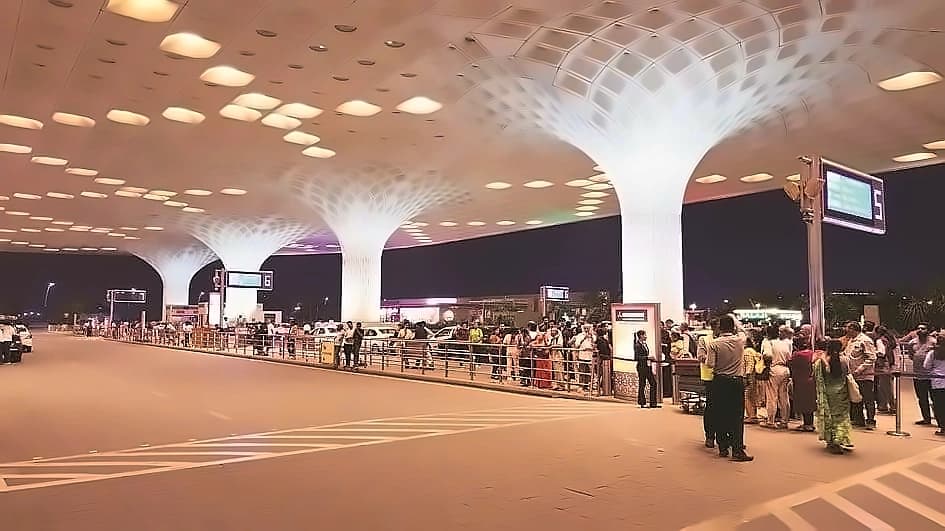
Currently, operators of Delhi and Mumbai airports face a hard cap: they cannot own more than a 10% stake in any airline. This restriction is embedded in the Operation, Management, and Development Agreement (OMDA) that governs these major airport concessions. The Delhi airport OMDA explicitly states that scheduled airlines' equity is restricted to 10% of aggregate shareholding, with foreign airlines completely barred.
The Ministry of Civil Aviation is now discussing a waiver that would remove this ownership ceiling, potentially opening the door for Adani Group and GMR Airports to launch their own carriers. However, this isn't a simple flip of a switch. Any relaxation requires legal clearance from the Ministry of Law and subsequent approval from the Union Cabinet headed by Prime Minister Narendra Modi. The existing OMDA contracts would also need formal amendment to remove the 10% restriction.
Why the Duopoly Needs Disrupting
The competitive rationale is compelling. IndiGo and the Air India Group together command approximately 90% of domestic capacity, creating what analysts call a near-duopoly. IndiGo alone holds 64.2% market share, while Air India Group accounts for 27.3%.
This duopoly didn't emerge by accident. It's the result of a decade of consolidation. Jet Airways, once India's second-largest carrier, collapsed in 2019 under mounting debts exceeding $1 billion, costly acquisitions, and fierce competition from low-cost carriers. Go First followed in 2023, filing for bankruptcy after Pratt & Whitney engine issues grounded half its fleet. These failures eliminated the competitive middle segment, leaving only dominant players and marginal carriers.
The remaining competition is thin. SpiceJet operates with less than 4% market share and 40% of its fleet grounded. Akasa Air, despite aggressive growth plans, holds just 5.4% market share. The market simply cannot absorb new entrants easily when two giants control the vast majority of capacity, slots, and infrastructure.
The Slot Allocation Dilemma
Here's where it gets tricky. If airport operators launch airlines, who gets the prime slots? Mumbai airport runs at full capacity during High Intensity Runway Operations (HIRO) periods, limited to 44 movements per hour. Delhi faces similar constraints. These slots are gold—morning and evening windows that command premium fares and higher passenger loads.
The current slot allocation system follows IATA World Slot Guidelines, with historical precedence giving existing airlines priority if they've utilized slots at least 80% of the time. New entrants get access to only 50% of available slots in the pool. Now imagine the slot allocator also owning an airline. The potential for preferential treatment is obvious.
Adani Group controls Mumbai airport and seven others, accounting for 25% of India's passenger footfalls. GMR Airports manages Delhi airport and four additional facilities. If either launches a carrier, they could theoretically allocate desirable slots to their own airline during peak hours, relegating IndiGo and Air India to less commercially viable off-peak times. This isn't hypothetical—the Airports Authority of India has already had to intervene at Mumbai airport over "excessive slot distribution" and "non-adherence of slots".
The Aircraft Supply Crunch
Even if regulatory barriers fall, a massive practical hurdle remains: aircraft. Airbus and Boeing are struggling with unprecedented delivery delays due to supply chain disruptions that began during the pandemic. Airbus has warned of additional A350 delivery delays due to problems securing fuselage parts from a former Spirit AeroSystems plant and disruptions in cargo door production in Spain. Boeing faces similar challenges, with each 787 Dreamliner requiring around 2.3 million parts sourced globally.
The backlogs are staggering. Airbus reports 9,247 aircraft in its backlog (10.6 years of production coverage), while Boeing has 6,758 aircraft (10.1 years of coverage). IndiGo, as Airbus's largest A320neo operator with nearly 1,000 aircraft on order, receives preferential treatment in delivery scheduling. New entrants would be at the back of a very long queue.
The IndiGo crisis in December 2025 exposed another vulnerability: pilot shortages. The airline's failure to adjust to new Flight Duty Time Limitation rules, which increased pilot rest periods and reduced night landings from six to two per week, triggered the mass cancellations. The crisis revealed that operational efficiency optimized for stable conditions may not provide resilience during regulatory stress. New entrants could exploit this by building operational buffers and conservative growth strategies—but they'd need to hire experienced pilots in a market already facing shortages.
The Financial and Strategic Calculus
Launching an airline requires substantial capital. A scheduled domestic airline typically needs ₹50-100 crores as initial investment, with access to additional funding for operations, fleet acquisition, and regulatory compliance. The total startup cost could reach ₹2,000-5,000 crores for a viable operation with 10-20 aircraft.
It maintains a conservative net debt-to-EBITDA ratio of 3.3x, below its 3.5x target. GMR Airports, while smaller, brings deep aviation expertise through its operations of 120+ million passengers annually across Asia.
Vertical integration offers potential synergies. Research suggests airports and airlines working together could boost airport commercial sales by 10-20% and airline commercial sales by more than 50% through integrated sales channels, loyalty programs, and joint digitization. Adani Group could leverage its ports, energy, and logistics infrastructure for cargo operations and ground handling. GMR Airports could utilize its MRO capabilities through GMR Aero Technic, India's largest integrated third-party MRO.
International Lessons and Regulatory Safeguards
The United States effectively prevents airport-airline joint ownership through strict public ownership laws and FAA revenue-diversion regulations that prohibit using airport revenues for non-aviation purposes. Almost every U.S. commercial-service airport is owned by state or local government, not private entities. The European Union technically permits such ownership but has seen limited commercial success due to aggressive antitrust enforcement.
India would need robust safeguards if it proceeds. These could include independent slot coordination mechanisms (learning from Australia's experience at Sydney Airport, where the slot manager was owned by the two largest airlines), enhanced Competition Commission of India oversight with aviation-specific expertise, and strict financial separation requirements between airport and airline operations.
The Growth Opportunity
Despite the challenges, the opportunity is massive.
IATA projects Asia Pacific air passengers will jump from 1.7 billion in 2024 to 4.1 billion by 2044, with India as a key driver. India's aviation sector is projected to handle 500 million passengers annually by 2030 and nearly 1 billion by 2047.
IndiGo plans to reach 550 aircraft and 200 million passengers annually by FY30, but faces operational constraints and leadership transition following its December crisis. Air India under Tata Group ownership has paused expansion plans due to aircraft delivery deferrals and financial pressures. This creates space for well-capitalized new entrants with infrastructure advantages.
The question isn't whether India's aviation market will grow—it's whether that growth will be captured by two giants or distributed more broadly. Adani Group and GMR Airports bring unique advantages: infrastructure assets, financial strength, and operational expertise. But they also face significant hurdles: regulatory approval, aircraft shortages, pilot constraints, and the need to avoid conflicts of interest in slot allocation. The coming months will reveal whether India's aviation sector remains a duopoly or evolves into a more competitive, resilient market.