The Legal Cloud Over Group Stocks
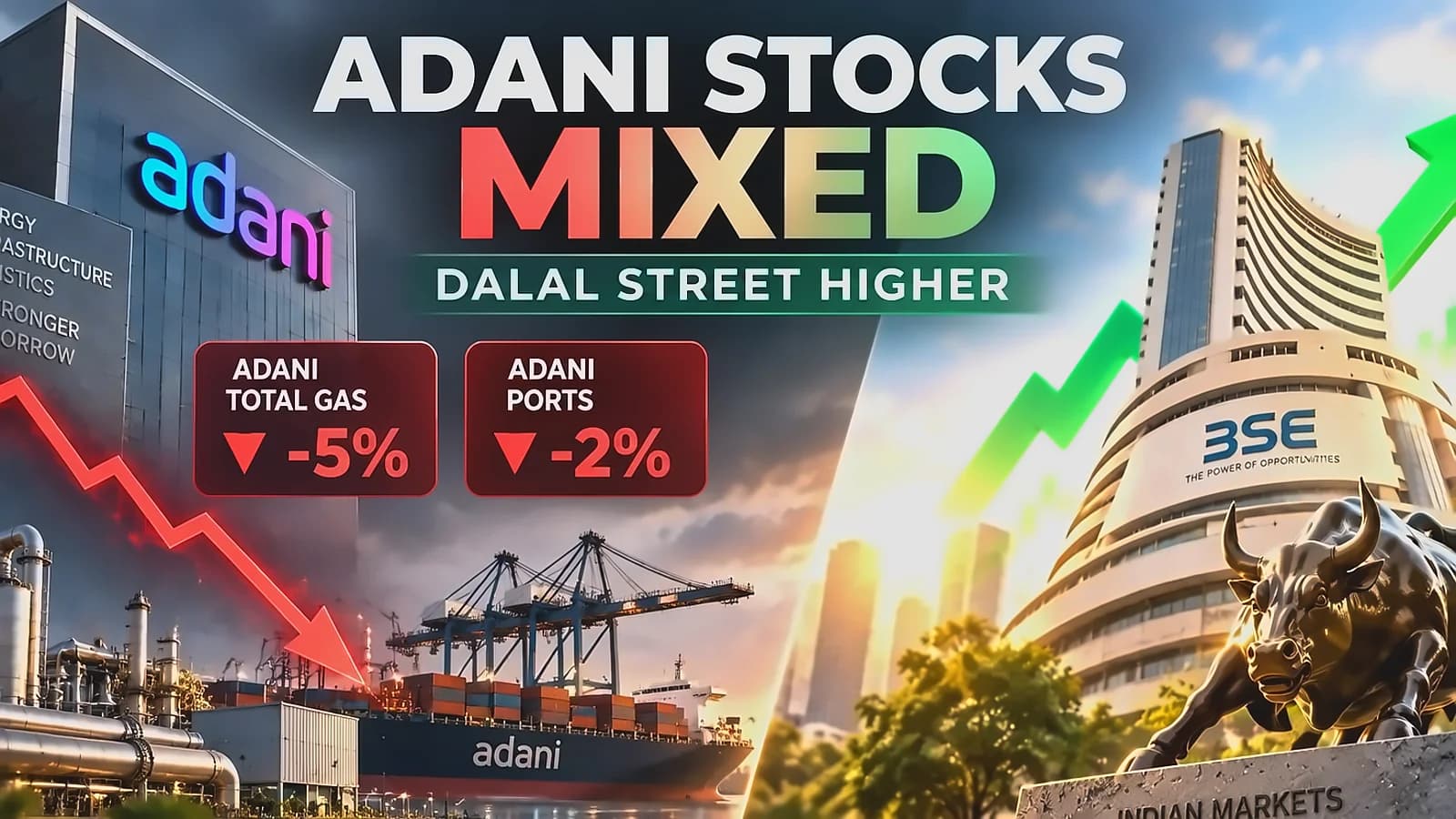
On June 26, 2026, US District Judge Nicholas Garaufis refused to immediately dismiss the criminal case against Gautam Adani, directing the Department of Justice (DOJ) to provide a detailed explanation for its dismissal request by July 13, 2026. Legal experts have characterized this as a routine procedural step under Rule 48(a) of the Federal Rules of Criminal Procedure, noting that prosecutorial discretion ultimately rests with the executive branch and courts have little precedent for forcing continued prosecution once the DOJ decides to abandon a case. Yet the market reaction has been swift and broad-based. Adani Enterprises fell 2.49%, Adani Green Energy dropped 1.55%, Adani Ports declined 1.11%, Adani Power slipped 0.97%, and Adani Energy Solutions lost 1.42% on June 29, 2026.
This simultaneous decline across fundamentally different businesses raises questions about why procedural legal developments are triggering group-wide selling pressure. The answer lies in how markets interpret uncertainty duration rather than legal substance. The July 13 deadline creates a two-week window of ambiguity, and markets dislike uncertainty more than they dislike bad news. Even though experts expect the dismissal to be approved within weeks, the mere extension of the legal overhang triggers risk-off behavior across the group.
Transmission Mechanisms: From Founder to Subsidiaries
The transmission of legal uncertainty from Gautam Adani's personal case to subsidiary valuations operates through several interconnected channels. The most critical is the funding contagion effect. Adani Group companies have raised over $3 billion through loans and bond offerings marketed to US investors, giving US authorities jurisdiction under the "effects" test. This international bond market exposure means legal developments directly impact borrowing costs. Fitch Ratings has placed several Adani dollar bonds on negative watch, citing "potential contagion risk" that could affect access to funding and liquidity.
Beyond funding, there are governance perception effects. Gautam Adani's high promoter holding across group companies means any legal risk to him directly impacts perceived governance standards, management continuity, and decision-making authority. Operational interdependencies also matter—shared services, cross-guarantees, and unified brand perception create linkages that markets price in even when subsidiaries operate independently. Finally, investor sentiment herding plays a role. Institutional investors often treat the group as a single risk entity for portfolio allocation, and risk management protocols trigger automated selling across group entities regardless of individual company fundamentals.
S&P's BBB Upgrade: A Tale of Two Adanis
On June 25, 2026, S&P Global Ratings upgraded Adani Ports and Special Economic Zone to investment-grade BBB from BBB-, elevating it to par with India's sovereign rating. The upgrade cited robust operating cash flows, a strengthening balance sheet, and disciplined leverage policy. S&P expects Adani Ports to maintain a net debt-to-EBITDA ratio of around 2.6 times over the next 12-24 months despite elevated capital expenditure—a marked improvement from nearly 4x recorded in fiscal 2023.
This rating action has created a visible divergence in how markets treat different Adani Group stocks. Adani Ports declined only 1.11% on June 29, outperforming most group peers. The BBB rating provides several insulation mechanisms: lower borrowing costs, diversified funding sources, and an investor base of credit-focused institutions less sensitive to group-level headlines. Adani Ports generates positive free cash flow of ₹5,036 crore, compared to negative FCF at Adani Enterprises and Adani Green Energy. Its conservative leverage (net debt-to-EBITDA of 2.3x) and strong asset base (51.8% equity financing) provide fundamental support that counters sentiment-driven selling.
The contrast with Adani Green Energy is stark. Adani Green trades at a P/E of 126.58x with a debt-equity ratio of 5.72x, reflecting both growth expectations and vulnerability. While Adani Ports' business model—integrated logistics with over 70% of revenue secured through Take-or-Pay contracts—provides exceptional revenue visibility, Adani Green's renewable projects face weather dependency, policy sensitivity, and high capital intensity. The market is increasingly differentiating based on these fundamental differences, with Adani Ports showing relative resilience despite group-wide pressure.
Operational Milestones vs. Legal Headlines
Amid the legal-driven sell-off, Adani Green Energy continues executing on its growth strategy. The company operationalized a 150 MW solar power project at Khavda, Gujarat, bringing total operational renewable capacity to 19,985.8 MW—just 14.2 MW shy of the psychologically significant 20 GW milestone. This achievement demonstrates execution excellence and directly translates to immediate revenue generation through existing Power Purchase Agreements. The incremental addition contributes approximately ₹45-60 crore in annual EBITDA, assuming standard solar capacity utilization factors.
Similarly, Adani Enterprises' airport business announced plans to invest more than ₹20,000 crore in the first phase of integrated airport city developments across six airports. Spanning 655 acres with 22 million sq. ft. of mixed-use infrastructure, these projects aim to transform airports into multi-purpose urban hubs combining hotels, retail, offices, and entertainment facilities. Nearly 70% of the investment will be concentrated in Mumbai and Navi Mumbai, leveraging India's premier aviation market. This creates multiple revenue streams beyond traditional aviation and provides long-term earnings visibility through 15-25 year lease agreements.
The group also announced a strategic entry into nuclear power through Adani Atomic Energy, targeting 10 GW capacity by 2035. This represents a significant capital allocation shift, with Adani Power committing ₹2 lakh crore to expand total generation capacity to 45 GW over the next five years. While creating near-term funding pressures, the nuclear initiative provides long-term competitive advantages through energy security leadership and regulatory moats.
The Cement Exception: Flat Trading Amid Chaos
Perhaps the most telling indicator of market differentiation is the performance of Ambuja Cements and ACC. While Adani Energy Solutions and Adani Total Gas declined around 3% during the same session, Ambuja Cements traded flat at ₹424.25 and ACC at ₹1,333.40. This resilience stems from fundamentally different business characteristics. Cement is an essential construction material with domestic market focus, providing insulation from international regulatory risks. Both companies maintain near-zero debt (debt-equity ratios of 0.01 and 0.02 respectively) and trade at attractive valuations—P/E ratios of 18.67x and 11.76x, representing 30-40% discounts to group averages.
The cement companies also benefit significantly from Adani Group integration. Access to Adani Ports' infrastructure provides cost-efficient logistics, while the group's 673 MW renewable energy capacity reduces power costs. Recent performance has been strong—ACC reported PAT of ₹1,119 crore in Q2 FY26, up 460% year-on-year, with EBITDA margin expansion to 14.3%. The combination of defensive business models, strong balance sheets, and attractive valuations creates natural insulation from group-level legal overhangs affecting more capital-intensive or internationally exposed businesses.
Power Sector Divergence: Thermal vs. Renewable
Even within the power generation sector, market reactions have diverged significantly. Adani Power declined 0.97% while Adani Green Energy dropped 1.55%, reflecting different risk profiles and business models. Adani Power's thermal baseload model offers stability through predictable generation, established technology, and regulated returns. The company maintains conservative leverage (debt-equity of 0.77x) and trades at a P/E of 34.06x—lower than Adani Green's 126.58x, reflecting both lower growth expectations and lower risk.
Adani Green Energy's renewable model carries higher expectations but also higher vulnerability. The company is aggressively expanding to 45 GW by 2030, requiring significant ongoing capital expenditure (₹26,097 crore in FY26). Its high debt-equity ratio of 5.72x creates financial vulnerability, while weather dependency and policy sensitivity add operational risks. The direct involvement in the US bribery case also affects international investor sentiment more acutely than for Adani Power, which has minimal direct exposure.
The Path Forward
The current situation presents a complex risk-reward equation for investors. The procedural characterization of legal proceedings suggests limited long-term legal risk, while strong business fundamentals across Adani Group companies provide underlying support. However, international capital market access concerns and potential for prolonged uncertainty warrant caution. The July 13 DOJ deadline represents a key catalyst that could provide clarity and potentially mark the beginning of legal overhang resolution.
Until then, markets are likely to continue differentiating based on fundamental business differences rather than treating all Adani Group stocks as homogeneous exposures. Companies with defensive characteristics, strong balance sheets, and attractive valuations—Ambuja Cements, ACC, and Adani Ports—show relative resilience. Growth-oriented companies with higher leverage and international exposure—Adani Green Energy and Adani Enterprises—face greater pressure. This divergence reflects rational pricing of business model differences, risk profiles, and legal exposure across the Adani Group portfolio.