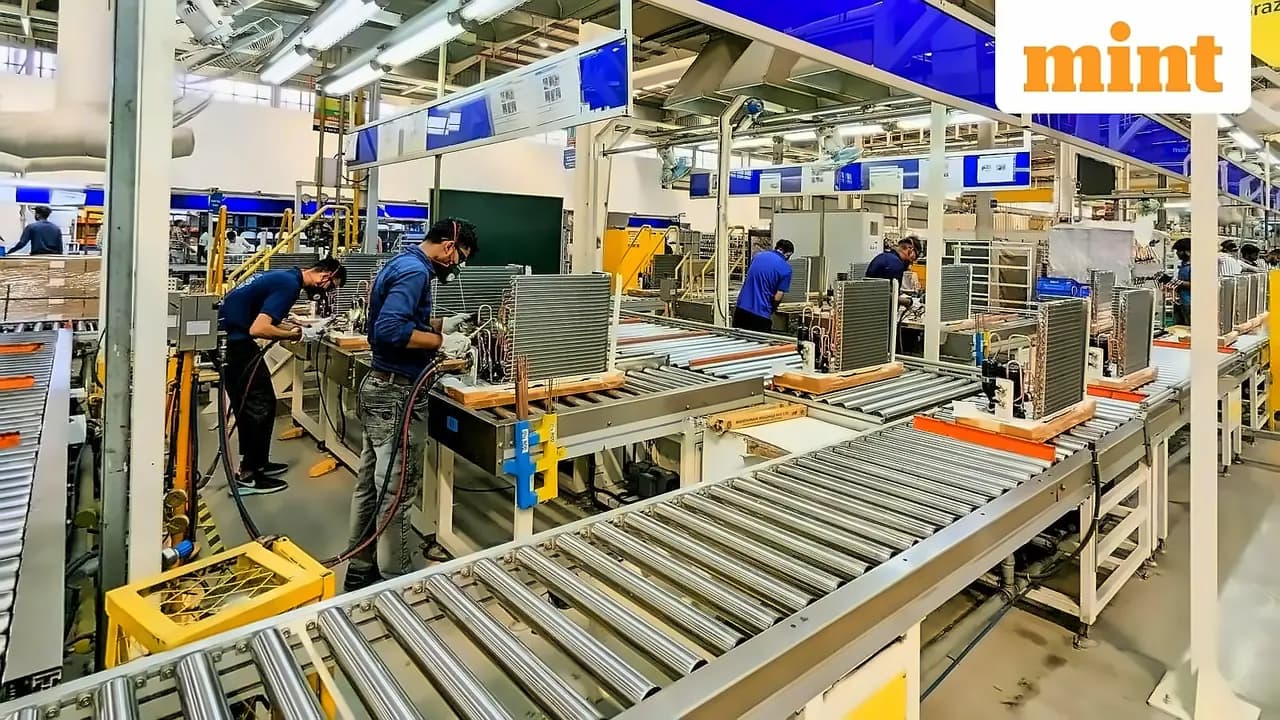
Garment factories in India supplying major international retailers are experiencing significant productivity losses due to extreme heat conditions. According to the latest NYU Stern Center for Business and Human Rights report, suppliers to Fast Retailing Co.'s Uniqlo, Marks & Spencer Plc, Tesco Plc, Primark, D-Mart, Target, Tommy Hilfiger and NEXT are suffering productivity losses of up to 10% as a result of the nation's extreme heat. Research conducted at 10 facilities across five states (Tamil Nadu, Haryana, Odisha, Maharashtra and Karnataka) found that high temperatures are impacting product quality, delivery reliability, and contributing to higher employee absenteeism during peak summer months. As reported by Bloomberg, the study highlights mounting climate-related risks for India's $39 billion apparel export industry, which employs 45 million people — 70% of whom are women — working in hot and humid conditions.

The report highlights the severity of India's current heat wave conditions, with large areas of the nation experiencing temperatures above 45 degrees Celsius (113F). Factory managers reported that severe temperatures are causing sweat stains on fabric, dust contamination, stitching errors, and forced production halts. At a knitwear factory in Faridabad, grid outages and generator overloads during an April 2024 heatwave forced the temporary closure of one of three production floors. Workers interviewed for the report described dizziness, headaches, dehydration, fainting, heat rashes, kidney and urinary issues, and higher out-of-pocket healthcare costs during peak heat periods, alongside wage losses from heat-related absences. According to the NYU Stern Center, indoor temperatures reached 43-45 degrees Celsius during peak summer months — up to 5 degrees Celsius higher than already dangerous outdoor temperatures at one dyeing and processing facility visited.
The report reveals the substantial financial burden heat extremes place on Indian workers and the broader apparel industry. According to the NYU Stern Center, heat-related expenses cost Indian workers ₹500-1,000 per month, representing a significant share of the average monthly income of ₹11,500-18,000. The International Labour Organization estimates that 70% of the global working population, or 2.41 billion workers, is exposed to extreme heat every year, leading to 23 million non-fatal injuries and 19,000 deaths annually. The study identifies significant gaps in how global brands monitor heat conditions, with only 35% of customers requiring suppliers to track factory temperatures, despite nearly all customers acknowledging extreme heat risks to production. As reported by Bloomberg, half of the companies surveyed said they had not asked manufacturers whether extreme heat had disrupted production, while another 12.5% were unsure if such inquiries had been made.
The UN Food and Agriculture Organization and World Meteorological Organization have warned that the world's food supply faces a quadruple attack on its stability. According to the UN report, the planet has already heated by 1.4C since the preindustrial era, gouging global agricultural productivity by 21%, equivalent to wasting seven years of productivity gains. Many staple crops such as soy, wheat and corn don't do well when temperatures stay above 30 degrees Celsius (86 degrees Fahrenheit) for very long, while livestock suffers in prolonged temperatures above 25C (77F). The report notes that there has been no sign yet of food crops or animals evolving to better withstand such heat. Marine heat waves are also causing devastation, with a heat wave in the Bering Sea in 2018 and 2019 killing off 90% of snow crabs, leading to the unprecedented halt to Alaskan crab fishing in 2022 and 2023.
The NYU Stern Center report emphasizes that global brands have both business and ethical responsibilities to address climate risks in their supply chains. According to Michael Posner, director of the NYU Stern Center, "brands that source from heat-exposed regions have both a business interest and a responsibility to act." The report recommends that global buyers establish enforceable heat standards, require temperature monitoring, share the costs of cooling and ventilation upgrades, and introduce greater flexibility in purchasing practices to accommodate climate-related disruptions. As Posner noted, "you can't manage a risk that you don't measure," highlighting the critical need for better monitoring systems across the global apparel supply chain. The report calls on global apparel brands and buyers to move beyond voluntary guidance and treat extreme heat as a measurable workplace safety and supply-chain risk, with suppliers indicating they would invest further in heat-mitigation measures if brands required them, provided technical support or shared the cost.