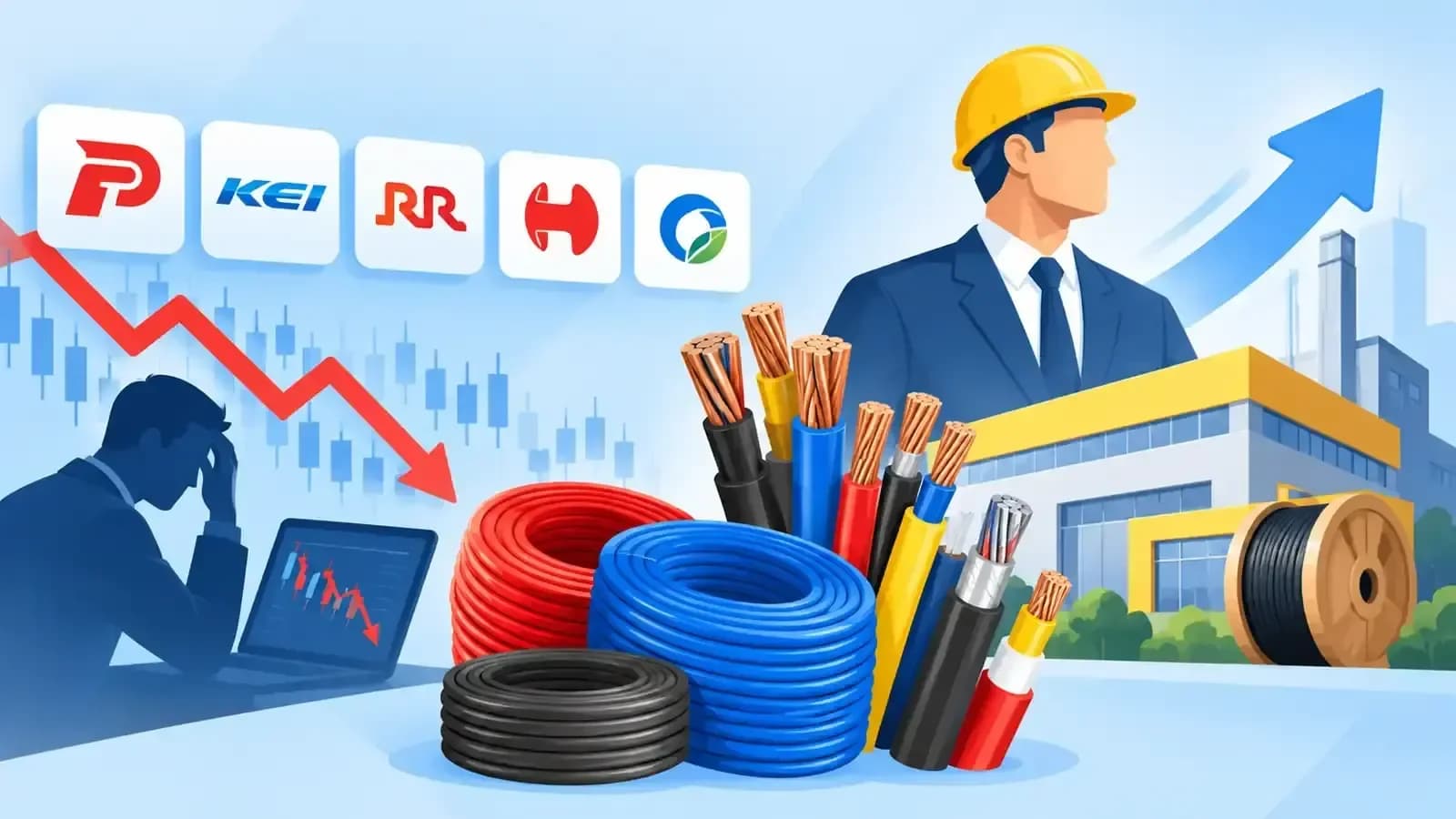
Shares of leading wires and cables companies experienced significant declines on Tuesday, September 1, following UltraTech Cement's commercial production launch at its Jhagadia facility in Gujarat. According to reports from CNBC TV18, KEI Industries shares fell 6% to ₹5,398.5, while Polycab India dropped 4.7% to ₹9,000 and Havells India declined 1.8% to ₹1,221.3. The market reaction reflects investor concerns about intensified competition from India's largest cement company entering the wires and cables segment. However, the broader metal sector faced additional pressure as Nifty Metal fell nearly 3% with all constituents trading lower, while Hindustan Zinc and National Aluminium Co. fell 3-4%. As per Informist Media reports, the decline was attributed to bullion prices falling after US Federal Reserve Chairman Kevin Warsh's speech at Jackson Hole Symposium, where he hinted at the possibility of interest rate hikes.
The UltraTech Cement facility at Jhagadia has commenced commercial production ahead of its earlier targeted commissioning timeline of December 2026. As reported by CNBC TV18, the facility has an installed capacity of 10.98 lakh kilometres for house wires and light-duty cables. The plant's strategic location in Gujarat provides proximity to key raw materials, particularly copper, which is expected to support operational efficiency. The company had initially announced its entry into the wires and cables business in February 2025 with a planned investment of around ₹1,800 crore over two years. According to CNBC TV18 reports, UltraTech had committed approximately ₹888 crore of its planned capex as of June 2026. The company has set ambitious targets for its wires and cables business, indicating it is targeting an asset turnover of 5-7 times, an internal rate of return (IRR) of around 25% on the capex and return on capital employed (ROCE) of over 20%. The commercial production launch came after the company indicated during its Q1FY27 earnings call that the wires and cables business would be launched in Q3FY27.
According to CNBC TV18 reports, UltraTech had committed approximately ₹888 crore of its planned capex as of June 2026. The company has set ambitious targets for its wires and cables business, indicating it is targeting an asset turnover of 5-7 times, an internal rate of return (IRR) of around 25% on the capex and return on capital employed (ROCE) of over 20%. The commercial production launch came after the company indicated during its Q1FY27 earnings call that the wires and cables business would be launched in Q3FY27.
The broader metal sector faced significant pressure as Nifty Metal fell nearly 3% with all constituents trading lower. According to Informist Media reports, Hindustan Zinc and National Aluminium Co. were among the top laggards in the Nifty 200, down about 4% and 3% respectively. The decline was attributed to bullion prices falling after US Federal Reserve Chairman Kevin Warsh's speech at Jackson Hole Symposium, where he hinted at the possibility of interest rate hikes. October futures of silver fell nearly 1% to $66.86 per ounce on the COMEX, while September futures of aluminium were flat at ₹345.7 per kilogram on the Multi Commodity Exchange. Despite the sector-wide decline, some individual metal stocks showed resilience, with Rasi Electrodes reporting 28.4% YoY growth in net profit to ₹351.6 lakh despite an 11.6% revenue decline due to cyclical steel price corrections.
Despite the recent decline, KEI Industries stock remains up 20% year-to-date, while Polycab is still up 17% in 2026 according to CNBC TV18 reports. Havells India has underperformed its peers, declining 14% year-to-date. On the positive side, UltraTech Cement shares traded 0.4% higher at ₹11,500 on Tuesday, though the stock is down 3.5% year-to-date. The market reaction reflects investor concerns about the competitive dynamics in the wires and cables sector following UltraTech's entry into this new business vertical, compounded by broader metal sector weakness. Meanwhile, Rasi Electrodes demonstrated operational efficiency improvements with profit before tax rising to ₹478.4 lakh from ₹376.8 lakh, while achieving debt-free status with finance costs dropping significantly to ₹4.5 lakh from ₹14.1 lakh.