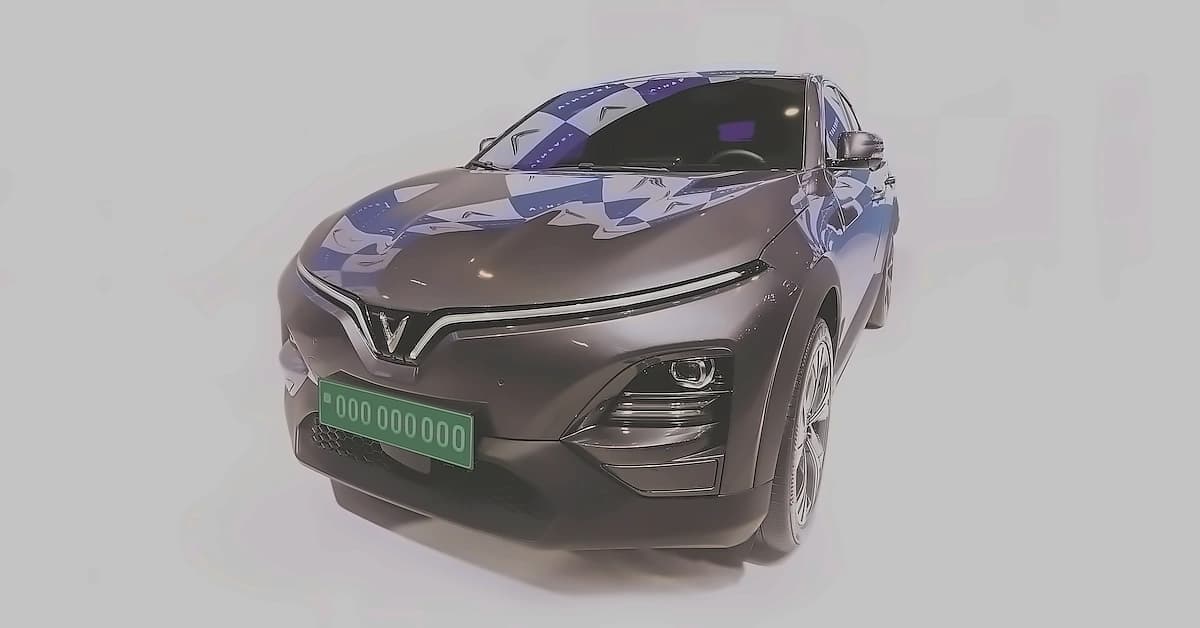
VinFast, the automotive subsidiary of Vietnam's $12.83 billion Vingroup conglomerate, has achieved remarkable success in India's electric vehicle market. According to reports from Business Standard, the company sold 10,000 electric cars cumulatively by May 2026, catapulting it from obscurity to the fifth-largest EV maker in India within just seven months. By June 2026, VinFast held a 4% share of the Indian EV car market, surpassing global giants Hyundai, Kia, and BYD. The company's aggressive pricing strategy and 10-year battery warranty with buyback offer have proven effective in capturing market share.
VinFast's competitive positioning is built on aggressive pricing across its product range. As reported by Business Standard, the company launched its VF 6 compact electric SUV at ₹16.29 lakh and VF 7 midsize SUV at ₹20.89 lakh, both priced lower than models from Tata Motors, Hyundai, and JSW MG Motors. The company recently introduced its third car model, the VF MPF 7 seven-seater multi-purpose vehicle for ₹24.49 lakh. VinFast has committed to introducing one new model every six months and plans to launch the VF 3 compact SUV below ₹10 lakh by the end of 2026.
The company has established a 400-acre manufacturing facility in Thoothukudi, Tamil Nadu, with operations beginning in October 2025 after signing an MoU with the Tamil Nadu government in January 2024. According to Business Standard, VinFast has committed $500 million for the first phase of five years, targeting production of 50,000 electric vehicles annually, with plans to scale up to 150,000 vehicles per annum. The company is evaluating India as an export hub and has signed a follow-up MoU with the Tamil Nadu government in December 2025 for an additional 500 acres to assemble electric buses and two-wheelers.
Despite strong Indian performance, VinFast faces significant financial challenges globally. As reported by Business Standard, the company's global sales nearly doubled to 196,912 vehicles in CY 2025, but 89% of sales came from Vietnam. In the US market, sales plummeted 57% to 1,413 vehicles in CY 2025, while European operations showed no improvement. The company reported net losses of $3.9 billion on revenue of $3.6 billion in CY 2025, with negative margins of 42.5% and accumulated losses of $12.3 billion. VinFast's auditors EY raised concerns about the company's ability to continue as a going concern in April 2026.
VinFast faces significant competitive challenges in India's established EV market. According to Business Standard, the top three players - Tata Motors, M&M, and JSW MG Motors - account for over 87% of electric car sales in FY26. The company is also entering the hyper-competitive electric two-wheeler space, where home-grown companies Bajaj, TVS, Ather Energy, and Hero MotoCorp control over 84% of the market in FY26. In the ride-hailing segment, VinFast's SM Green India faces competition from Uber, Rapido, and Ola Electric, which dominate with over 92% share of the passenger car mobility market. Despite these challenges, VinFast plans to expand its dealer network to 75 dealers across 60 cities in 2026, up from the current 50 locations.