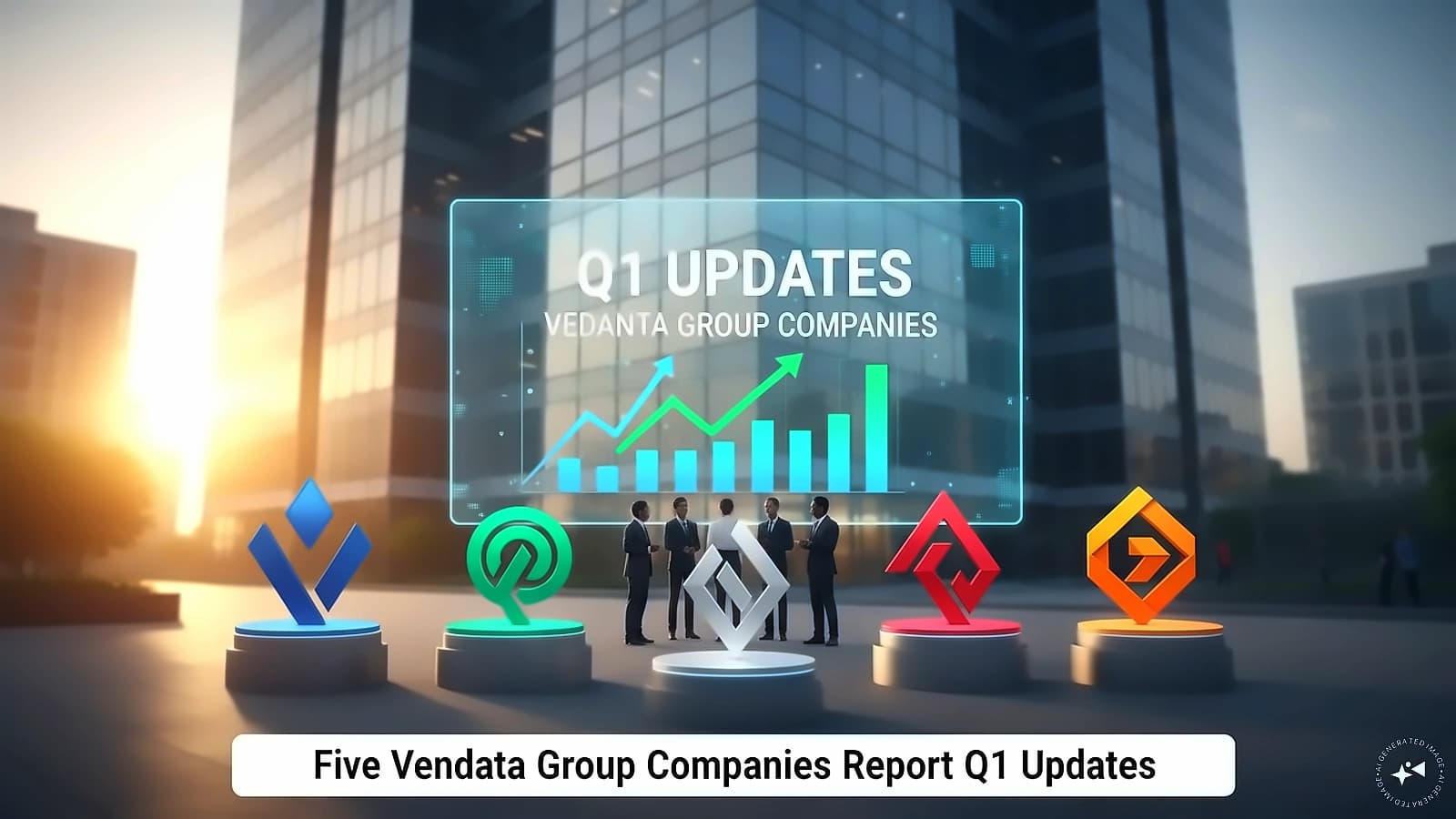
Vedanta Group stocks gained on Monday, recovering from a recent correction after their stock exchange debut. Vedanta Iron and Steel shares rose nearly 5%, while Vedanta Oil and Gas also saw an increase. Vedanta Power shares experienced a slight gain, and Vedanta Aluminium shares traded higher today. The four Vedanta Group stocks made their much-awaited debut on stock exchanges on June 15, concluding the mega demerger that marked one of the biggest corporate restructurings in India's metals and mining space. As per The Economic Times, the positive momentum extended to Vedanta Power, which was trading 2.22% higher at ₹42.75, though Vedanta Iron and Steel declined 5% to ₹34.76. Following the demerger completion in May 2026, the group's flagship company Vedanta Ltd retained businesses such as Hindustan Zinc, Zinc International and its copper operations, while the demerged entities listed on BSE and NSE on June 15, 2026.
Hindustan Zinc shares were trading nearly 2% higher at ₹541.05 on the NSE, as reported by The Economic Times. The company recently announced its Q1 FY27 operational update, revealing that mined metal production rose 1% year-on-year to 268 kt, while saleable metal production increased 4% to 260 kt, driven by higher zinc output despite a 2% decline in refined lead production. The company achieved what it described as the 'best-ever first quarter mined metal production' at 268,000 tonnes, with refined zinc production reaching 213,000 tonnes. Under Zinc International, total mined metal production declined 14% to 48 kt from 57 kt in the corresponding quarter last year. The company's port operations at the Vizag General Cargo Berth remained strong, with discharge volumes rising 40% and dispatch volumes increasing 11%.
According to The Economic Times, Vedanta Ltd shares were trading flat at ₹274.55 per unit on the bourse, hitting a high of ₹278.80 during the session before retreating. Vedanta Aluminium reported a 5% year-on-year increase in aluminium production to 632 kt during the quarter, with the company last week reporting its highest-ever quarterly aluminium production of 6.32 lakh tonnes in Q1 FY27, marking a 5% YoY and 3% quarter-on-quarter increase. Meanwhile, Vedanta Power announced that power sales rose 38% to 5,225 million units in Q1 FY27, with Meenakshi Energy recording the highest growth among generating assets with power sales rising 245% year-on-year to 1,350 million units. Ferro Alloys showed mixed performance with ore production increasing 41% while global copper rod sales declined 51%, though copper sales rose 3%. Vedanta Iron & Steel reported a 4% increase in saleable iron ore production to 2.6 million DMT and steel production rose 4% to 582 kt.
Vedanta Oil & Gas shares rebounded last week and the trend continued on Monday, rising around 3% to trade at ₹39.89 apiece, as reported by The Economic Times. The stock has now gained more than 11% in four consecutive sessions. Vedanta Oil & Gas debuted at ₹38 apiece on June 15 and then jumped more than 25% to hit a record high at ₹47.60 apiece earlier this month, though it then sharply declined. Despite the production challenges, the company received a significant legal boost after the Delhi High Court upheld two foreign arbitral awards worth around $99 million in favour of Vedanta and Singapore-based Ravva Oil Company in a long-running dispute related to the production sharing contract for the Ravva oil field in the Krishna Godavari basin.
Several brokerages have issued bullish calls for Vedanta Aluminium Metal shares, with Nuvama Institutional Equities initiating coverage with a 'Buy' rating and target price of ₹540 per share, implying an upside potential of nearly 22% from the stock's previous closing price. The brokerage highlighted that Vedanta Aluminium Metal is the fastest-expanding primary aluminium company in India, with its EBITDA likely to compound at 29% over FY26–28. Motilal Oswal Financial Services also initiated coverage with a 'Buy' rating and target price of ₹540 per share, calling the company India's largest pure-play primary aluminum company and the third-largest aluminum producer globally, excluding China. The restructuring was aimed at unlocking value across individual businesses while helping reduce debt at the parent company and attracting investors to each standalone vertical.