US President Donald Trump has escalated economic pressure on Iran and its allies, announcing what he calls 'economic D-Day' on Truth Social. Trump wrote in all capital letters that he was launching 'the most crushing economic operation ever taken against any country' against Iran, without providing specific details or target nations. The threat comes after a 60-day ceasefire expired on Monday without any diplomatic settlement to the war that began in February. Trump warned that 'ANY country that allows its financial institutions, businesses, airports, or government entities to provide any type of lifeline to Iran will itself face TREMENDOUS Economic Consequences'. He specifically targeted oil smuggling, swap lines, cash transfers, exchange houses, ship registries, and front companies, stating 'it all needs to stop NOW'. Latest reports indicate that Treasury Secretary Scott Bessent claimed the new round of sanctions would 'collapse' the Iranian government.

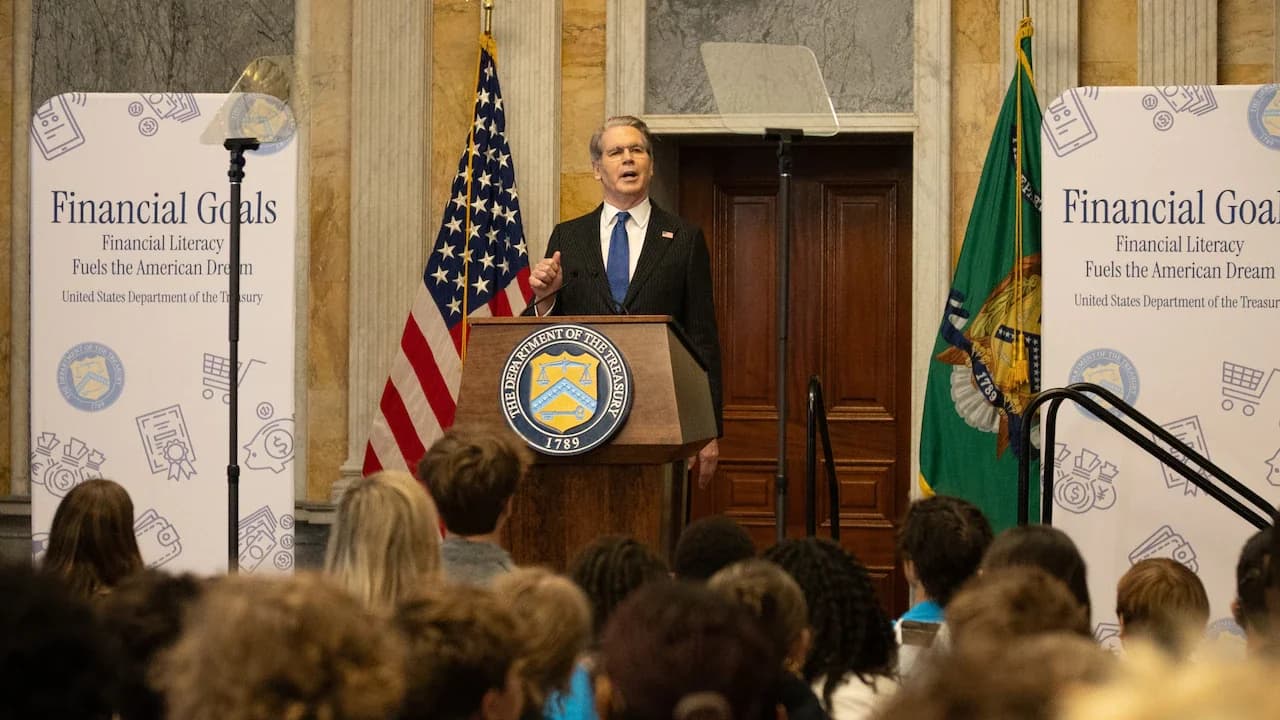
Treasury Secretary Scott Bessent announced the launch of what he called 'economic asphyxiation' against Iran's financial connections globally. Speaking at a press conference, Bessent warned that President Trump is calling world leaders with 'specific requests to cease their interactions with the regime' and countries will face a specific timeline to shut down links with Iran or face unilateral US punishment. The Treasury unveiled sanctions against more than 60 entities on Monday, with Bessent focusing on five of Iran's 'most vital lifelines,' including digital assets, technology, gold, aviation and shipping. He also threatened to sanction a major financial institution over Iran ties by the end of this week but didn't name the target. Bessent acknowledged the risk of putting the US on a collision course with China, which buys the bulk of Iran's oil, saying 'Why would I want to blow up the global financial system?'
The United Arab Emirates announced it would sever all financial and economic ties with Iran following new missile threats from the country. The UAE's defence ministry detected two ballistic missiles launched from Iran targeting maritime traffic, both of which landed in the sea. Iranian entities have long used Dubai's financial system to transfer money through exchange houses and shell companies. Following the UAE's decision, Iran's armed forces warned neighbouring Gulf states against providing support to the US military, saying any assistance would be considered collusion. The UAE's suspension of trade with Iran has further limited competition for Middle Eastern carriers operating to and from India, creating additional challenges for Indian airlines already struggling with geopolitical tensions.
Indian carriers experienced a 26% decline in international carriage during the April-June quarter, significantly outpacing the 10.5% drop in overall passenger traffic to and from India, according to DGCA data. This sharp contrast highlights how the US-Iran conflict has disproportionately impacted domestic airlines compared to their foreign counterparts. Air India Group saw its international carriage fall by 35%, while IndiGo experienced a 15.4% decline in international operations during the same period. The conflict has created a challenging operating environment for Indian carriers, with geopolitical tensions disrupting traditional air travel patterns and creating additional operational costs.
Ship traffic through the Strait of Hormuz has been significantly impacted by the ongoing US-Iran conflict, with confirmed crossings falling 19.5% to 95 transits last week. Latest data from maritime intelligence firm Kpler shows that 236 ships transited through the strait between August 1-19, including oil, gas, dry cargo and chemical vessels. Of these, 83 openly used the Iranian route, only 3 publicly used the Omani route, and 2 used the old pre-war route. However, 148 vessels went dark or used unknown routes, representing more than 60% of ships that passed through the strait during this period. The UAE Foreign Ministry has suspended trade with Iran, citing regional escalations that undermine peace and security.