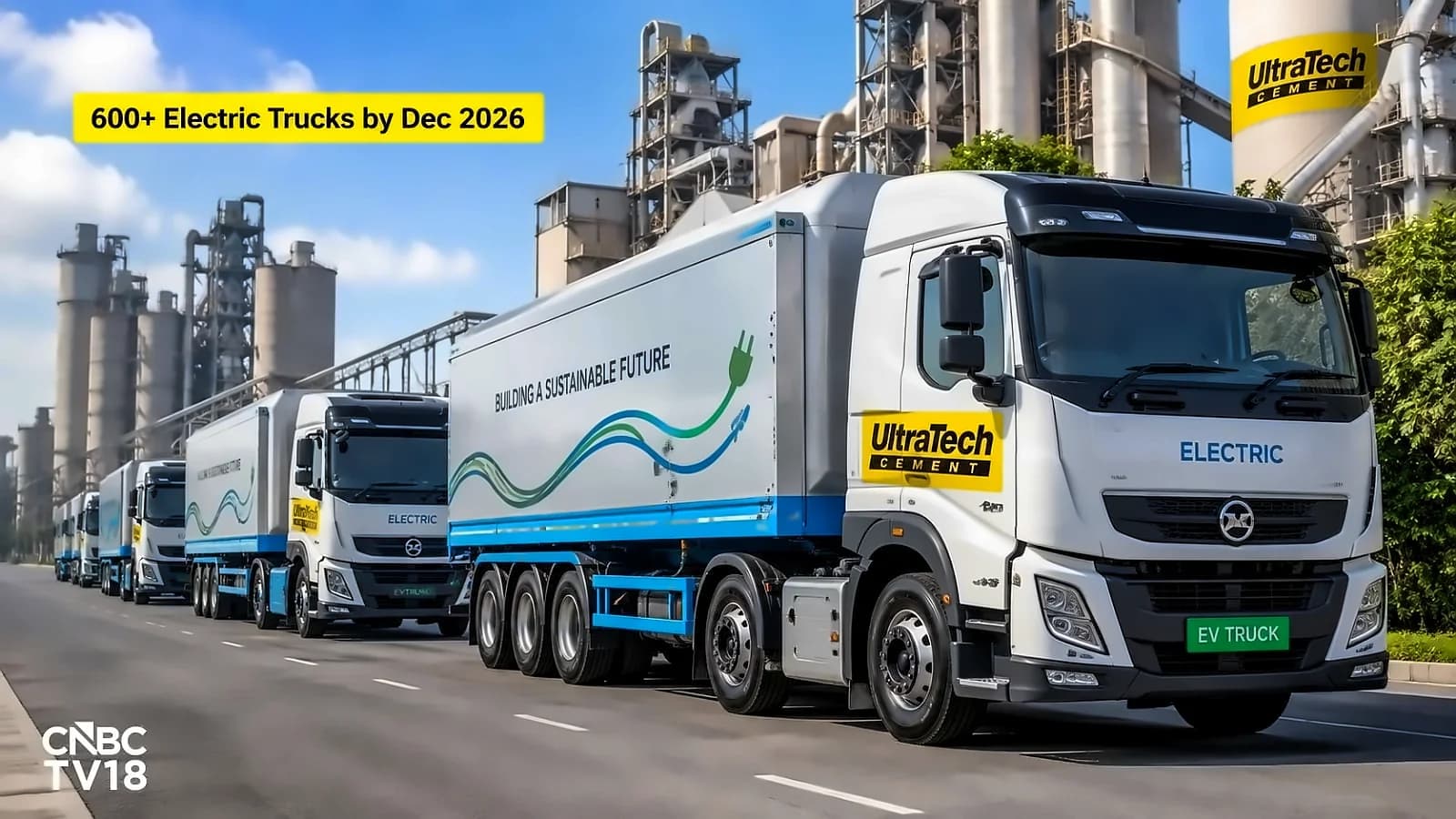
Cement major UltraTech Cement has received board approval for its Finance Committee's earlier proposal to raise up to ₹5,000 crore through the issuance of non-convertible debentures (NCDs) on a private placement basis. According to the company's BSE filing, the fundraising will involve the issuance of up to 5,00,000 fully paid, unsecured, listed, rated, redeemable, rupee-denominated, non-convertible and non-cumulative debentures with a face value of ₹1,00,000 each, aggregating up to ₹5,000 crore. The proposed fundraising will be undertaken in one or more tranches through private placement, offering the company flexibility to time the issuances according to market conditions and interest rate trends. Further details regarding the tenure, coupon rate and timeline of the tranches are awaited.
The fundraising approval comes after UltraTech Cement reported robust performance for the quarter ended June 30, 2026. As reported by the company, net profit attributable to owners grew 16.8% year-on-year to ₹2,599.3 crore in Q1FY27, compared with the previous year. Revenue from operations increased 15.9% to ₹24,648.20 crore from the corresponding quarter last year. At the operating level, earnings before interest, tax, depreciation and amortisation (EBITDA) rose 13.7% YoY to ₹5,015 crore, while EBITDA margin stood at 20.3%, compared with 20.7% in the year-ago quarter. The company's operating EBITDA per tonne improved to ₹1,214 from ₹1,198 a year ago, reflecting the company's continued focus on operational efficiency and cost discipline despite facing fuel cost shocks and logistical pressures from West Asia tensions.
According to latest reports from Business Standard, UltraTech Cement is in talks with merchant bankers and arrangers to raise what would be its biggest rupee bond funding. The country's largest cement producer by capacity plans to raise an aggregate ₹5,000 crore through bonds maturing in two-and-a-half years, three-and-a-half years and five years. The company is targeting ₹1,500 crore each in the shorter two tranches at annual coupons of 7.22% and 7.23% respectively, and ₹2,000 crore in the five-year tranche at 7.25%. The bankers said UltraTech aimed to complete the sale before the Reserve Bank of India's monetary policy decision on August 5. The bonds are rated AAA by Crisil and may attract demand from mutual funds seeking high-quality credit, with the company having ₹3,500 crore of bonds outstanding, including ₹500 crore due within a month.
According to the company's latest disclosures, UltraTech Cement reported net debt of ₹15,875 crore as of June 2026, with its capacity expansion projects under execution backed by capital expenditure of about ₹17,000 crore over the next two to two-and-a-half years. During the company's earnings call, CFO Atul Daga stated that consolidated capacity would be taken beyond 242 MTPA, with grey cement capacity reaching 212.7 MTPA by the end of FY27. The company has already crossed 200.1 MTPA of domestic grey cement capacity and 205.5 MTPA of global capacity in April 2026. With net debt-to-EBITDA ratio of 0.87 times as of June 2026, Daga expressed confidence that the company would end FY27 with a net debt-to-EBITDA ratio below one time, demonstrating strong financial management and debt reduction trajectory.
According to the company's results, grey cement sales volume grew 12.2% YoY to 41.31 million tonnes during the quarter. Domestic sales volumes increased 13.1% to 39.2 million tonnes, while capacity utilisation stood at 81% on an installed domestic grey cement capacity of 200.1 MTPA. The company has now crossed 205.5 MTPA of consolidated capacity as of June 30, 2026, including 5.4 MTPA in the UAE. UltraTech also confirmed it had crossed 200.1 MTPA of domestic grey cement capacity and 205.5 MTPA of global capacity, providing it with massive scale to negotiate better supply terms and maintain stable operating performance despite regional pricing pressures. The company's nearly 17% rise in first-quarter profit earlier this month demonstrated its ability to use scale and market position to absorb higher fuel costs linked to the West Asia conflict better than smaller rivals.