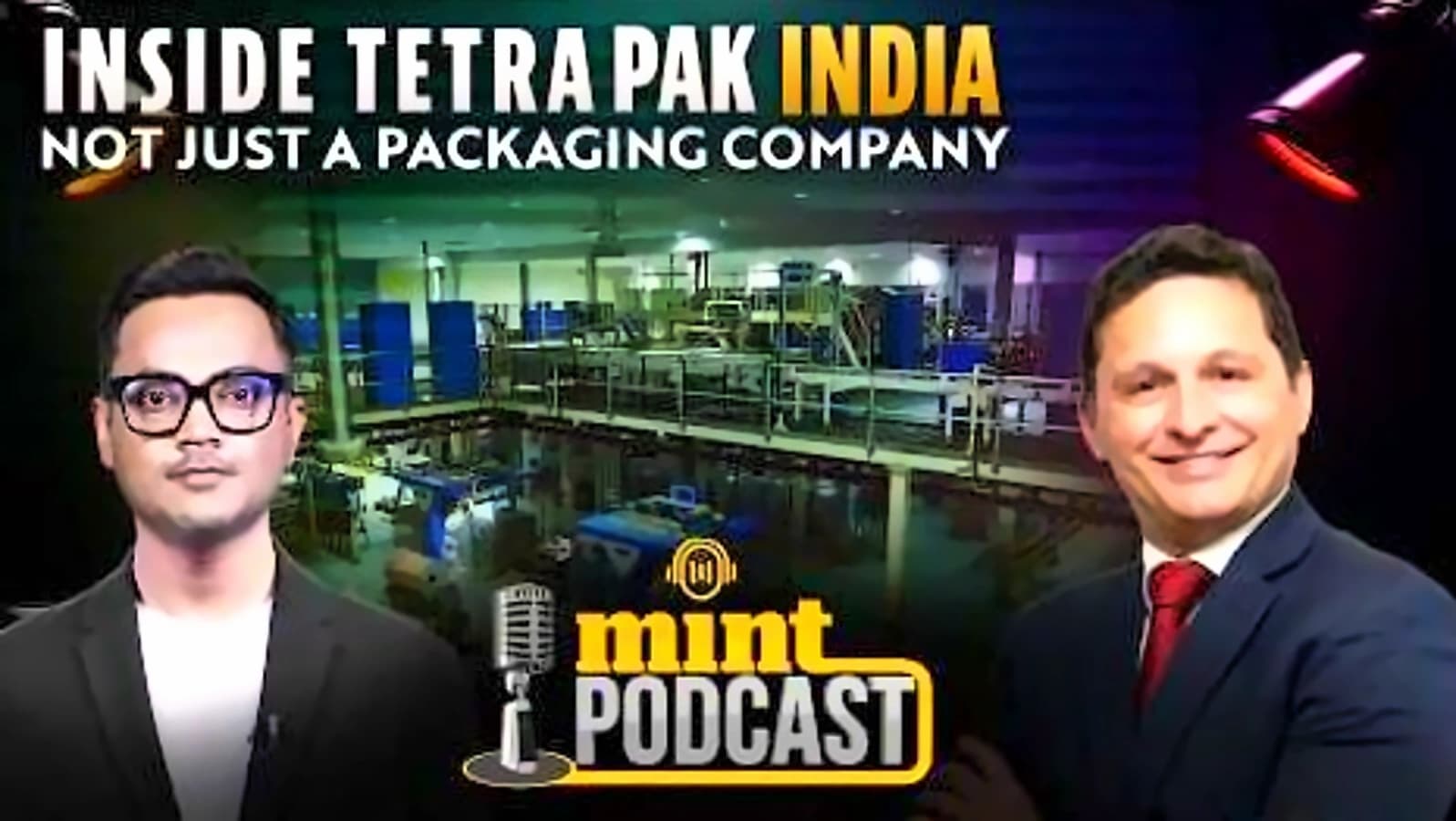
Tetra Pak's Chakan plant, operational since 2012, has become the company's largest facility outside Sweden, employing around 1,500 people across its 45-acre site. According to reports from LiveMint, the facility now manufactures 85% of equipment locally, with 75% of components sourced from Indian suppliers. The plant's capabilities include packaging material production, food processing equipment manufacturing, a straw factory, renovation center, recipe formulation center, and back-office support hubs. Last year, the facility exported more than 400 pieces of equipment to 56 countries, demonstrating the plant's global manufacturing capabilities. The growth trajectory aligns with the global liquid carton packaging market, which was valued at USD 16.8 billion in 2025 and is projected to reach USD 28.4 billion by 2034 at a 5.9% CAGR during the forecast period.
The company has developed a tailored approach to serve different customer segments across India. As reported by LiveMint, large, established brands receive dedicated account managers and on-site engineering support, while smaller and newer businesses get assistance with formulation, market research, and co-packing through a network of 450 machines across India. This comprehensive support structure reflects Tetra Pak's evolution from a packaging supplier to a complete production and operations support provider for food and beverage brands. The market outlook supports this strategy, with manufacturers increasingly adopting renewable materials and lightweight designs that minimize carbon footprint throughout the supply chain.
Tetra Pak has invested approximately €10 million in building recycling infrastructure in India over the past two decades, according to LiveMint reports. The company's sustainability initiatives include collection points and aggregation centers that help recover used cartons for conversion into secondary materials such as roof tiles and school furniture. Simões cited estimates suggesting that roughly 30% of food produced globally is lost or wasted, arguing that better packaging and processing can help reduce these losses. The company's six-layer aseptic cartons and ultra-high temperature processing can extend shelf life for up to six months without preservatives by eliminating contact with air and external microorganisms. Environmental concerns continue reshaping purchasing decisions, with manufacturers increasingly adopting renewable materials and lightweight designs that minimize carbon footprint throughout the supply chain.
Cartons demonstrate significant environmental advantages through their material composition and operational efficiency. Unlike many other packaging types, aseptic cartons do not require refrigeration, helping to reduce energy consumption and lower fuel consumption and associated emissions. With a high product-to-packaging ratio of 96:4 – where 96% is product and the rest packaging – cartons are designed to deliver more with less. Multiple Life Cycle Assessments demonstrate that cartons have a lower climate impact compared to single-use packaging made primarily from fossil fuel-based materials in the diary and juice categories. Cartons are made mainly from responsibly sourced paperboard, which is a renewable material that can be replenished when sourced responsibly. The company continuously strives to increase renewable content, introducing innovations such as Bonsucro-certified, sugarcane-based plastic layers and caps while developing paper-based barriers to replace ultra-thin aluminum layers.
Since entering India four decades ago, Tetra Pak has expanded beyond its core packaging business into food processing, equipment manufacturing, services, automation, and digitalization. According to LiveMint, the company now supplies food processing equipment, automation and digital solutions, along with maintenance, marketing support, and recycling ecosystem to food and beverage brands across India. This strategic diversification positions the company as a comprehensive partner in the food and beverage industry rather than just a packaging supplier. The company operates alongside other prominent entities in the competitive liquid carton packaging landscape, including Tetra Pak International S.A., Elopak ASA, SIG Combibloc Group AG, Greatview Aseptic Packaging Co., Ltd., and Nippon Paper Industries Co., Ltd., all representing diversified geographic presence and product innovation pipelines.