Tata Consumer Products delivered robust financial results for the September quarter of FY27, with consolidated net profit rising 15.6% year-on-year to ₹470.14 crore compared to ₹404 crore in the corresponding quarter last year. According to latest NSE filings, the company's revenue from core operations advanced 14% YoY to ₹5,661.13 crore in Q2 FY27 from ₹4,966 crore a year earlier. The revenue performance exceeded market expectations, with 22 analysts tracking the stock estimating revenue at ₹5,583.2 crore for the quarter, representing a 0.98% beat over consensus projections. However, the company faced significant headwinds from weak tea demand and rising commodity costs, with India tea and coffee revenue declining 1% year-on-year to ₹1,244 crore amid flat volumes and weak category demand. Shares of Tata Consumer Products rallied 7% to touch an intraday high of ₹999 on Tuesday, October 27, reflecting positive market sentiment on the Q2 results. The stock has declined 15% year-to-date, compared with a 14% fall in the Sensex, but is up 5% so far in October, on course to end its two-month losing run.
A comprehensive distribution strategy overhaul completed in February has unlocked significant growth potential across Tata Consumer's portfolio. As per MD and CEO Sunil D'Souza, "I think we've unlocked our growth by doing the split and segmented distribution right." The company separated distributors handling salt from those handling other products in markets where salt accounted for a high share of sales, and split distributors between core and growth portfolios in markets where both tea and salt had strong presence. This restructuring helped achieve underlying volume growth of 11% in the September quarter despite price hikes in products like tea and salt. Revenue from the salt segment grew 15% year-on-year, while volumes rose 9%, demonstrating the effectiveness of the distribution strategy. The growth businesses, including ready-to-drink beverages, Tata Sampann, Capital Foods and Organic India, crossed the ₹4,000 crore revenue mark in FY26, growing 24%. These businesses now account for 38% of the India business, with the Tata Sampann portfolio reporting 57% year-on-year growth driven by volume expansion.
The company achieved significant segment-wise EBIT growth during the quarter, with non-branded business reporting 28% YoY EBIT growth, international business growing 23% YoY, and Indian branded business expanding 14% YoY. As per latest reports, EBITDA margins expanded 40 basis points to 14% from the previous year, beating estimates. The consolidated net profit after tax stood at ₹467.23 crore, up 17.6% from ₹397.05 crore in Q2 of the previous fiscal. The company recorded an exceptional expense of ₹7.37 crore during Q2, relating to an adjustment in 'contingent consideration paid on a business acquisition'. Despite strong overall performance, commodity inflation weighed on the India business where margins narrowed to 11.1% from 11.5% a year earlier, with CFO Ashish Goenka attributing this contraction largely to inflation in salt. The company's margin ambitions remain vulnerable to volatility in commodity and operating costs, including oil, packaging, freight and fuel.
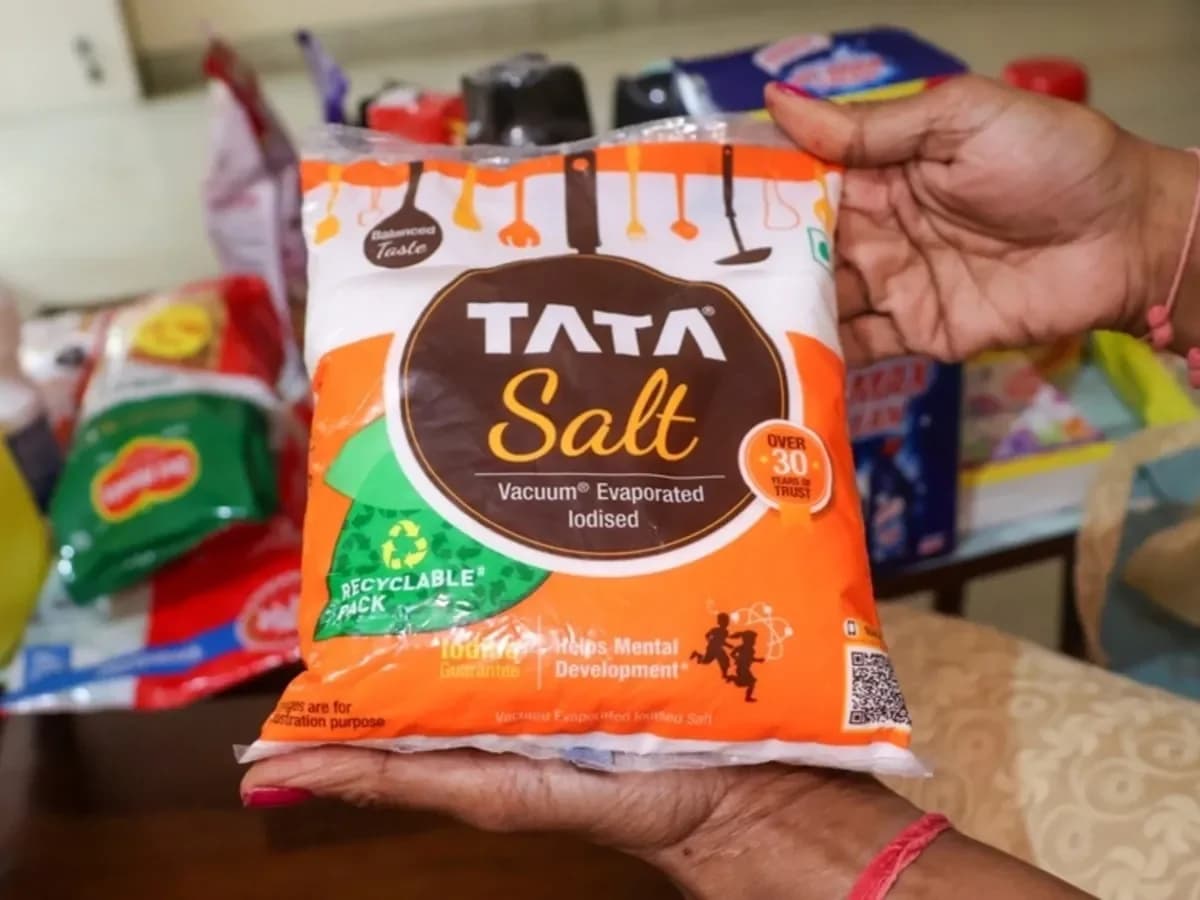
India Business reported underlying volume growth (UVG) of 11% year-on-year, with growth businesses expanding 40% and now contributing 38% of the India business. According to latest reports, Tata Sampann continued its strong growth momentum, recording 57% year-over-year growth driven by volume expansion. The salt segment revenue grew 15% during the quarter backed by 9% volume growth, while value-added and premium salt volumes grew 17%. The company implemented price hikes across products, with tea prices up 8-10% from Q1 and salt prices hiked by 13% to pass on cost inflation. As per MD and CEO Sunil D'Souza, "We had seen a little bit of inflation in Capital Foods as well, and we've taken pricing through the quarter, which will again start to flow. So across the board, I think the whole play of price increases has yet to, manifest fully into the P&L." The company also raised prices of its standard orange salt pack from ₹30 to ₹32 in May, and to ₹34 on October 1. Jefferies analysts noted that the FMCG major's Q2 performance was ahead of expectations despite inflationary pressures in tea and salt, with product price hikes expected to support growth ahead.
Brokerage firms appear positive about Tata Consumer Products for the long term after the company's Q2 results. Equirus Securities has maintained a "long" view on the stock with a December 2027 target price of ₹1,173, citing the company's ability to broaden its earnings base by scaling Growth Businesses alongside tea and salt. "Management's long-term aspiration of a 17-20% EBITDA margin for India offers a profitability reference. However, sustaining Growth Business momentum, converting stronger domestic execution in acquired businesses into overall growth, and reviving tea volumes remain key execution tests," said Equirus Securities. Systematix Shares and Stocks (India) has upgraded the stock to a buy, but cut the target price to ₹1,185 from ₹1,245 earlier. The brokerage firm raised FY27E-FY29E revenue estimates by 2% and kept EPS estimates unchanged. According to Jigar S. Patel from Anand Rathi Share and Stock Brokers, Tata Consumer Products is currently trading below its major 50-, 100-, and 200-day double exponential moving averages (DEMA), indicating weakness in the prevailing price structure. However, the Relative Strength Index (RSI) behaviour suggests that the stock could be kept on the watchlist for a potential reversal. Immediate support is near ₹950, while ₹1,020 is a crucial resistance level. A sustained breakout above ₹1,020 could indicate improving bullish momentum with an upside target of ₹1,100.
The International Business revenue increased 6.4% YoY to ₹1,256 crore but fell 2% in constant currency terms against a high base. In the UK, Tetley revenue fell 8% in constant currency as unusually hot weather hurt tea consumption, while the Canadian business continued to gain share across regular and speciality tea segments. Growth across acquired brands remained healthy, with Capital Foods and Organic India together reporting 15% revenue growth during the quarter. Export shipments were impacted by disruptions in global logistics, while domestic revenue from these businesses increased 24%. The company launched 22 new products during the quarter across health and wellness, convenience and premium segments. Citi analysts noted that the growth momentum of the company remains sustained, with a clearer path to sequential margin recovery in H2, estimating a 50 basis point expansion in EBITDA margin in H2. Despite strong quarterly performance, TCPL shares fell 2.84% to close at ₹936.50 on Monday, while the benchmark Nifty 50 rose 0.68%. However, shares of Tata Consumer Products gained 7% to touch an intraday high of ₹999 on Tuesday after the FMCG major released its results, reflecting positive market sentiment on the Q2 results.