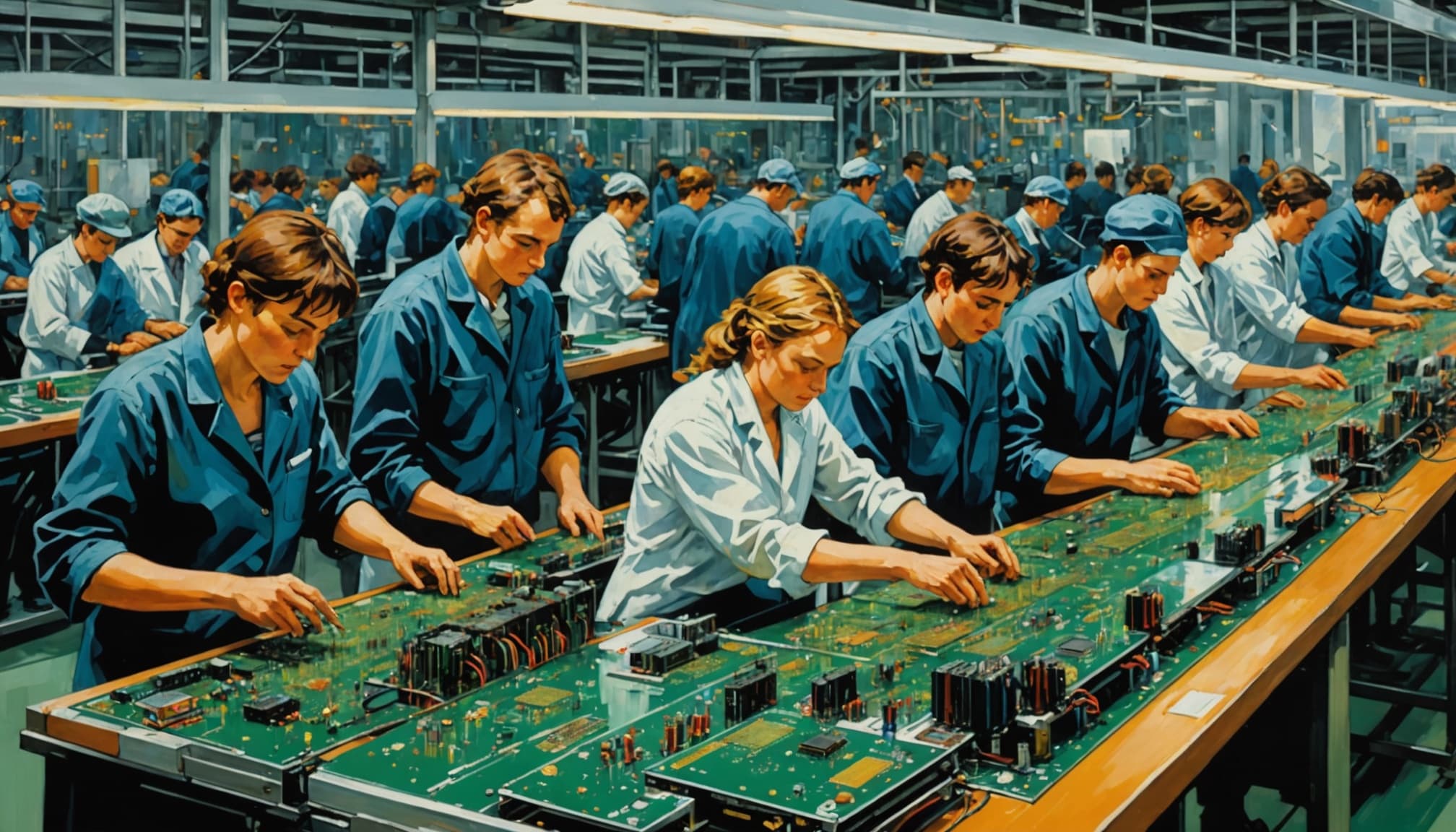
SpaceX has officially filed plans to build a next-generation, vertically integrated semiconductor manufacturing and advanced computing fabrication facility in Grimes County, Texas. The proposed upfront investment stands at $55 billion, with total investment potentially reaching $119 billion — a scale that would rank among the largest industrial commitments in U.S. history. According to manufacturing industry reports, this filing represents a qualitative shift from supplementing existing supply chains to potentially replacing them entirely for certain chip categories. The phrase "vertically integrated" in the filing is deliberate and significant, as it would give the Musk ecosystem direct control over chip design, fabrication, packaging, and testing under one roof. The filing landed days before the company's expected IPO S-1 window opens, positioning the Terafab project as a strategic move ahead of SpaceX's public market debut.
The Terafab project was first unveiled in March 2026 as a joint semiconductor initiative between Tesla, SpaceX and Musk's AI company xAI in the Austin area. As reported by Bloomberg, Musk called Terafab "a grand plan to eventually manufacture our own chips for robotics, artificial intelligence and space data centers," with the complex to be built in Austin and jointly run by Tesla and SpaceX. The initiative targets over one terawatt of AI compute capacity per year and is valued at up to $25 billion. Earlier disclosures from Musk and media reports had initially estimated the Terafab cost at between $20 billion and $25 billion. The $55 billion figure represents a substantial increase from these earlier projections, reflecting the growing scale and ambition of the project. According to Reuters, the project will use the Intel 14A process node and is jointly developed with Tesla, positioning SpaceX inside a US-domiciled process node rather than offshore fabs. The primary goal is to reduce dependence on chip manufacturers, primarily TSMC, Samsung, and Nvidia, with Musk repeatedly warning of shortages in advanced chip supply and identifying computing power as the main bottleneck for scaling up AI systems.
The latest documentation suggests SpaceX is planning a separate or expanded Terafab footprint beyond Austin, with the "SpaceX Reinvestment Zone No. 1 – 2026-001" designated around the Gibbons Creek Reservoir area. According to the official notice, a public hearing is scheduled for June 3, with the site characterized as a multiphase complex for semiconductor manufacturing and advanced compute. The county filing also designates the parcel as a fresh reinvestment zone, which is a precondition for any abatement package. Local officials have set the formal vote for a June meeting that will lock in the financial terms, with local tax abatement expected to be a key factor for advancing construction milestones. This expansion could eclipse earlier cost estimates and represent a significant increase from the initially projected $20-25 billion investment, positioning the project as a major industrial development in Texas. The roadmap calls for production in 2029, though the intended scale requires significantly more capital than initially announced.
The Terafab filing comes as SpaceX prepares for its highly anticipated IPO, with the IPO S-1 window targeted for May 18-22, 2026, and a roadshow scheduled for the week of June 8. According to The Motley Fool, the company filed confidentially with the SEC on April 1, 2026, with press consensus pointing to a $1.75 trillion to $2 trillion valuation and a $75 billion raise that would more than double Saudi Aramco's record $29.4 billion. The indicative Nasdaq listing price has been floated at roughly $525 per share. The combined entity of Tesla and SpaceX was valued at $1.25 trillion following SpaceX's acquisition of Musk's startup xAI earlier this year. The Terafab project positions Tesla and SpaceX to share a captive silicon pipeline across robotics, autonomy, and AI training workloads, with SpaceX also flagging plans to manufacture its own GPUs at the site. The strategic intent is to reduce reliance on Samsung and TSMC for advanced nodes, with the project anchoring SpaceX inside a US-domiciled process node. Investors are closely watching the June Texas vote and the May S-1 window as key markers that will determine whether positive momentum extends or fades into delay headlines.
The Terafab announcement has generated positive market reactions, with Rocket Lab gaining 5.79% and AST SpaceMobile adding 2.98% on the news. According to Reuters, the moves were not pinned to a single session but tracked the Terafab and IPO headlines, as investors often use listed peers as proxies when marquee private names move toward public offerings. The long-run impact on US suppliers can cut both ways, as Terafab volumes could lift orders for US-made equipment while trimming advanced-node bookings at Asian fabs. For Intel, a real Terafab order book on 14A would validate its foundry pivot. The filing itself flags execution risks, with the document stating "there is no assurance it will meet its Terafab objectives within expected timelines, or at all." The capex bull case is real, but execution remains gated on permits, equipment, and IPO proceeds, making the IPO event a binary catalyst that could extend the rally or reset sentiment quickly. Despite the ambitious goals, building proprietary GPUs remains challenging, as only Google and AWS have succeeded in building full-fledged AI chips for training that compete with GPU manufacturers, and even AWS's Trainium faces competitive doubts.