SpaceX is currently targeting a valuation of at least $1.8 trillion in its initial public offering, according to people familiar with the matter as reported by Bloomberg News. The rocket, data and artificial intelligence firm is seeking to raise $75 billion to $80 billion, which would make it the biggest IPO of all time. This represents a downward revision from the company's previous target of above $2 trillion that was reported in April, as the company has settled on a more conservative valuation after consultations with advisers and investors. The company is expected to start formal marketing of its IPO as soon as June 4 and to price as early as June 11, with the IPO scheduled for June 12.
More than 1,000 current and former SpaceX employees have banded together to negotiate with wealth management firms for better pricing and access to sophisticated tax-saving financial products ahead of the IPO. The group has considered over 20 financial advisers and private banks, according to a May document summarizing the effort that was viewed by Bloomberg. The document said they were "leveraging collective power" in order to get "significantly lower fees" for financial advice – with a goal of paying less than 0.5% on all assets under management, rather than the traditional 1% fee. The effort has been organized in a private Slack room and led by former engineer Aisha Ayoub, with the group representing at least $2 billion in wealth initially, now estimated to be worth as much as $20 billion. The group is seeking complex strategies like equity-based lending, direct indexing, and variable prepaid forward contracts to tap the value of their shares without tax implications.
SpaceX had ₹1,57,000 crore ($18.7 billion) in revenue in 2025, up from ₹1,16,000 crore ($14 billion) the previous year. During that period, the company swung from a profit of ₹6,470 crore ($791 million) in 2024 to a loss of ₹41,000 crore ($4.94 billion) last year, as detailed in the company's IPO filing. In the first three months of this year, SpaceX made $4.7 billion in sales but still posted a $4.3 billion loss. The company's balance sheet shows $102 billion in assets, including rockets and equipment, along with debts of $60.5 billion. The company is only floating roughly 4.3% of its shares to the public, with the other AI-3 companies also providing relatively small free float.
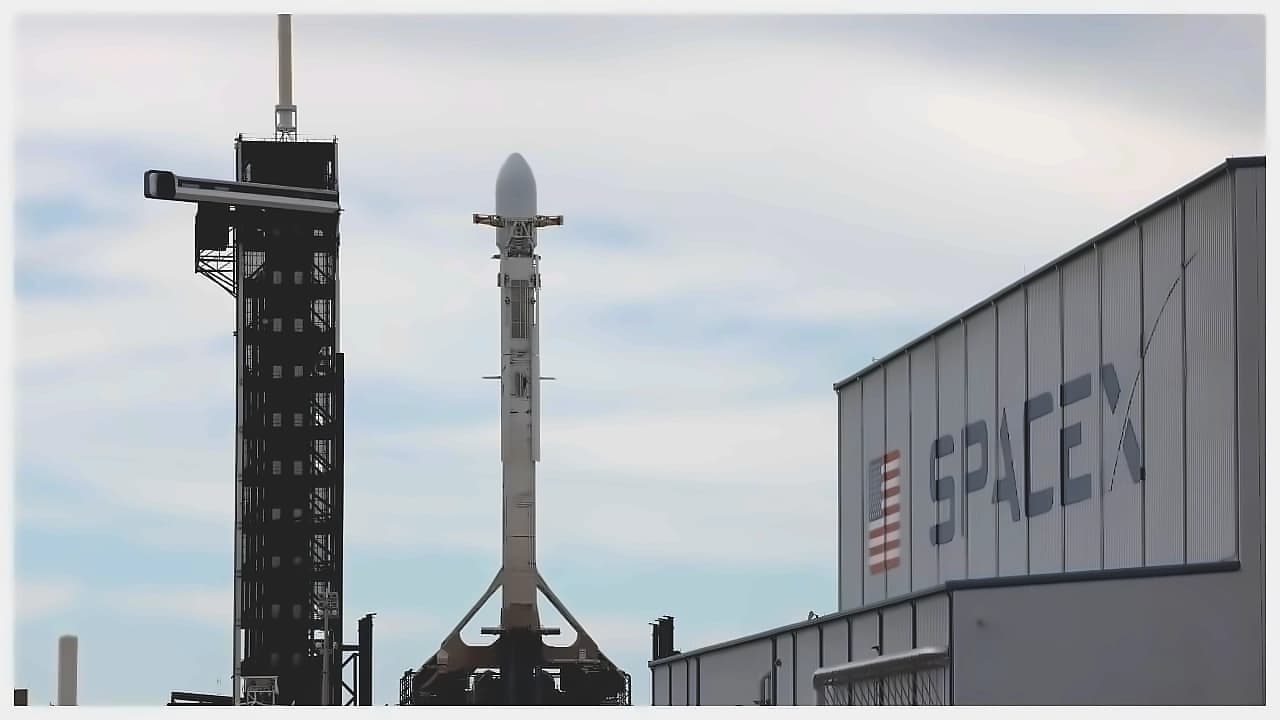
The company's pitch to investors shows its evolution from focusing on making reusable rockets and satellite internet to an AI services and infrastructure giant. SpaceX announced in February it had acquired Musk's xAI, housing the Grok chatbot and social media platform X, which gave SpaceX a valuation of $1 trillion at the time and xAI a value of $250 billion. The company is dreaming of orbital data centers and is targeting a total addressable market of $28.5 trillion. The AI-3 companies are expected to have no trouble raising $200 billion in the IPO market, which has financed $232 billion in new equity issuance over the past 12 months through April.
Goldman Sachs Group Inc., Morgan Stanley, Bank of America Corp., Citigroup Inc. and JPMorgan Chase & Co. are leading the IPO along with 18 other banks. The company, known formally as Space Exploration Technologies Corp., expects to make its debut on Nasdaq and Nasdaq Texas under the symbol SPCX. SpaceX is bargaining for one of the lowest IPO fee structures in Wall Street history, negotiating with leading bankers for a 0.75% fee. However, the banks are still likely to rake in $500 million for the issue. Bloomberg Intelligence estimates that S&P 500 funds would need to absorb 19% of SpaceX's public float within six months, with the Russell 1000 and Nasdaq-100 funds absorbing another 24%. The IPO, expected to trade under the symbol SPCX, could become the biggest stock market launch in Wall Street history this month.