Union Home Minister Amit Shah declared India's pharmaceutical sector a national strategic asset during the RV Patel Pharminova Awards 2026 ceremony organized by Troikaa Pharmaceuticals Ltd at Sindhu Bhavan in Ahmedabad. According to reports from IANS, Shah emphasized that India must not only achieve self-reliance in medicines but also emerge as a global supplier of pharmaceutical products. The minister highlighted that while India had previously held a strong position in the pharmaceutical sector, it gradually lost ground to China, but stressed the importance of maintaining this traditional strength. "The Indian pharma sector is no longer merely an industry, but a national strategic asset of India. It is a reflection of India's tradition, talent and research capabilities," Shah stated, paying tribute to the late Rajnibhai who understood the essence of the pharmaceutical business.
Shah expressed confidence that the Bulk Drug Park and Production-Linked Incentive (PLI) schemes for the pharmaceutical sector will be very effective in reducing China's dominance in the industry. As reported by IANS, these government initiatives have already encouraged around ₹67,000 crore of investment in the pharmaceutical sector, with India making significant progress in drug exports. The minister noted that while the government has introduced several schemes to make the sector robust, the pharmaceutical industry must focus on research and innovation to advance further. Shah pointed to initiatives including bulk drug parks, medical device parks and the Production Linked Incentive (PLI) scheme as part of efforts to create a world-class manufacturing ecosystem. According to Moneycontrol, Shah stated that "I have done a detailed study of the Bulk Drug Park and PLI scheme which is meant for the pharma sector. Both these schemes are going to be very effective in the coming days to break the hegemony of China."
Speaking at the awards ceremony, Shah outlined India's dual objectives for the pharmaceutical sector while emphasizing the country's broader economic transformation. According to IANS, he stated that it is now the pharmaceutical industry's responsibility to make India self-reliant in medicines while also providing medicines to the world. The minister highlighted that India has emerged as the world's fourth-largest economy, up from the 11th position it held when Narendra Modi became Prime Minister in 2014. Shah described the pharmaceutical sector as more than an industry, calling it a national strategic asset that reflected India's tradition, talent and research capabilities. "Sustained research, scientific capability, entrepreneurship and appropriate policy would be important to India's ambition of becoming a developed and leading nation by 2047," he added, noting that the capacity to achieve this goal exists within India. As reported by Moneycontrol, Shah emphasized that "It is now the turn of the (pharma) industry to not only make India self-reliant in the field of medicines but also provide medicines to the world."
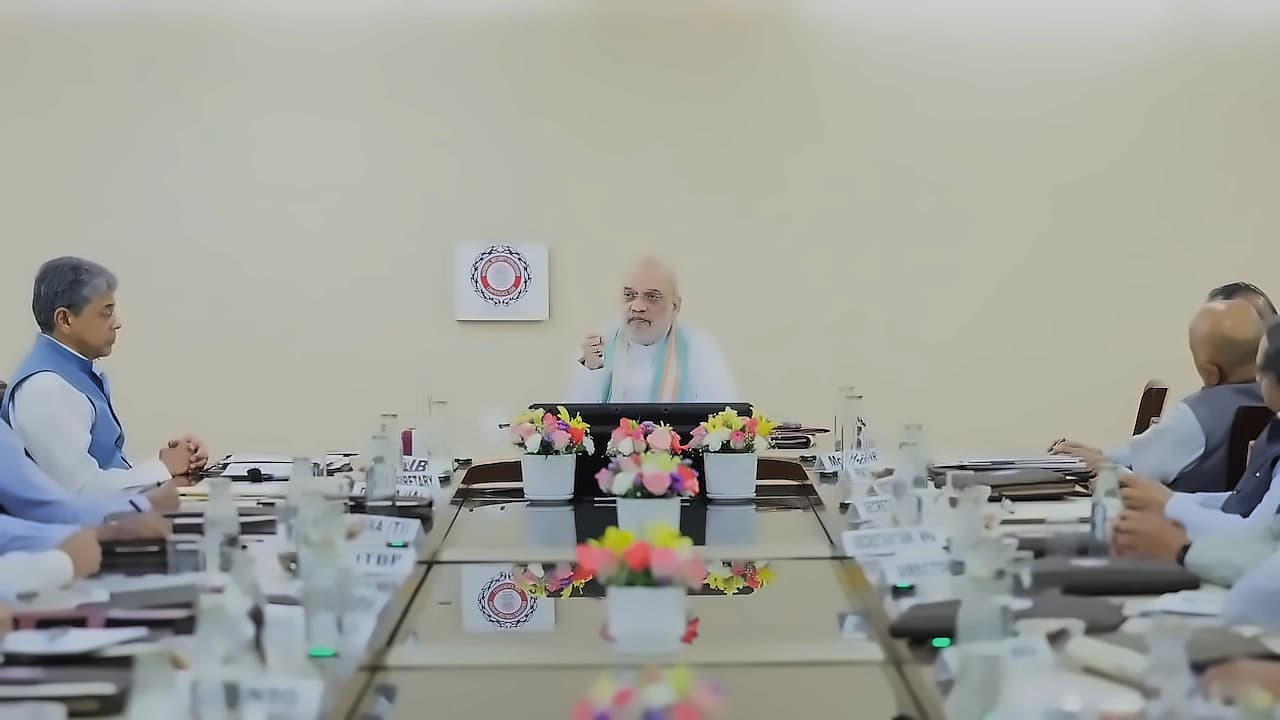
Shah stressed the critical importance of research and innovation in the pharmaceutical sector's future growth. According to Moneycontrol, the Union Home Minister stated that "Every company will have to concentrate on research and encourage students and professors doing research." He noted that the Government of India has introduced three schemes for research and suggested that smaller companies could collaborate through profit-sharing arrangements with five companies working together. Shah highlighted that "The Government of India has made arrangements to ensure that Indians get all these things like bandage, CT scan and MRI machine through indigenous production before 2028. Many companies are working, there is a need to encourage and provide a platform to our youth."
The pharmaceutical sector has demonstrated strong export performance under the government's initiatives. As reported by Moneycontrol, Shah revealed that India has exported drugs worth more than ₹3.64 lakh crore from the sector. The minister emphasized that the Modi government implemented the PLI scheme in the pharma sector to encourage manufacturing of critical API materials and medical devices in India, with a world-class manufacturing ecosystem being created under the rules of Bulk Drug and Medical Device Park Policy. Shah's confidence in the sector's future is reflected in his statement that "I still maintain that the Indian pharma sector is India's national strategic asset and we should never let it go unnoticed."