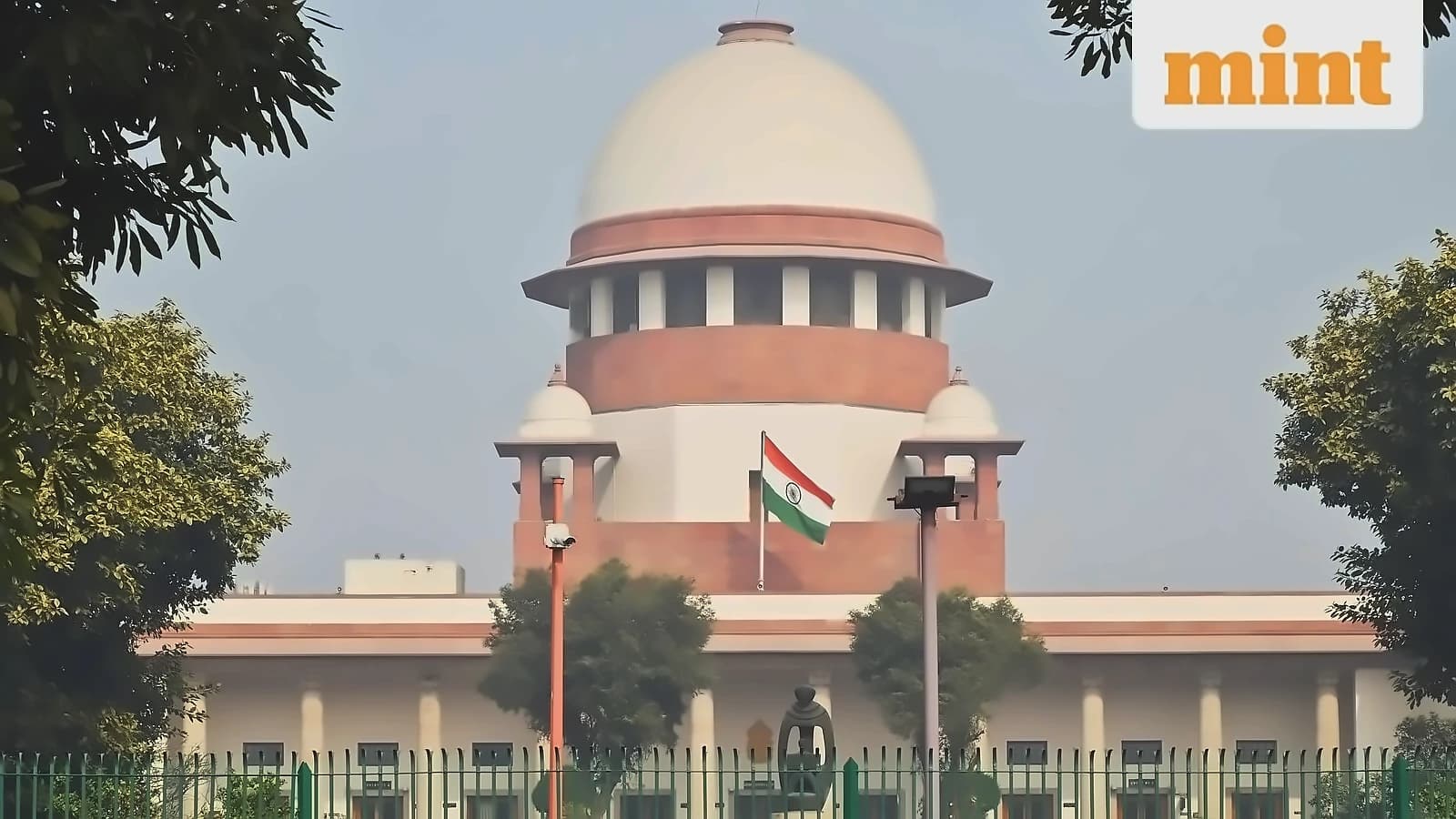
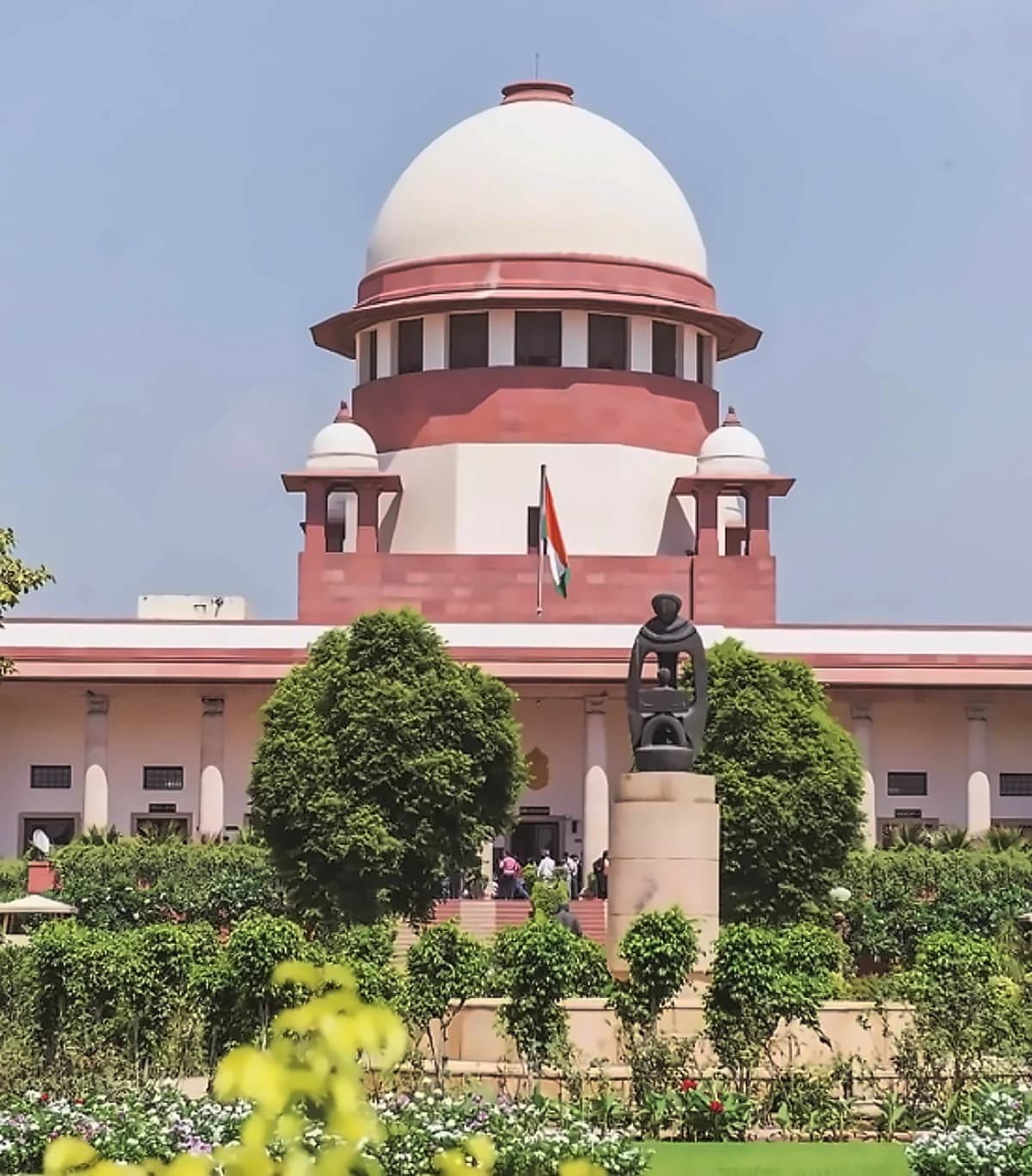
The Supreme Court on Friday issued notice on the Union of India's appeal challenging the Bombay High Court's judgment that quashed the government's ₹3,300 crore spectrum charges on Bharti Airtel and Vodafone Idea. A bench of Justices B.V. Nagarathna and R. Mahadevan heard the parties and issued notice in the case. The Court granted two weeks to the telecom companies to respond to the Centre's appeal. The bench interjected and observed that the source of the Government's power under the Telegraph Act would require consideration, stating "Look at the source of power, whether at all there is power. It is a matter to be considered."
Additional Solicitor General Vikramjit Banerjee appearing for the Union of India argued that the one-time spectrum charges were imposed pursuant to the Union's statutory powers under Section 4 of the Telegraph Act and not merely under the contractual licence terms. As per Business Standard, he defended the levy by stating "Spectrum belongs to the people. I hold it in trust. It's a privilege which is given to them. They are telecom companies. They should give a market rate." The Centre also opposed the release of bank guarantees furnished by the telecom operators, telling the Court that the dispute involved more than ₹3,300 crore. "This is public money. This is not the government only," the court was told. The telecom companies, however, opposed this position, with senior advocates Shyam Divan, Mukul Rohatgi and Balbir Singh describing the Bombay High Court judgment as well reasoned and arguing that retrospective demands undermined commercial certainty.
Following the Bombay High Court ruling, Bharti Airtel estimated its total relief at approximately ₹8,414 crore, according to a 9 June stock exchange filing reported by Mint. The company's FY26 annual report also noted an accumulated interest liability of ₹12,137 crore on the original OTSC demand through the end of March. Vodafone Idea similarly stated in a 9 June exchange filing that the high court order quashed government demand notices for one-time spectrum charges totaling ₹2,113 crore. In its FY26 annual report, the telecom operator recorded an accumulated provision of ₹8,780 crore toward these charges, as reported by Mint. According to Business Standard, industry estimates suggest the High Court's ruling provided relief exceeding ₹20,000 crore to the two operators. The Supreme Court's decision to issue notice on the Centre's appeal ensures these substantial financial reliefs remain intact for both operators, though the matter is now pending further proceedings.
Both telecom majors' stocks were in positive territory during afternoon trade on Friday, with Bharti Airtel up around 0.38% at ₹1,955.50 and Vodafone Idea up around 0.55% at ₹12.70 at 3 pm, according to Mint. The immediate market relief came as investors responded positively to the Supreme Court's decision to issue notice on the Centre's appeal, with the market viewing this as a positive development for the telecom operators. The Supreme Court proceedings saw Bharti Airtel and Vodafone Idea represented by senior advocates Mukul Rohatgi and Shyam Divan, while Additional Solicitor General Vikramjit Banerjee appeared for the government. The Centre has now challenged the Bombay High Court ruling in the Supreme Court, seeking to revive the DoT's demand against the telecom companies, though the latest decision has issued notice on the Union's appeal and directed the parties to file their replies.
The dispute dates back to 2012, when the Union government decided to levy OTSCs on spectrum holdings beyond 6.2 MHz with retrospective effect from July 2008, according to Business Standard. The DoT subsequently issued demand notices to telecom operators, including Bharti Airtel and Vodafone Idea, seeking additional payments for spectrum that had already been allotted. The levy was calculated using prices discovered in the 2012 spectrum auction. The telecom operators challenged the levy before the Bombay High Court in 2013, arguing that they had already paid applicable entry fees, licence fees and spectrum usage charges under their licence agreements. The high court granted them interim protection in January 2013 and, after 13 years of litigation, quashed the demands in June 2026. The dispute originated from the National Telecom Policy, 1999, which saw telecom operators transition from a fixed license fee regime to revenue sharing, with various communications issued for recurring spectrum usage charges between 2001 and 2007. The Union government also urged the Court to hear the matter alongside pending appeals arising from the Madras High Court's decision in Aircel Limited versus Union of India, which had upheld the validity of the OTSC levy, though the Bench deferred a decision on tagging the cases to the next hearing.