Hindustan Aeronautics Limited (HAL) has prepared 27 airframes of the advanced Tejas Mk1A fighter aircraft out of the 180 ordered, but delivery of the first batch to the Indian Air Force is being held up by pending technical issues. According to HAL Chairman and Managing Director Ravi K speaking to The Times of India, the company has received 10 engines from GE Aerospace and is close to completing work on the initial Tejas Mk1A aircraft. However, further testing is required for some systems, including the integration of the AESA (Active Electronically Scanned Array) radar and missiles. Ravi K estimated that the programme was around 90-95% complete, with the remaining work involving the final stages of testing and integration. The company is also progressing with the development of the more advanced Tejas Mk2, with structural coupling work having reached an advanced stage.
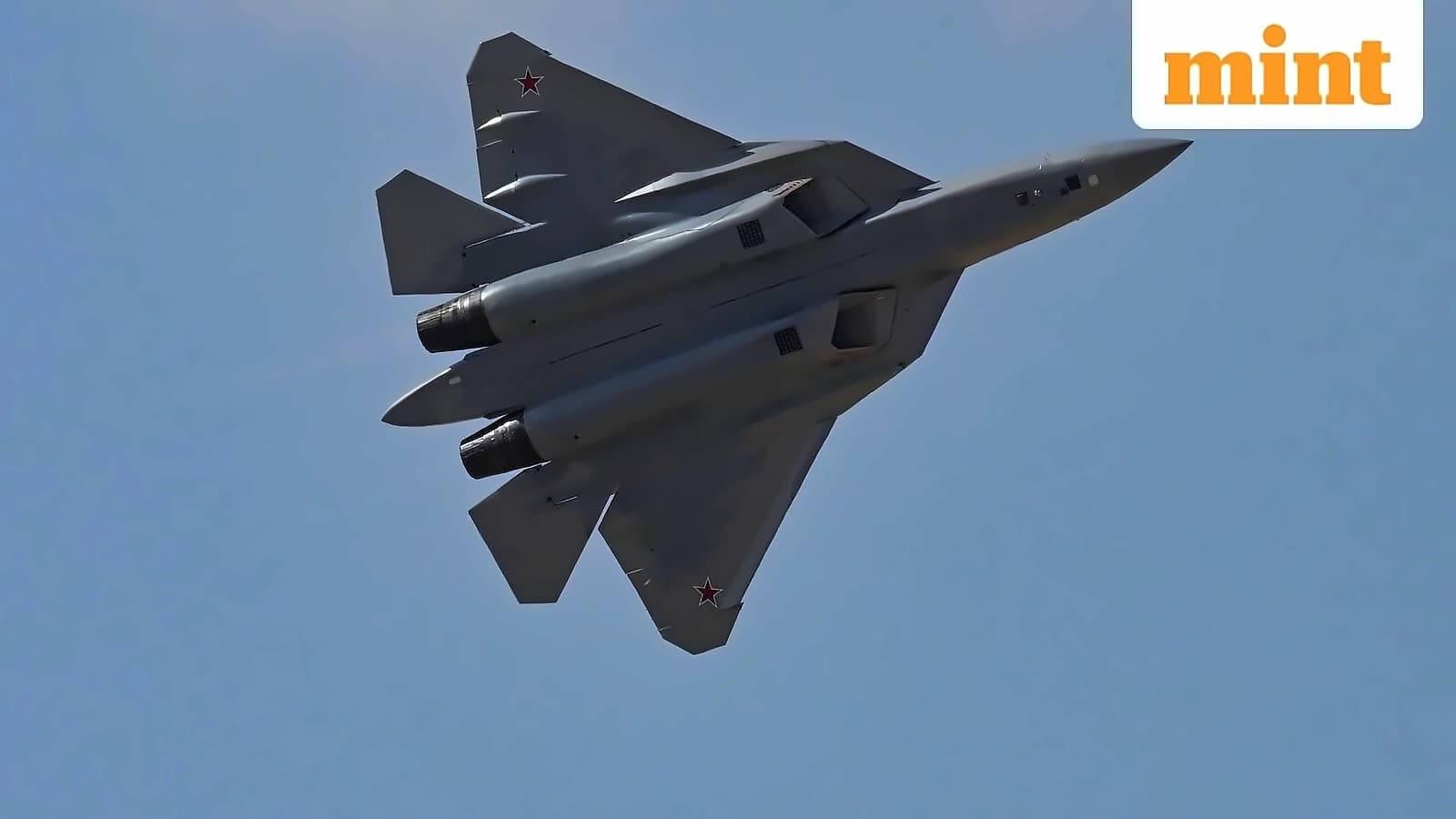
Hindustan Aeronautics Limited (HAL) has announced its readiness to produce the Russian fifth-generation fighter Su-57 in India, with significant infrastructure already in place. According to HAL Chairman and Managing Director Ravi K in an interview with The Times of India, the Indian aerospace corporation possesses approximately 40% of the necessary infrastructure due to its experience in producing the Su-30MKI. However, Kotta emphasized that additional investments will be required to launch Su-57 production, indicating that while the foundation is strong, substantial capital expenditure will be necessary to transition from Su-30MKI production capabilities to Su-57 manufacturing. The company is currently studying the aircraft's technical aspects, including the facilities and ecosystem needed for production, with technical discussions with the Russian side continuing.
Russia has offered to share sensitive Su-57 stealth fighter technology with India during bilateral discussions ahead of President Putin's visit to Delhi for the BRICS Summit. Kremlin spokesperson Dmitry Peskov confirmed that the sophisticated machines are on the agenda, stating "Indian scientists want production technologies, and this is a question for additional discussions which are underway." Peskov emphasized that while every country wants to keep sophisticated technology to itself, advanced strategic ties with India will facilitate discussions about whether technology can be made available. The Russian official noted that such military cooperation is of great importance but cannot be discussed openly and publicly, as reported by Economic Times. Ravi K confirmed that HAL would subsequently sign a contract covering technology transfer, but no timeline had been fixed because the proposal would require extensive discussions.
Russia has proposed that India manufacture the Su-57 stealth fighter domestically, seeking a Su-30MKI-style partnership that extends well beyond meeting immediate Indian Air Force requirements. According to reports from Defence.in, Moscow's latest push appears to extend well beyond the IAF's fighter requirements, seeking to expand its aerospace manufacturing footprint in India and build a long-term industrial relationship. Following recent diplomatic engagements involving Russian President Vladimir Putin at the BRICS summit, Moscow is seeking to replicate the success of the earlier licensed production arrangement. The proposal is motivated by broader strategic and industrial motives rather than simply meeting the operational requirements of the Indian Air Force. As per Economic Times, the proposed model envisages Indian defence companies becoming long-term suppliers of important Su-57 components and subsystems, with equipment manufactured in India incorporated into fighters for the Russian Aerospace Forces and future export customers.
For New Delhi, the potential deal presents a difficult strategic choice between immediate operational needs and long-term indigenous development goals. Greater participation in the Su-57 supply chain could provide Indian companies with valuable manufacturing experience and technology, while strengthening India's position as an aerospace production hub. However, India would need to balance these potential gains against its own operational requirements and the Advanced Medium Combat Aircraft (AMCA) programme, which has entered the prototype manufacturing phase and is considered a key component of India's future aerospace ambitions. A 100-aircraft domestic production commitment would require substantially larger financial allocation, potentially affecting resources available for the AMCA programme and other indigenous defence projects. Procuring a small batch of Su-57s off the shelf could serve as an effective stopgap measure to counter regional fifth-generation threats, but committing to a 100-jet local manufacturing programme would require massive financial investment that could drain vital funding and potentially derail India's homegrown stealth ambitions.
The proposed Su-57 partnership could be considerably larger in scope than conventional licence agreements. The strategy draws parallels with the Su-30MKI programme, which helped Hindustan Aeronautics Limited (HAL) and a network of Indian suppliers develop substantial aerospace manufacturing capabilities. Under the proposed model, Indian companies could become long-term suppliers of important Su-57 components and subsystems, with equipment manufactured in India incorporated into fighters for Russian and overseas customers. This could provide access to advanced aerospace technologies and allow domestic manufacturers to become important suppliers in the Su-57's global production network. For Russian negotiators, committing to a larger fleet would generate the economies of scale needed to justify a joint production facility, while for Indian manufacturers, a project of this magnitude would offer access to advanced production technology and establish them as vital nodes in the aircraft's global supply network. As per Economic Times, the cooperation could extend well beyond the current generation, with the Su-57 potentially serving the IAF well into 2075, beyond the Viksit Bharat mark of 2047.