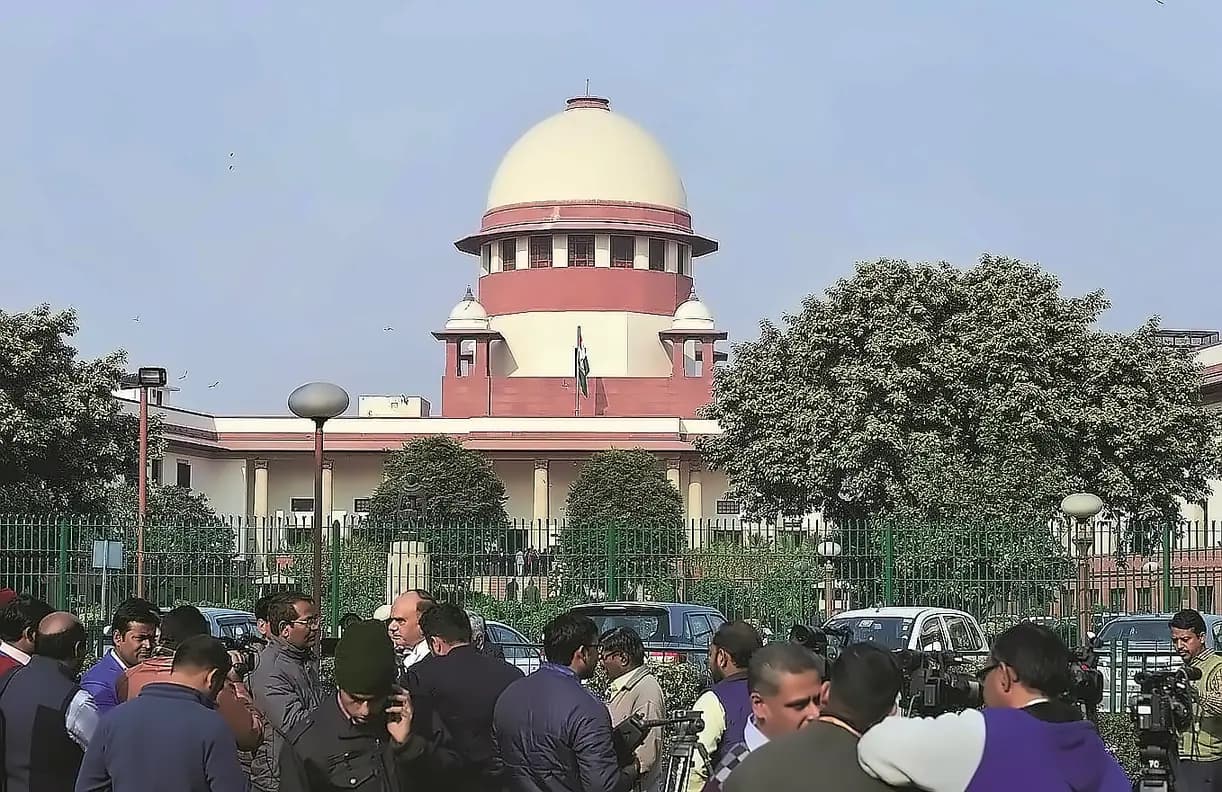
Reliance Communications (RCom) has filed a curative petition in the Supreme Court challenging the apex court's February 13 judgment that excluded spectrum as an asset under the Insolvency and Bankruptcy Code (IBC). According to reports from Business Standard, the petition was filed by resolution professional Anish Nanvaty on Friday, seeking recall of the verdict as the ruling was causing 'irreversible harm' to lenders. The petition explained that the Department of Telecommunications (DoT) invoked bank guarantees of the erstwhile service provider in August and terminated spectrum allocated to RCom and its subsidiary Reliance Telecom Limited earlier this month. The latest filing comes on October 16 and follows the Supreme Court's dismissal of RCom's review petition on July 28, with the RP also seeking an open-court hearing.
The RP has argued that by excluding spectrum, banks had been stripped of the asset against which they had lent, leaving them having advanced thousands of crores without recourse. As reported by Business Standard, the petition flagged that the ruling created a sectoral exception that had no basis in the IBC, cautioning that it could be extended to other instances such as mining leases, oil and gas licences, infrastructure concessions and hydropower rights. The petition noted that the judgment did not consider the explanation to Section 14(1) of the IBC, which stated that licences cannot be terminated during the moratorium if current dues were paid, with RCom's current dues being paid. The petition also cited Section 31(5) of the IBC (Amendment) Act, 2026, which received assent on April 6 and which the petition says applies retrospectively.
According to Business Standard reports, the RP argued that the DoT had filed its claim as an operational creditor and the admission of claims of ₹31,276 crore had given it a 'de facto super-priority', which was contrary to the Swiss Ribbons ruling of 2019 that had upheld the constitutional validity of the IBC. The petition highlighted that this super-priority status was contrary to established insolvency principles. The DoT invoked bank guarantees linked to RCom on August 14 and terminated its spectrum allocation on October 5, actions that the petition says have caused irreversible harm. The RP has further argued that DoT, despite filing a claim of around ₹31,276 crore as an operational creditor and having it admitted, should not be allowed to recover pre-insolvency dues outside the resolution process, as such recovery would effectively give the department priority over other creditors, contrary to the principles underlying the IBC.
The verdict was delivered on a batch of petitions filed by the State Bank of India and the two insolvent telecom operators, challenging a 2021 order of the National Company Law Appellate Tribunal (NCLAT), which had held that spectrum could be transferred or sold under a resolution plan only after clearing all outstanding government dues. As reported by Business Standard, experts noted that the SC ruling would deter recovery of bank dues from corporate insolvency cases, including RCom and Aircel. Aircel had bank dues worth over ₹13,500 crore, while Reliance Communications had over ₹50,000 crore in bank dues. The Supreme Court dismissed appeals by RCom, State Bank of India, UV Asset Reconstruction Company and Aircel, while allowing DoT's appeal in part. RCom had subsequently filed a review petition, which was rejected.