India's large private hospital chains are undertaking their most significant capacity expansion in recent years, with 18 major chains planning to add more than 34,000 beds between FY26 and FY30, according to rating agency Icra. This investment of around ₹40,000 crore will expand their combined capacity by 48-50% from March 2025 levels. However, the scale of this expansion pales in comparison to India's actual healthcare needs, as Apollo Hospitals estimates the country requires another 2.4 million high-quality hospital beds. By this measure, the entire five-year pipeline of the 18 large chains would meet only around 1.4% of what is needed. Icra separately estimates these additions at only 2.3-2.5% of India's existing private hospital capacity, suggesting the expansion will increase organised hospital chains' share without improving bed availability nationally.
India currently has an estimated 1.3-1.4 million private hospital beds, with the expansion coming against a wider shortage of hospital infrastructure. According to a PRS Legislative Research analysis of the Union health ministry's demand for grants for 2026-27, India had an estimated 1.4 hospital beds per 1,000 people in 2020, which fell to 0.6 when only government hospitals were considered. The National Health Policy, 2017, recommends two beds per 1,000 people, highlighting the significant gap between current capacity and recommended standards. The government is seeking to bridge some of the gap through public investment as well as greater use of private capacity, with 38,466 public and private hospitals empanelled under Ayushman Bharat–Pradhan Mantri Jan Arogya Yojana (PM-JAY) having covered nearly 127 million hospitalisations worth ₹1.92 trillion as of June-end.
Despite the massive capacity additions, new beds are filling rapidly, demonstrating strong underlying demand. Icra's sample of 11 listed hospital companies recorded a healthy occupancy of 63.5% in FY26 despite capacity expansion, and it expects aggregate occupancy to remain around 62-64% through FY27. In Q1FY27, Max Healthcare reported 75% occupancy despite a 13% year-on-year increase in operational beds, followed by Apollo Hospitals at 70%, Fortis Healthcare at 68.7%, and Manipal Health Enterprises at 65%. Recent additions show even stronger utilization, with beds at Max Smart in Delhi and Nanavati Max in Mumbai reaching around 80% occupancy. Fortis specifically showed 17% year-on-year growth in occupied-bed count to 3,418 in the June quarter, while Manipal's new Yelahanka and Kanakapura hospitals in Bengaluru achieved EBITDA break-even within two and five months respectively.
The expansion is heavily concentrated in specialized medical services, with Crisil Ratings reporting that specialties such as cardiac sciences, oncology, neurosciences, gastroenterology and orthopaedics now account for around 65% of hospitals' revenues, up from about 59% before the pandemic. *Oncology alone has increased its share from around 12% to 18%**. This strategic shift enables hospitals to maintain strong occupancy levels while driving higher Average Revenue Per Occupied Bed (ARPOB) through more favorable case-mix. Aster DM Quality Care plans to add 4,170 beds over three to four years, with 53% of expansion through brownfield projects, while Manipal Health Enterprises plans ₹4,000 crore capital expenditure to add approximately 3,000 beds over the next three to four years. Aster's robotic surgery volumes increased 80% year-on-year during the June quarter, joint replacements rose 39%, and transplants grew 19%.
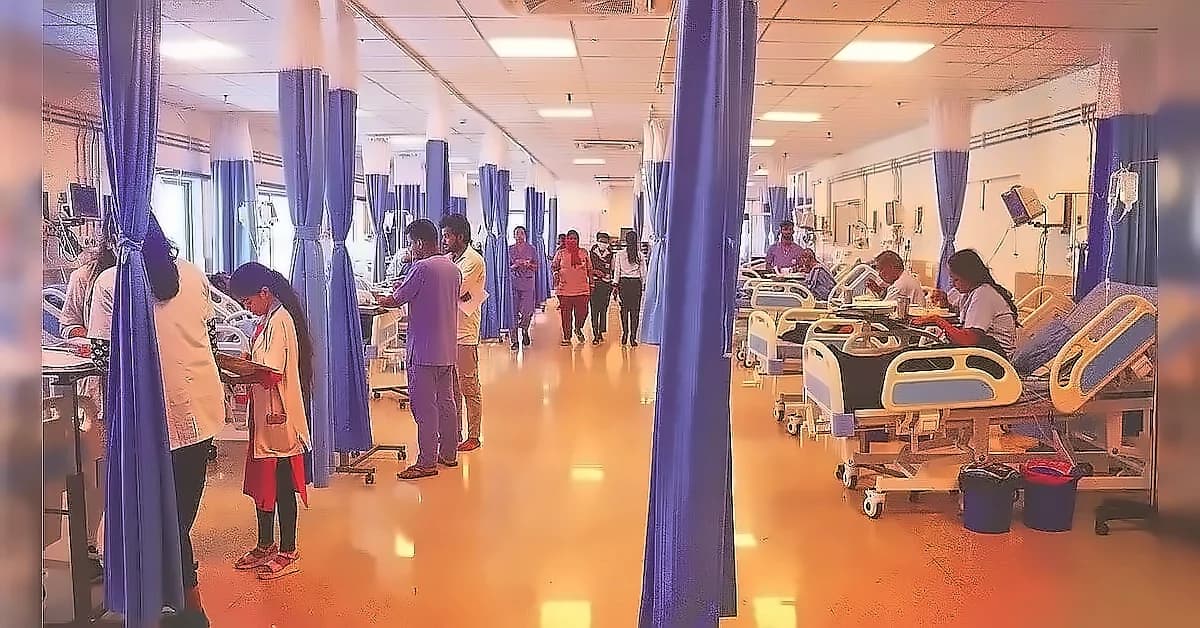
The combination of stronger occupancy and specialized services has improved sector economics significantly. According to Crisil, operating margins for the sector have risen from around 14-15% before the pandemic to nearly 20-21% currently. However, new capacity weighs on profitability before case and payer mix improves. Apollo's recently commissioned hospitals reported an EBITDA loss of ₹38 crore during the June quarter, while Max Healthcare noted that margins were affected by newly commissioned brownfield beds and the acquisition of Kalinga Hospital. As Max Healthcare Chairman Abhay Soi explained, profitability generally begins accelerating after occupancy and revenue stabilize, typically by the second or third quarter of operations. The changing case-mix is helping hospitals generate more revenue from existing capacity, with Manipal's centres of excellence contributing around 65% of Q1FY27 revenue and inpatient revenue from these specialties rising 45%.