Copper prices have soared to unprecedented levels, creating ripple effects on manufacturing expenses worldwide. The latest leg of the rally has seen copper surge to an all-time high of $14,533 per metric ton, largely driven by tariff-related trade flows. According to the International Copper Study Group, global mine output declined 1.1% in the first half of the year, with major producers Codelco and Freeport-McMoRan Inc. both reporting double-digit drops. Morgan Stanley now expects mine supply to remain little changed or slightly lower, raising the prospect of the first annual decline in mine supply since 2017. Citigroup Inc. analyst Tom Mulqueen forecasts copper at $15,000 a ton by year-end, with potential to reach about $17,000 if manufacturing recovers or energy transition demand proves stronger than expected.
UltraTech's Ultravolt entry into the Indian wires and cables sector creates a competitive landscape for established manufacturers in fiscal year 2027. The company plans to distribute products across more than 500 districts and 6,000 pin codes, targeting more than 100,000 retailers. It is leveraging more than 5,000 UltraTech Building Solutions outlets and has onboarded over 1,600 electricians ahead of the launch. UltraTech aims to become one of the top two wires and cables players within five years, with eventual capacity potentially rising to 3.5-4 million kilometres. Nomura estimates that UltraTech could capture around 6%-7% of the organised wires and cables market by fiscal 2030, assuming strong industry demand and asset turnover of 5-6 times.
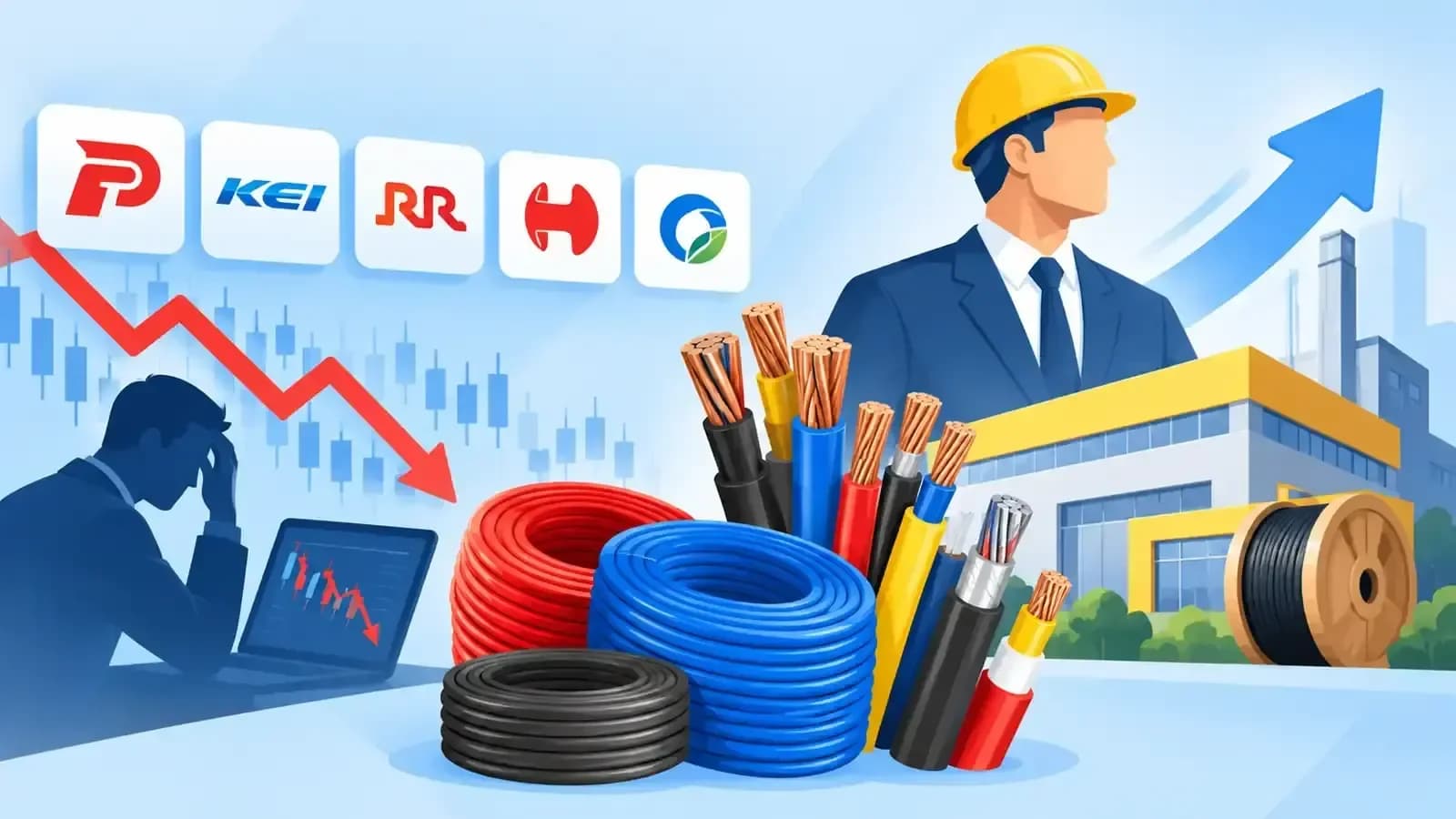
Cable and wires stocks came under significant pressure on Friday as major players moved to raise prices amid elevated copper costs, putting the spotlight on margins, competition and demand in the sector. Polycab India shares fell as much as 5.85% to ₹8,308.55 on the BSE, while Finolex Cables declined 4.92% to ₹1,210.40 and RR Kabel slipped 4.97% to ₹2,488.60. According to Ravi Singh, Chief Research Officer at Master Capital Services, the fall in cable and wire stocks despite recent price hikes reflects concerns over rising copper costs and the ability of companies to pass on the higher input costs without affecting demand. The selling comes even as companies have begun passing higher input costs through to customers, with the recent weakness appearing driven by concerns over margin pressure and competitive pricing rather than the absence of demand.
According to channel checks, Polycab India and Finolex Cables have implemented price increases across select wire and cable products following a rise in copper prices and elevated input costs. Finolex Cables implemented a 3% price hike on Light Duty Cables and Communication Cables, effective September 4. Meanwhile, Polycab raised the listing price by 3% for its 90-metre and 180-metre wires, with the revised prices effective September 2. The companies had announced these price increases to dealers towards the end of August, but implementation was delayed amid competitive considerations and announcements from other major industry players.
The pricing actions come against the backdrop of higher copper prices, which have a significant bearing on the cost structure of the wires and cables industry. Copper accounts for a substantial portion of raw material costs for cable manufacturers, making sharp movements in the commodity a key margin variable for the sector. For manufacturers, raising prices can help offset higher input costs and protect profitability, but passing on costs in a competitive market also carries the risk of affecting demand and market share. The competitive wires and cables market features established players including Polycab, Finolex Cables, KEI Industries and RR Kabel, alongside new entrants and capacity additions. The immediate focus for investors will be on whether price hikes are implemented across the industry and how effectively companies can pass higher copper costs to customers without hurting volumes. JM Financial noted that competition in the Indian C&W space is clearly intensifying, with the possibility of a sector-wide derating not being ruled out.
The sharp fall in cable stocks on Friday suggests the market is already weighing the trade-offs between margin protection and competitive positioning. For Polycab, Finolex Cables and RR Kabel, the ability to maintain pricing discipline while defending market share could determine how much of the commodity inflation ultimately flows through to margins. JM Financial raised three key questions on the Indian cables and wires industry, questioning whether C&W growth is peaking and whether the Street is underestimating new competition. The brokerage noted that C&W names are trading at a 4-5% premium to their 5-year average P/E multiple and around 25% above their long-term average P/E multiple. With copper accounting for a significant portion of raw material costs, sustained commodity inflation could keep investor sentiment cautious in the near term, making the response of other large players equally important for the sector's overall performance.