The BSE Sensex tumbled 1,248 points to close at 73,580.54, while the Nifty 50 shed 383.70 points to end at 23,063.10 on Thursday, September 24. According to The Times of India, the Sensex closed 1,247 points or 1.7% down at 73,581 points, marking a more than three-month closing low. The broad-based selloff was triggered by US 10-year Treasury yields reaching their highest level in nearly two decades, coupled with hawkish commentary from Federal Reserve officials signalling the possibility of further rate hikes. The growing global uncertainty and sharp spike in US bond yields triggered a broad-based sell-off in equity markets, dragging BSE Sensex to their lowest levels in three months. Selling pressure was widespread, with all major Nifty sectoral indices ending in the red, and the broader Nifty Midcap 100 and Nifty Smallcap 100 indices declining 2% and 1.5% respectively. Elevated crude prices, higher US yields, rupee weakness and geopolitical uncertainty kept investors cautious, with only three Nifty stocks advancing against 47 declines.

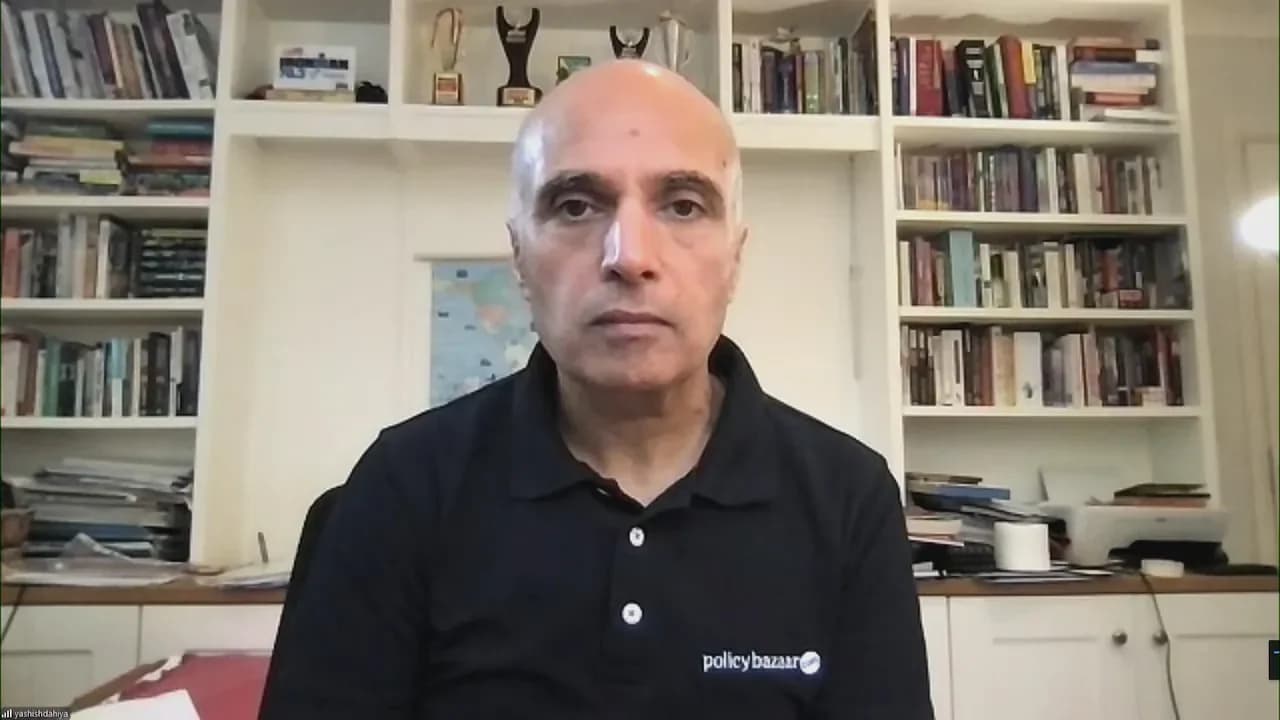
Shares of insurance companies and insurance distribution platforms, including PB Fintech, tumbled 30.02% on the NSE, while Turtlemint Fintech Solutions was down 20% following IRDAI's announcement of comprehensive reforms. PB Fintech, the parent of Policybazaar, plunged a staggering 30% intraday, while heavyweight names including Axis Bank, Bajaj Finance and Bajaj Finserv fell around 3-5%. HDFC Life Insurance remained the worst performer on the Nifty 50, falling 8.5% to ₹533.15 from a previous close of ₹561.50, while Bajaj Finance was down 6% to ₹991.60 from ₹1,043.20, and Axis Bank shed 4.67% to ₹1,185.10 from ₹1,243.20. Banking and Insurance stocks were the biggest drags on the market on Thursday, with the Bank Nifty falling below 56,000 after the Insurance Regulatory and Development Authority of India (IRDAI) proposed sweeping changes to insurance distribution, including tighter Expense of Management (EoM) limits and lower commission caps. The sector's weakness had an outsized impact on the benchmark because banking and financial services stocks carry the highest weightage in the Nifty 50.
The day's selling was led by foreign funds, with net outflow from stocks alone at ₹5,027 crore, as per BSE data. According to The Times of India, domestic funds, on the other hand, were net buyers at ₹4,301 crore. The slide left investors poorer by about ₹2.7 lakh crore, with India's market capitalisation now at ₹482.3 lakh crore, data from BSE showed. Financial stocks, which stand to be hit most by rising yields and hence interest rates, led the slide, along with index heavyweight Reliance Industries. Vinod Nair of Geojit Investments noted that markets came under pressure amid rising bond yields and a rebound in crude oil prices, reflecting heightened global macroeconomic risks. Investor sentiment turned increasingly risk averse as concerns over the interest rate trajectory intensified, driven by lingering uncertainties around inflation and economic growth.
The rupee remained under pressure, weakening by 22 paise to close at 95.96 against the US dollar, as geopolitical tensions fuelled a sharp rise in crude oil prices and pushed US Treasury yields and the greenback higher. According to Vaibhav Chugh, Chief Executive Officer of Abakkus Mutual Fund, the sharp decline in domestic equities was driven by US 10-year Treasury yields reaching their highest level in nearly two decades, coupled with hawkish commentary from Federal Reserve officials signalling the possibility of further rate hikes. The yield on the US 10-year Treasury climbed above 5.10 per cent, a level last seen in 2007, while Brent crude prices remained above $102 per barrel, raising concerns over global liquidity, inflation and India's import bill. The US Dollar also continued to strengthen past the mark of 101, the highest level in two months, which is negative for our own currency and also for Metal stocks, which fell up to 3% on Thursday.
**IRDAI has issued a consultation paper on 'Recalibrating Economics of Insurance Distribution', setting out a comprehensive framework of reforms covering insurance distribution, its structure, expenses, commissions, market conduct, transparency and leveraging digital infrastructure. According to Mint, the insurance regulator proposes to replace the existing complex and fragmented architecture with three broad categories of distribution entities: Insurance Distribution Entities (IDEs), Insurance Distribution Persons (IDPs) and Market Infrastructure Institutions (MIIs). The Expense of Management (EoM) framework is proposed to be recalibrated through lower limits with a phased glide path. For life insurers, the EoM limit would move to a company-level basis linked to Gross Direct Premium Income (GDPI), with the limit proposed at 15 within two years and 12.5 within five years. For general insurers, the basis would shift from gross written premium (GWP) to domestic GDPI, with the EoM limit reducing from 30% of GWP to 20% of GDPI within five years. The proposals are slated for implementation from FY28, with public and stakeholder feedback open until October 25, 2026.
The volatility gauge, India VIX, surged as much as 28% to an intraday high of 13.22 level on Thursday, following the crash in equity benchmark indices. At 2:52 PM, the index was at the 12.90 level, soaring 24.72%. Over a year's time the NSE's Volatility Index has jumped 21%, while for six months' time it has fallen 48.5%. The NIFTY Midcap 100 and NIFTY Smallcap 100 were underperforming the main equity benchmark indices, declining 2% each. Brent crude futures surged to $100 per barrel after Iran and the United States remain divided over how to bring an end to their war, but diplomacy must continue, a senior Iranian official told Reuters on Wednesday. Brent crude hovered around $105.4 a barrel on Thursday after gaining over 2% in the previous session. All sectoral indices ended lower, led by Nifty Private Bank, which fell 2.2%, followed by Nifty Metal (1.9%) and Nifty Bank (1.7%). Nifty Infra and Nifty Auto declined 1.5% each, followed by Nifty Oil & Gas (1.3%), Nifty PSU Bank (1.3%), Nifty Energy (1.2%) and Nifty FMCG (1%).