Himanshu Chadha, founder of Nimson International, started his entrepreneurial journey in 1997 with ₹50,000 and a failed batch of white petroleum jelly. According to reports from LiveMint, the timing proved disastrous as winter had nearly passed by the time his formulation was ready, leaving him with unsold stock and a hard lesson about product-market fit. The business was rescued by identifying a gap in the sachet market, where no small manufacturer sold shampoo, hair oil, face cream, or detergent in one- and two-rupee packs. Chadha launched his first brand as a shampoo sachet and grew that single machine into 23-24 machines within about 18 months.
As reported by LiveMint, Chadha expanded into hair oil, face creams, and detergent powders in sachet form, establishing a larger factory in Himachal Pradesh that employed more than 50 people. The company now manufactures over 500 SKUs across more than 1,000 formulations and sells across every PIN code in India with exports abroad. A significant turning point came when Chadha joined ASCENT's All India chapter, a peer group of entrepreneurs from cities including Hyderabad, Kolkata, Bengaluru and Ahmedabad. This exposure introduced him to delegation, checklists, production management systems and ERPs, fundamentally changing his approach to leadership and decision-making.
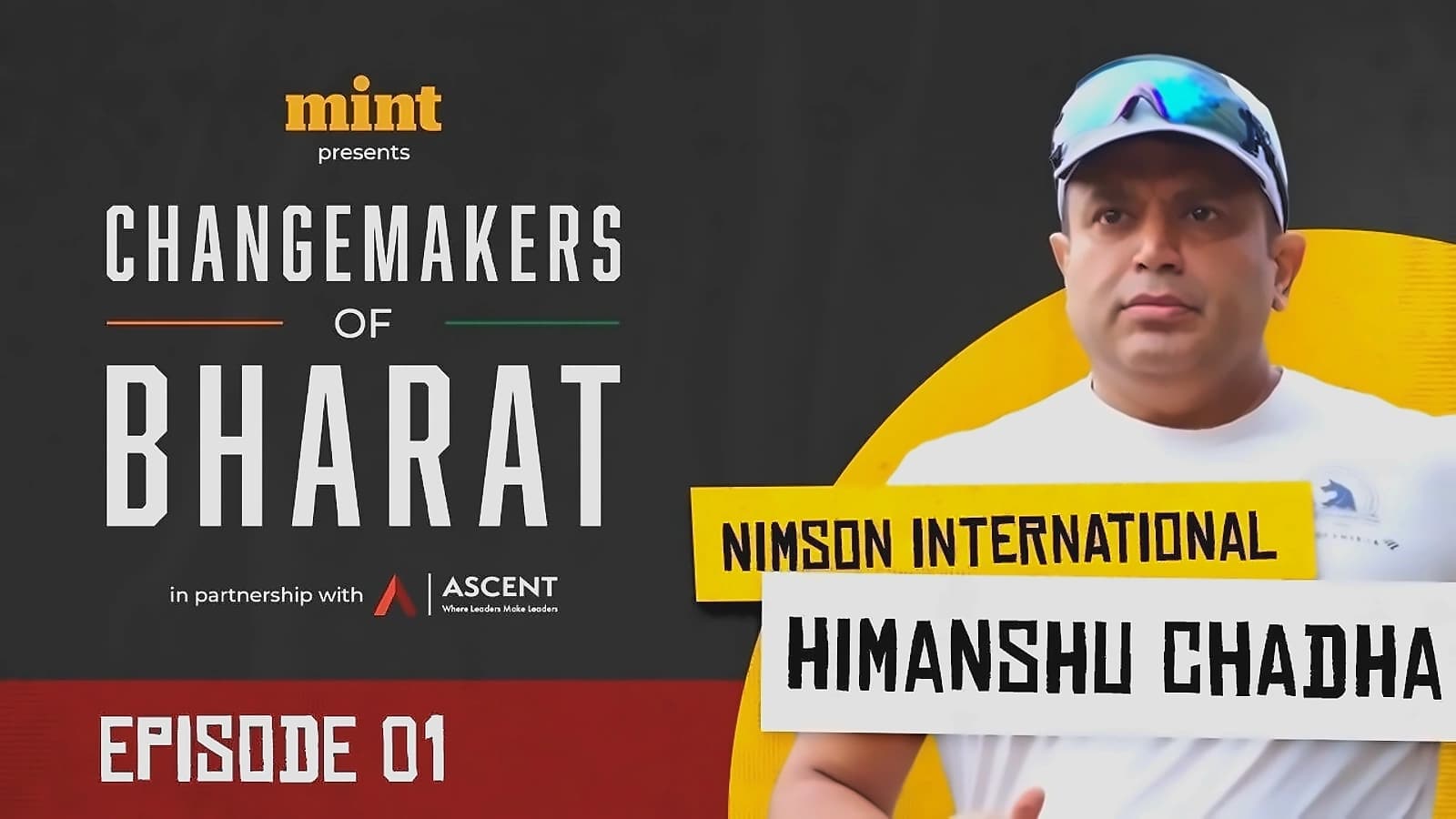
According to LiveMint, Nimson International employs roughly 70% women in its workforce and works with communities of women farmers who supply raw herbs while funding schooling for their children. Chadha describes wanting to give women in his organization the same sense of identity he wants for his own family. The company has evolved from a single-machine operation to a structured pan-India business, demonstrating the impact of shared learning and delegated responsibility in building sustainable growth.
As reported by LiveMint, Chadha's workaholic phase saw him working 18-20 hours a day and carrying two mobile phones that never stopped ringing. His health suffered, with weight climbing to 120 kg and tests showing high blood sugar, hypertension, and chest pain. The turning point came through ASCENT's peer group, where he learned to build leadership around shared learning and delegated responsibility. Chadha summarizes his approach as 'if you want to walk fast, walk alone; if you want to walk far, walk together,' describing his journey as a mix of failure and extreme success guided by patience and gratitude.