The Food Safety and Standards Authority of India (FSSAI) has issued notices to 15 food business operators for using misleading brand names, trade names and product claims in violation of the Food Safety and Standards Act, 2006. According to Business Standard, the companies served notices include Emami Healthy & Tasty, Health Aid, Troovy, The Healthy Factory, Healthy Master, Healthy Choice, Plan B, Neuherbs, Plan B Plant Based Vegan, The Health Factory, and Neuherbs True Vitamin. The regulator announced the notices through its official social media handles, with the action reflecting heightened vigilance and growing reliance on social media-led complaints to ensure consumer safety. Rather than waiting for formal complaints through traditional channels, authorities appear to be monitoring viral or widely shared allegations more closely to initiate preliminary inquiries where food safety concerns are raised.
Among the prominent names flagged is Emami Healthy & Tasty, the cooking oils arm of the Kolkata-based Emami Group, with FSSAI stating that its trade name is "likely to mislead consumers and appears to be in contravention of applicable FSSAI regulations". Plan B, which markets its products as "plant based vegan", has drawn the regulator's attention for creating the impression that its products are vegan - without obtaining prior approval for vegan food endorsement in its FSSAI licence. The Healthy Factory's "Zero Maida Whole Wheat Bread" - which contains chakki fresh atta and wheat gluten - has been flagged for misleading consumers, with its "zero maida pizza base" product facing similar scrutiny as the claim appears to violate applicable regulations. Neuherbs' product line "True Vitamin" has been cited for using a trade name that is "neither defined nor recognised" under FSSAI regulations, making it potentially misleading for consumers. Troovy's range of snack products, including "Healthy Mix Veggie Chips", "Healthy Ragi Chips" and "Healthy Moong Dal Chips", have been flagged for making misleading "healthy" claims despite containing a range of other ingredients.
Healthy Master's tagline, "Vision to serve healthy," has been flagged as likely to mislead consumers about the nature of the products. Healthy Choice's "Healthy food for Healthy life Poha" and Health Aid's brand name have also been identified as potentially misleading consumers about the true nature of their products. According to Business Standard, FSSAI is seeking detailed Action Taken Reports (ATR) from all companies as part of the investigation, demanding comprehensive information including batch-level quality checks, vendor details, internal quality-check logs, corrective measures taken and steps to prevent recurrence. The regulator has also directed food businesses to immediately stop using metallic pins, wires and similar materials in food products and packaging after a three-year-old child in Maharashtra allegedly swallowed pieces of metal wire hidden inside decorative cake toppers.
Food packaging in India is governed by two key frameworks: the Food Safety and Standards (Packaging) Regulations, 2018 and the Food Safety and Standards (Labelling and Display) Regulations, 2020. According to Business Standard, brand names and claims must not mislead consumers about a product's nature, composition or nutritional value, with businesses prohibited from using terms that create a false impression about a product's ingredients, quality or health benefits. Product names and health claims such as "healthy", "high protein", "low fat", "natural", "fresh", "pure", "immunity boosting" or "plant-based" can only be used if they meet FSSAI criteria and are supported by scientific evidence. The regulator also requires every packaged food product to prominently display the FSSAI logo and licence number, with labels clearly mentioning manufacturing or packing dates and best-before or use-by dates. All packaged food products need to display essential information including name of food, list of ingredients, nutritional information, allergen details, vegetarian or non-vegetarian symbol, net quantity, manufacturing or packing date, best-before or use-by date, FSSAI logo and licence number, and manufacturer details. Additionally, e-commerce, food delivery and quick-commerce platforms are required to display mandatory product information before purchase completion.
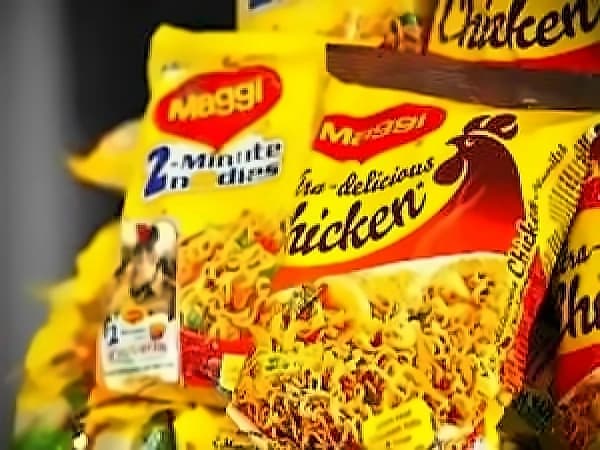
In its recently released annual report, Nestle India highlighted that Maggi noodles delivered strong volume growth by engaging urban consumers and expanding their rural reach, leading to both market share gains and increased penetration. As reported by ANI, this regulatory action comes at a time when FSSAI has been taking cognisance of complaints circulating on social media and issuing notices to multiple companies. According to Business Standard, Nestle India maintains stringent quality and food safety standards across its manufacturing operations and remains fully transparent with authorities. KFC operator Devyani International has said they "will conduct an investigation in respect of allegations in the notice and make our representation to FSSAI," while Sapphire Foods has confirmed that the store in question belongs to Devyani. Companies and food business operators have been asked to submit detailed responses and supporting documentation before any further action is considered, with the outcome of these investigations being closely watched for their potential impact on brand trust and regulatory compliance in India's fast-growing food and quick-commerce sectors. Food businesses selling unsafe food may face higher penalties, including fines of up to ₹10 lakh, with individuals or companies responsible for unsafe food causing injury or death facing imprisonment in addition to monetary penalties.