Two companies have established a 50:50 joint venture to introduce Analog's physical intelligence platform to India, with planned investments of $300 million to $500 million over the next three to four years. According to reports from Business Standard, the Abu Dhabi-based company, founded by Brazilian engineer Alex Kipman - known as the inventor of HoloLens during his tenure at Microsoft - will deploy its technology across infrastructure, mobility and urban systems. The partnership combines MEIL's extensive reach in India with Analog's physical intelligence technology platform.
As reported by Business Standard, Analog has already established a wholly owned subsidiary in India and plans to establish an Analog facility in Hyderabad within six months, while a commercial launch is expected within three months. The company's physical intelligence platform enables machines to perceive, understand and act in the physical world through continuous learning and creation of a living model that becomes more intelligent with every interaction. This technology generates data through thousands of sensors across cities, enterprises, hotels and homes, supported by robots and intelligent agents.
According to Business Standard, the first project with the Telangana government will focus on reducing traffic congestion in real time in Hyderabad. Kipman explained that while around 100,000 sensors are already installed in the city, they do not provide predictive insights for real-time decision-making. The partnership plans to add physical intelligence to these existing sensors to enable real-time reduction of traffic congestion, with Kipman stating that 1 million sensors would be required to do it effectively across the whole city. The more sensors deployed, the better the intelligence capabilities become.
As reported by Business Standard, MEIL's managing director PV Krishna Reddy outlined the partnership's comprehensive application across multiple sectors. The technology can be utilized for operating electric buses, refinery execution, water infrastructure operations and maintenance, and manufacturing of cells, batteries and passenger cars. The collaboration will advance deployments across intelligent infrastructure and mobility, smart urban systems, advanced sensing and operational intelligence, robotics and spatial computing, industrial transformation, public safety and AI-enabled real-world environments. Beyond deployments, the partnership will invest in long-term capability creation, talent development and ecosystem building in India.
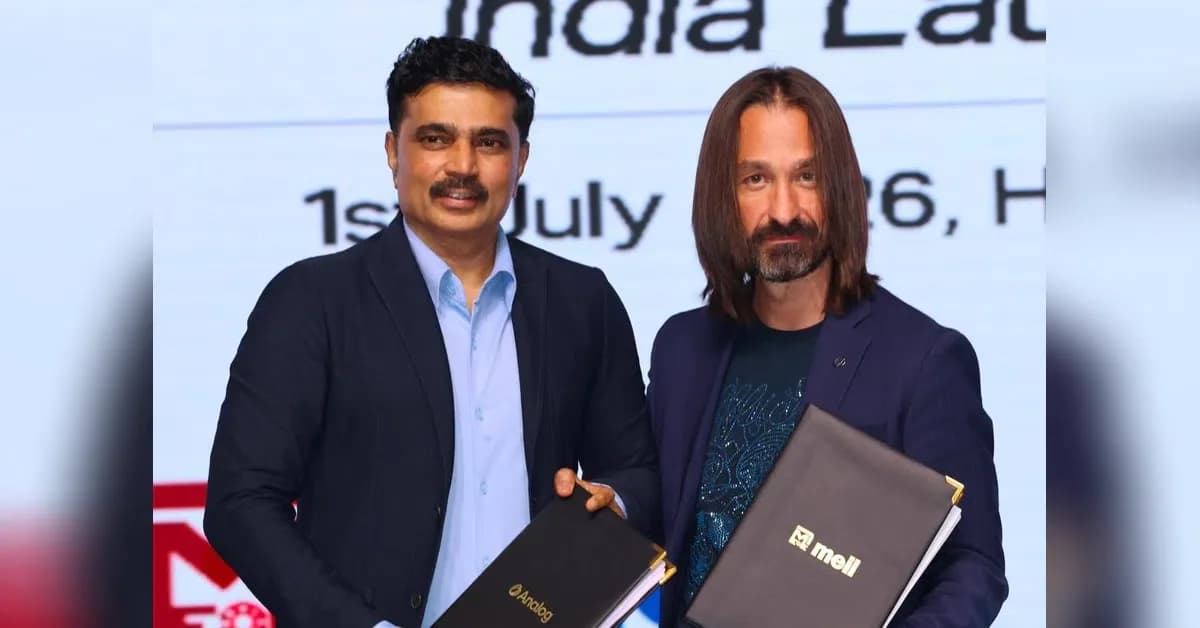
According to Business Standard, Kipman emphasized that data sovereignty is the most important principle followed by Analog, with no data leaving the country and storage occurring in India while complying with all government privacy legislation. He suggested that physical intelligence should be treated as a utility like water or connectivity, metered so that users pay more based on usage, providing enough return on investment to make the technology viable for providers.