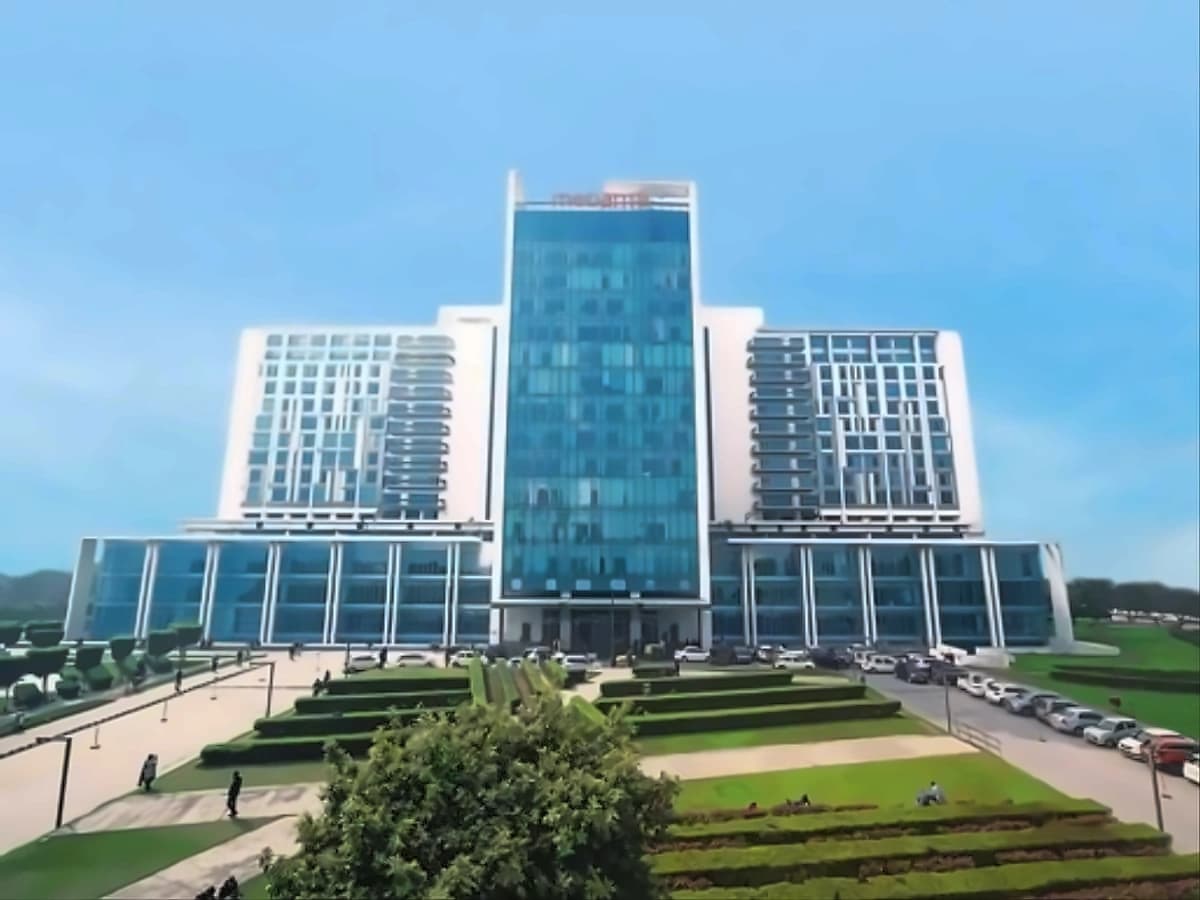
Max Smart Super Speciality Hospital in Saket has completed a significant expansion by adding a 400-bed tower, bringing its total capacity to approximately 1,200 beds. According to reports from CNBC TV18, this expansion makes it the largest private hospital in Delhi by bed capacity. Chairman and Managing Director Abhay Soi has revealed that a further 600-bed expansion is planned at the same campus over the next three to four years, taking the census bed count to about 1,800 beds. The company's current expansion programme aims to take Max's total capacity to more than 10,000 beds over the next few years, with around 4,000 beds expected to be added over the next three to four years. As per Moneycontrol, Soi indicated that the expansion can be funded through internal accruals, reducing the need for fresh equity.
The new facility houses cutting-edge surgical equipment including the Da Vinci Xi Surgical Robot and Mako Total Knee Replacement Robot, as reported by CNBC TV18. These advanced technologies will support minimally invasive procedures across multiple specialities, strengthening the hospital's ability to provide tertiary and quaternary care across more than 22 specialities. At the newly opened Saket facility, Soi said Max has focused on robotics, artificial intelligence and premium patient infrastructure aimed at both domestic and international patients. Around 40 percent of Delhi patients come from outside NCR, while international patients contribute roughly 9 percent of business. The deployment of robotic surgical platforms further enhances its positioning in quaternary care, promising superior clinical outcomes and quicker patient turnaround times.
According to Moneycontrol, Max Healthcare generated free cash flow of ₹397 crore in the June quarter and reiterated its strategy of deploying cash towards capacity expansion and acquisitions. Chairman and Managing Director Abhay Soi told Moneycontrol that the company intends to continue pursuing M&A opportunities and is comfortable increasing leverage from current levels. "My target is that I operate near 2.5 times debt to EBITDA. Right now, we are less than 1 time debt to EBITDA," Soi explained. The company ended June with net debt of ₹2,384 crore and a net debt-to-EBITDA ratio below 1. Soi indicated that Max is not restricted by geography or asset size and would consider regional hospital chains if returns meet its thresholds, looking at around 20-21 cities across India and currently present in nine cities.
As reported by CNBC TV18, Max Healthcare reported its first-quarter earnings in August with net profit rising 3% to ₹357 crore from ₹345 crore in the year-ago period. Revenue increased 15.2% to ₹2,835 crore from ₹2,460 crore, while EBITDA rose 15% to ₹704 crore from ₹613 crore. However, EBITDA margin contracted marginally to 24.8% from 24.9%. The company's board also approved a capital expenditure of ₹425 crore to set up an additional hospital block and gave in-principle approval for setting up medical colleges or medical institutions. Despite the heavy expansion pipeline, Soi remains confident that margins will hold up because nearly 70 percent of upcoming capacity is brownfield, where occupancy ramps up quickly.
Beyond the Saket expansion, Max plans to add about 100 beds in Lucknow and commission a 500-bed hospital in Gurugram by the end of FY27. The company is also expanding in Mumbai, Mohali, Dwarka, Pitampura and other markets. Max Healthcare treated more than 40 lakh patients from over 800 cities and 180 countries in the last financial year. The company operates 21 healthcare facilities with more than 6,100 beds and provided free treatment worth ₹244 crore to 3.60 lakh patients last year. The recent acquisition of a 58.28% stake in Kalinga Hospital, Bhubaneswar for approximately ₹298 crore, adding 250 beds to its network in August 2026, demonstrates the company's active scaling strategy through both organic and inorganic routes.