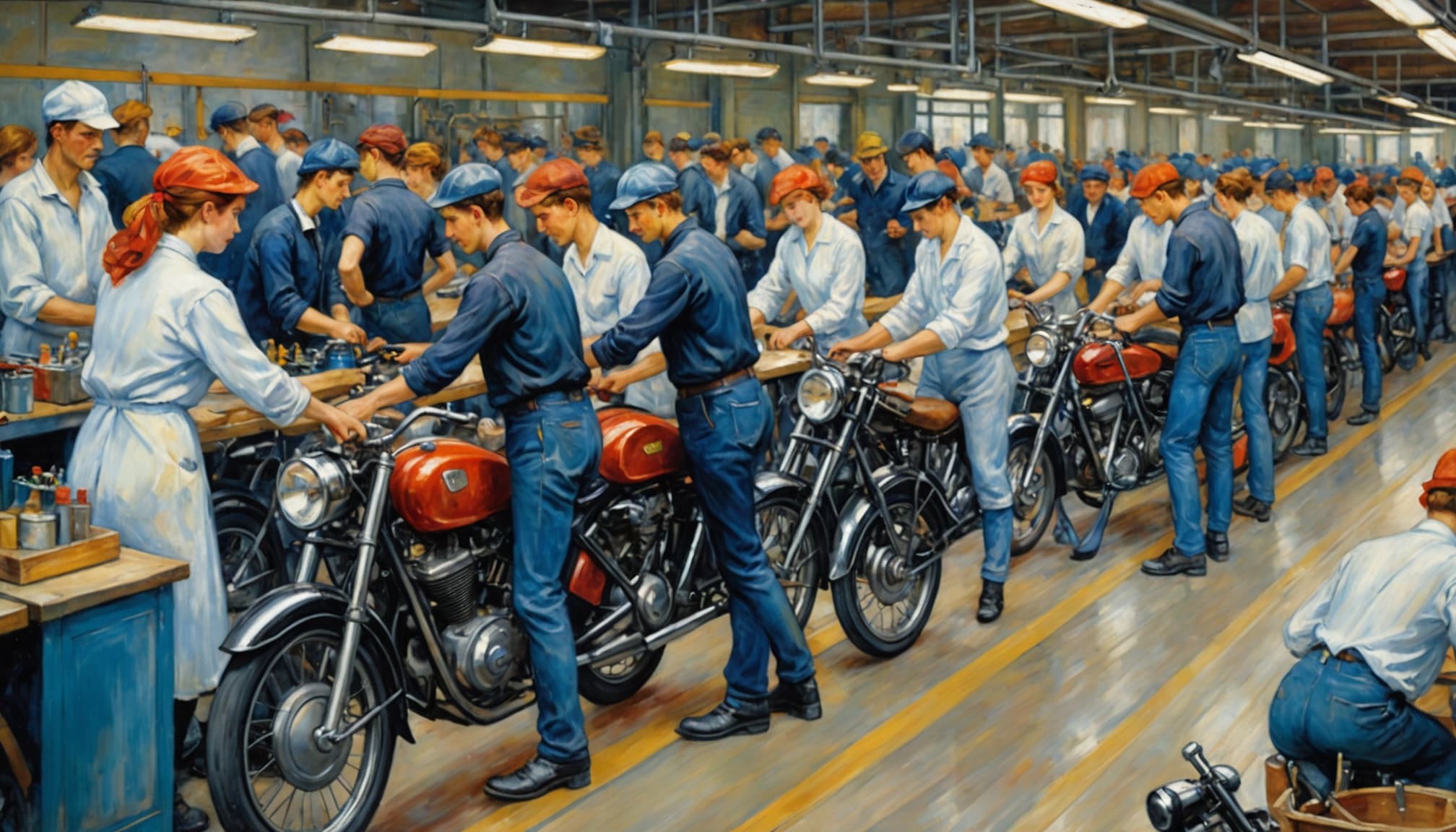
Car market leader Maruti Suzuki India Ltd has signed a Memorandum of Understanding with the Directorate of Employment and Training (DET), Government of Gujarat to establish Advanced Manufacturing Labs at five Industrial Training Institutes in Gujarat. According to the company, the initiative is aligned with the central government's Skill India mission and is part of a ₹14,000 crore record capital expenditure earmarked for FY27. The Advanced Manufacturing Labs will be set up at Industrial Training Institutes in Palanpur, Bhavnagar, Surendranagar, Godhra, and Dahod. As per ETAuto, the labs are designed to replicate shop-floor conditions and offer hands-on training in assembly, welding, painting, machining, mechatronics and safety.

MSIL Senior Executive Officer, Corporate Affairs, Rahul Bharti emphasized that through Advanced Manufacturing Labs, students are being equipped with experiential learning and confidence in modern equipment. The initiative aims to nurture professionals who can seamlessly integrate into the evolving automotive ecosystem. Bharti noted that the company's collaboration with the Skill India mission is meant to create livelihood opportunities for young people through relevant skill training. He added that the company's planned expansion in the state would require a correspondingly skilled workforce, with the labs intended to give students practical experience with modern equipment to help them enter the automotive sector. Stuti Charan, IAS, Director, DET, Government of Gujarat, stated that by setting up Advanced Manufacturing Labs in Gujarat's ITIs, Maruti Suzuki is bridging the gap between classroom learning and industry requirements, as reported by ETAuto.
The ₹14,000 crore capex plan focuses on adding 5 lakh units of annual production capacity across Gujarat and Haryana facilities, supporting Maruti Suzuki's ambitious goal to reach 4 million unit annual capacity by 2030. The company is starting a fourth production line at its Hansalpur facility this year, which would take total annual capacity there to 1 million units from the current 750,000. Additionally, the company is setting up a separate plant with a capacity of 1 million units at Sanand, Gujarat. Combined, the company's annual production capacity in the state would rise to 2 million units. This expansion aligns with the company's transition towards EV manufacturing in Gujarat and supports its 'Make in India' goals.
The labs form a critical component of Maruti Suzuki's strategy to increase localization of the workforce to mitigate future labor shortages in the Sanand and Hansalpur hubs. As per recent reports, the initiative represents a shift from passive CSR-led training to active, lab-integrated technical education. Currently, Maruti Suzuki supports 31 ITIs across India in manufacturing-related trades and has set up 18 AMLs across the country. With the addition of five in Gujarat, the company will operate 23 AMLs across seven states and union territories, including Gujarat, Haryana, Uttar Pradesh, Bihar, Madhya Pradesh, Punjab, and Chandigarh. The ₹35,000 crore total planned investment for the new Khoraj facility in Gujarat will add 2.5 lakh units of annual capacity and establish Gujarat as the company's primary hub for both domestic high-growth models and global exports of the e Vitara.
Despite a 7% PAT dip in Q4 FY26 due to accounting adjustments, Maruti Suzuki reported its highest-ever monthly sales volume of 242,688 units in May 2026. The company implemented a price hike of up to ₹30,000 across its portfolio in June 2024 to offset rising input costs. The ₹10,189 crore board-approved investment for the first phase of the Khoraj plant will add 2.5 lakh units of annual capacity. The company also operates four Japan-India Institutes for Manufacturing (JIMs) in Gujarat and Haryana, established as a joint initiative between the governments of India and Japan. This comprehensive expansion strategy positions Maruti Suzuki for aggressive volume growth while strengthening its competitive moat in the mass-market segment.