Maruti Suzuki shares fell over 2% to ₹13,911 on the NSE in early trade on Monday, August 3, despite the country's largest carmaker reporting record quarterly vehicle sales. According to The Economic Times, the stock declined despite the company posting consolidated net profit of ₹3,446.9 crore in Q1 FY27, compared with ₹3,792.4 crore in the same period a year ago, representing a 9.11% year-on-year decline. The market reaction reflects concerns over margin pressures despite strong revenue growth, with Maruti Suzuki declining 16.48% year-to-date and underperforming the BSE Sensex, which is down 7.74% during the same period. Of the 48 analysts tracking Maruti Suzuki, 43 have a 'Buy' rating, three recommend 'Hold' and two have a 'Sell' rating, according to Bloomberg data. The consensus 12-month target price stands at ₹15,959, implying a potential return of 13% from the last regular trade.
The company posted consolidated net profit of ₹3,446.9 crore in Q1 FY27, compared with ₹3,792.4 crore in the same period a year ago, representing a 9.11% year-on-year decline. However, total revenue from operations surged 35.9% YoY to ₹52,469.8 crore in Q1 FY27 from ₹38,605.2 crore in the corresponding quarter a year ago. Total expenses increased to ₹50,000.3 crore compared to ₹35,585.4 crore in the year-ago period, with cost of materials consumed shooting up to ₹32,013.2 crore from ₹21,936.8 crore in the corresponding period last fiscal. Ebitda margin narrowed significantly as the company implemented price hikes during the quarter. The company's board also approved four CBG (compressed biogas) projects in the first phase with a budget of ₹561 crore, demonstrating continued investment in alternative fuel technologies. According to Morgan Stanley, while first-quarter EBITDA missed estimates because of higher-than-expected commodity costs, it believes margins have bottomed out and sees the August price hike and easing aluminium and precious metal costs as key catalysts.
Maruti Suzuki Chairman R C Bhargava addressed the impact of the West Asian crisis on the company's pricing strategy, stating that "it will be shortsighted to put a dampener on customers if companies make big price increases primarily linked to cost escalation due to the war in West Asia." As reported by Business Standard, Bhargava explained that "in the first quarter, Maruti decided that it has enough resilience to absorb most of the short-term increase in costs. Therefore, volumes in the first quarter went up by 30 per cent, but profit fell by 10 per cent." The company has decided not to pass on the entire cost increase to customers, though some price increase is coming, with Bhargava noting that "if stable peace returns in West Asia, the increase in costs will go away in three to four weeks." The chairman emphasized that "We are comfortable with this, as one has to take a longer term view beyond a quarter."
Maruti Suzuki achieved its highest-ever monthly production of 248,845 units in July 2026, representing a 33% jump over the same month last year. According to The Economic Times, this marks a significant milestone for the country's largest carmaker, demonstrating strong operational execution despite margin pressures. The exceptional production performance was driven by robust demand across all segments, with the mini segment experiencing a sharp 85.20% YoY jump to 12,634 units compared to 6,822 units in July 2025, while compact and mid-size models expanded 37.94% YoY to 90,822 units. The momentum continued into July 2026, with the company achieving total sales of 241,421 units, marking a 33.73% year-on-year growth compared to 180,526 units in July 2025. SUV sales outpaced overall volume growth, reflecting Maruti's continued expansion in a segment where it had previously trailed larger rivals, while strong growth in small car sales supported volumes across both entry-level and premium offerings. Despite a record production, Maruti Suzuki India Ltd Senior Executive Officer, Marketing & Sales, Partho Banerjee said the company's dealer inventory is much lower compared to the average as it registered retail sales of 1.78 lakh units in July, with network stock at just 16 days across the dealer network compared to the industry average of 30 days.
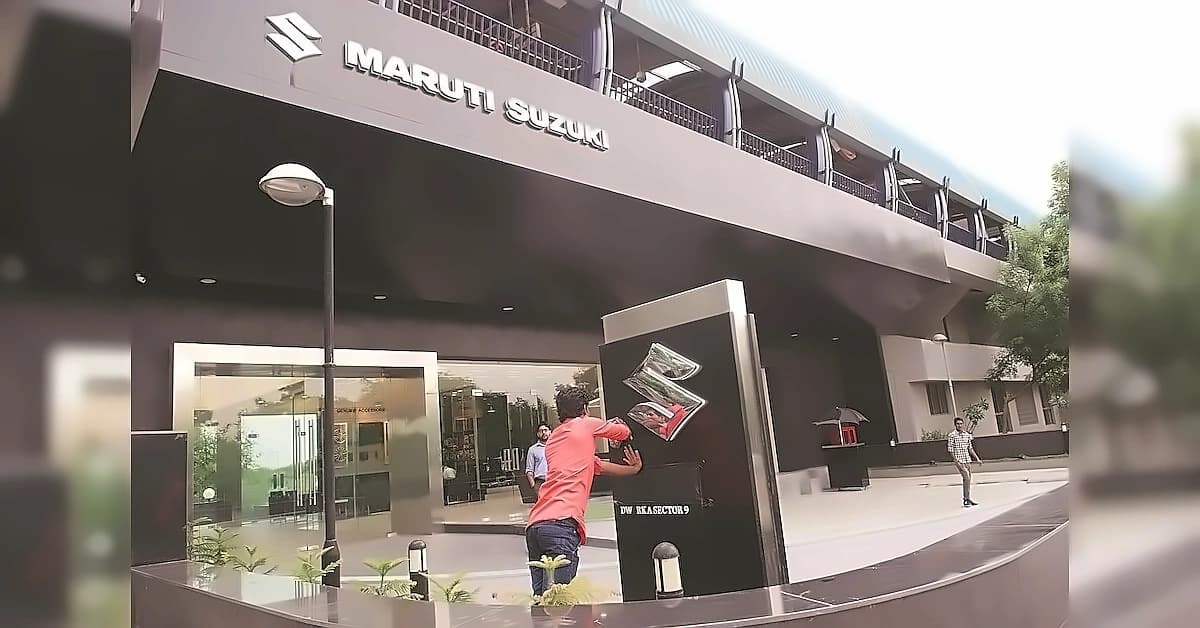
Maruti Suzuki is ramping up production capacity from 2.4 million to 2.9 million by the end of FY27, with plans to add another 250,000 capacity in FY29 and reach 3.3-3.5 million capacity by FY31, potentially going up to 4.4 million by FY33. According to Business Standard, the company is clearing the backlog of orders of around 130,000 in the next two to four months and has put in a separate line in Kharkhoda for the new Brezza model, which is receiving 2,000 to 3,000 daily bookings. The Gujarat plant is expected to get rolling only in 2029, with the company waiting to finalise its five-year projection before deciding whether to bring forward the completion of Gujarat capacity due to acceleration in demand. In FY27, Maruti expects to end at 4.8 lakh vehicles to Europe, with a bulk of this being electric vehicles, as the company already accounts for 50% of all car exports from India.
Despite margin pressures, brokerages remained largely constructive on the country's largest carmaker, saying the June-quarter margin weakness is likely to ease over the coming quarters as commodity pressures moderate and demand remains healthy. Motilal Oswal has reiterated its Buy rating with a target price of ₹17,064, implying a 20% upside, expecting Maruti to outperform in FY27 supported by new product launches, recovery in passenger vehicle demand, lean dealer inventories and ramp-up of two new manufacturing facilities. The brokerage believes sustained market share gains could trigger a re-rating, while easing raw material costs and steady volume growth should help normalise margins, expecting the company to deliver a 20% earnings CAGR over FY26–FY28. Elara Securities also remains bullish with a BUY rating, raising the target price to ₹17,298 from ₹16,546 and valuing MSIL at 26x September 2028E EPS, as it expects Q1 margin compression to unwind through Q2FY27. Nomura has maintained a Neutral rating with a target price of ₹14,071, raising volume estimates by 12.5% to 2.72 million for FY27 but lowering Ebitda margins to factor in higher cost pressures, while cautioning that higher vehicle prices may hurt demand for small cars. The global brokerage believes current valuation at ~27x FY28F core EPS is fair and prefers M&M and Hyundai Motor among four-wheeler OEMs. HSBC noted that demand remains robust, while the launch of the new Brezza is expected to support volume growth in FY27 despite a high base in the second half, though it added that valuations are no longer inexpensive following earnings estimate cuts.