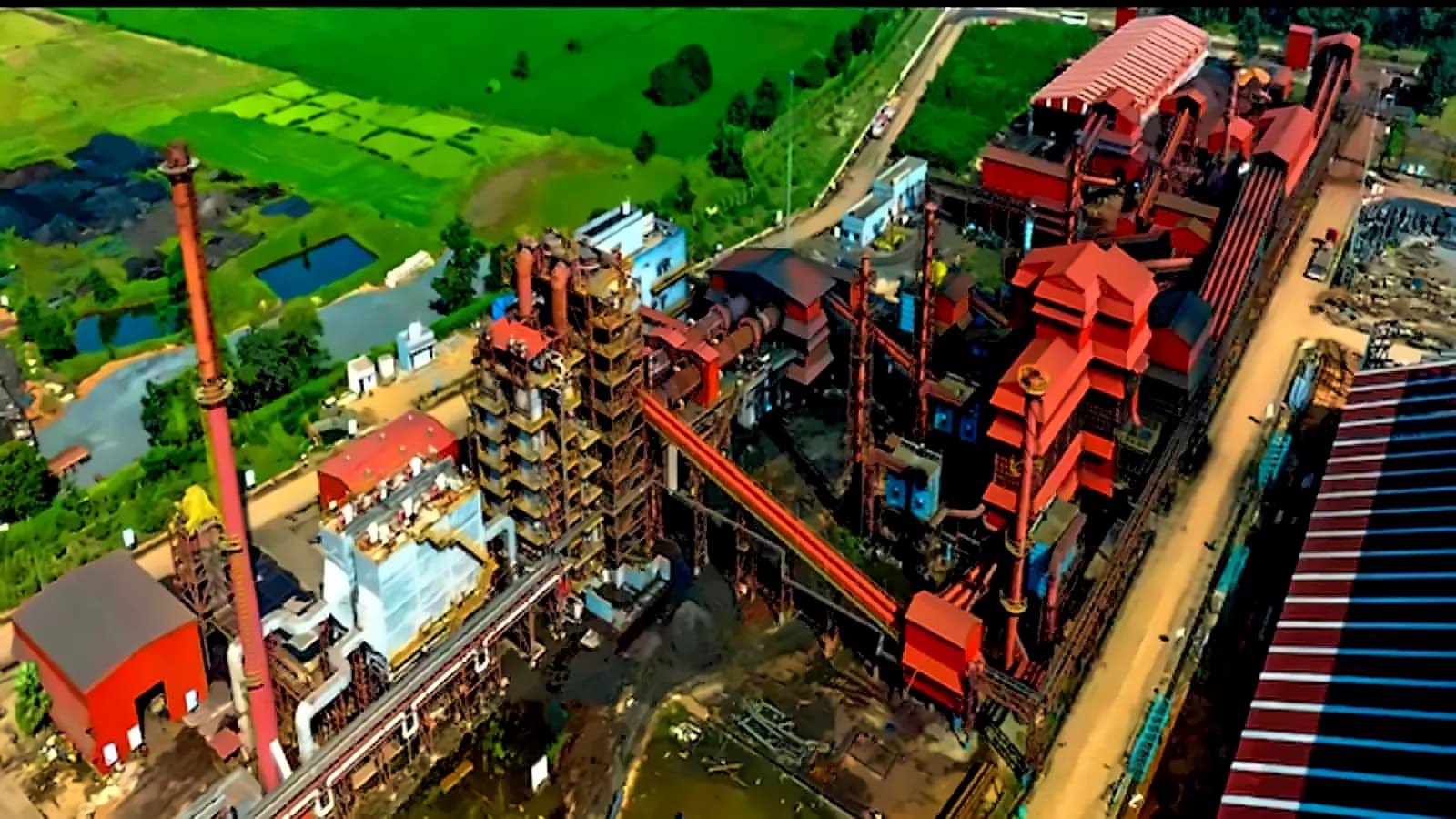
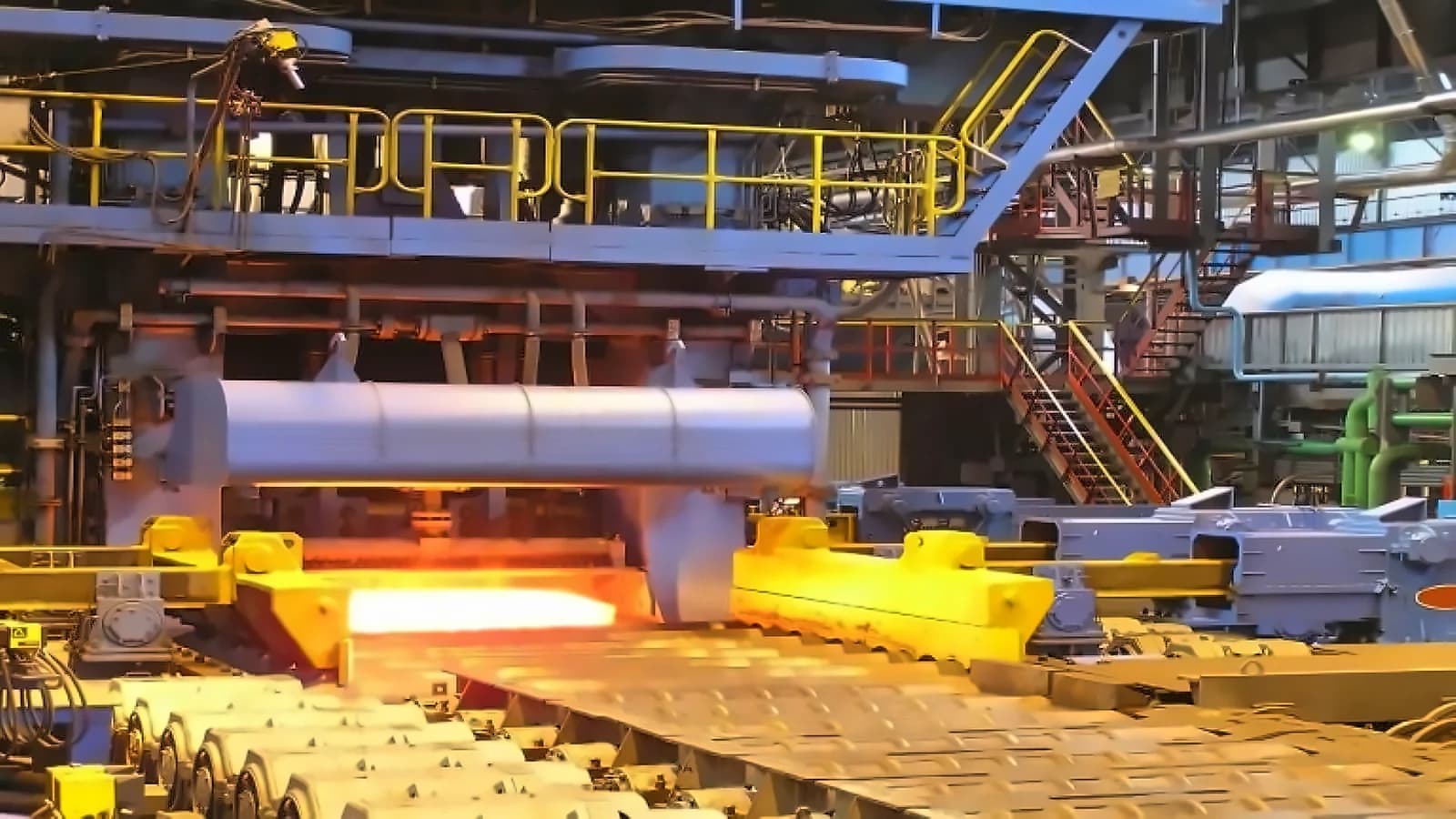
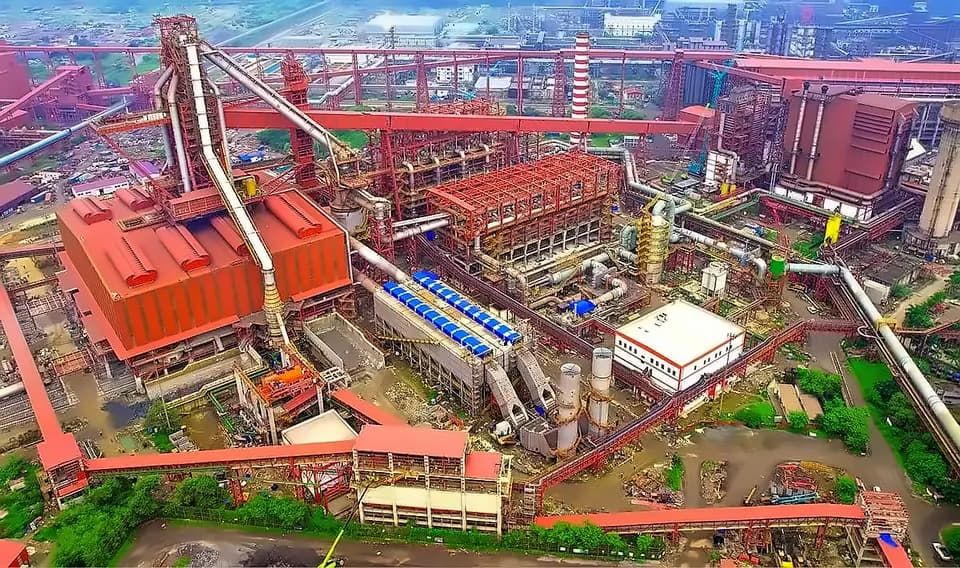
Lloyds Metals and Energy Ltd approved ₹190 crore investment to expand capacity at its Direct Reduced Iron (DRI) plants at Ghugus and Konsari in Maharashtra. According to reports from CNBC TV18, the expansion will increase total DRI capacity above 9 lakh tonnes per annum. The Ghugus plant's capacity will rise by 1.85 lakh tonnes per annum to 8.15 lakh tonnes per annum from 6.30 lakh tonnes per annum, while the Konsari plant's capacity will increase by 22,400 tonnes per annum to 92,400 tonnes per annum from 70,000 tonnes per annum. Both expansions will be completed within one year through internal accruals, with the company scaling DRI capacity to 907,400 MTPA using entirely self-generated cash flows, demonstrating strong operational liquidity and allowing the company to lock in value-added sponge iron margins rather than relying solely on commodity ore sales.
The board approved the issuance of two separate non-convertible debentures (NCDs) aggregating up to ₹1,550 crore through private placement. As reported by CNBC TV18, the first NCD will be up to ₹600 crore, while the second will be up to ₹950 crore. The proposed issuance is subject to applicable regulatory and statutory approvals and falls within the overall limits previously approved by the board on 5 May 2026. The company will invest ₹140 crore at the Ghugus plant and ₹50 crore at the Konsari plant, with both expansions financed through internal accruals. The NCD programme provides Lloyds Metals with access to additional debt capital without requiring immediate equity dilution, though the company plans to fund the DRI expansion projects through internal accruals rather than using the newly approved NCD programme for these specific investments. The board authorized ₹1,550 crore of NCD issuances, structured into tranche limits of ₹600 crore and ₹950 crore to maintain an active capital buffer, leaving the debt program available for larger structured capital allocations on the horizon.
Lloyds Metals reported robust financial performance in Q1 FY27, with consolidated revenue reaching ₹7,354 crore compared to ₹2,384 crore in Q1 FY26, representing significant growth. According to CNBC TV18, consolidated EBITDA increased to ₹2,942 crore from ₹833 crore in the corresponding quarter, with EBITDA margin standing at approximately 40% compared with around 35% a year earlier. This substantial increase in operating scale provides a strong financial backdrop for the company's latest capacity expansion initiatives. The company's improved financial metrics demonstrate enhanced operational efficiency and provide a solid foundation for the planned DRI capacity enhancement. The consolidated Q1 FY27 top-line grew exponentially to ₹7,354 crore compared to ₹2,384 crore in the previous year's quarter, showcasing massive scalability. EBITDA margins expanded by 500 bps to 40% in Q1 FY27, backed by superior operational integration and high captive iron ore utilization from Surjagarh, with the company capturing value from captive iron ore mining to pelletisation and DRI production, establishing structural cost advantages that few peers in the mid-cap ferrous metals space can match.
The board approved the allotment of 1,41,969 equity shares under the Lloyds Metals and Energy Limited Employee Stock Option Plan – 2017. As reported by CNBC TV18, the shares were allotted to the Lloyds Employees Welfare Trust at an exercise price of ₹4 per share, which includes a premium of ₹3 per share. Following this allotment, the issued and paid-up equity share capital stands increased to ₹56,30,48,920, comprising 56,30,48,920 equity shares. The newly allotted shares will rank pari passu with existing equity shares. This employee stock option plan allotment represents a significant component of the company's broader employee compensation strategy alongside the major debt fundraise and capacity expansion initiatives.
The capacity enhancement will be achieved through debottlenecking measures and optimisation of process and technological parameters. According to CNBC TV18, the expansion is aimed at improving operational efficiency and utilisation of existing kiln facilities at both plants. The planned increase to more than 900,000 MTPA of DRI capacity materially raises the company's potential output, allowing Lloyds Metals to move a larger portion of its raw-material output further along the steel value chain rather than relying mainly on upstream mining operations. With iron ore production peaking and the Surjagarh mine logistics integrating via the slurry pipeline, scaling internal processing via DRI plants is a natural hedge against raw material price volatility. The forward-integration model stabilizes EBITDA margins against steel cycle downturns, though future performance will depend on production volumes, raw-material availability, steel and sponge-iron realisations, and the contribution from additional downstream capacity after commissioning. The company's strategy of increasing value addition within its operations broadens its revenue mix and reduces dependence on a single stage of the metals value chain, though higher utilisation will be crucial to generate suitable returns on the ₹190 crore investment.
Lloyds Metals shares are under spotlight following the board's approval of NCD issuances and DRI plant capacity expansion. As per NSE data, Lloyds Metals and Energy shares were trading at ₹1,824.60 apiece on the National Stock Exchange at 12:31 PM, falling 0.11% on September 21, 2026. From the beginning of the year, Lloyds Metals and Energy shares have jumped 35%, while over a month's time, the stock has fallen 2.5%, and for a six-month period, it has soared 50%. The company's shares had hit a 52-week high of ₹2,125 on August 10, 2026, and a 52-week low of ₹1,042.90 on February 2, 2026. According to NSE data, as of September 21, 2026, Lloyds Metals and Energy has a total market capitalisation of ₹1.03 lakh crore.