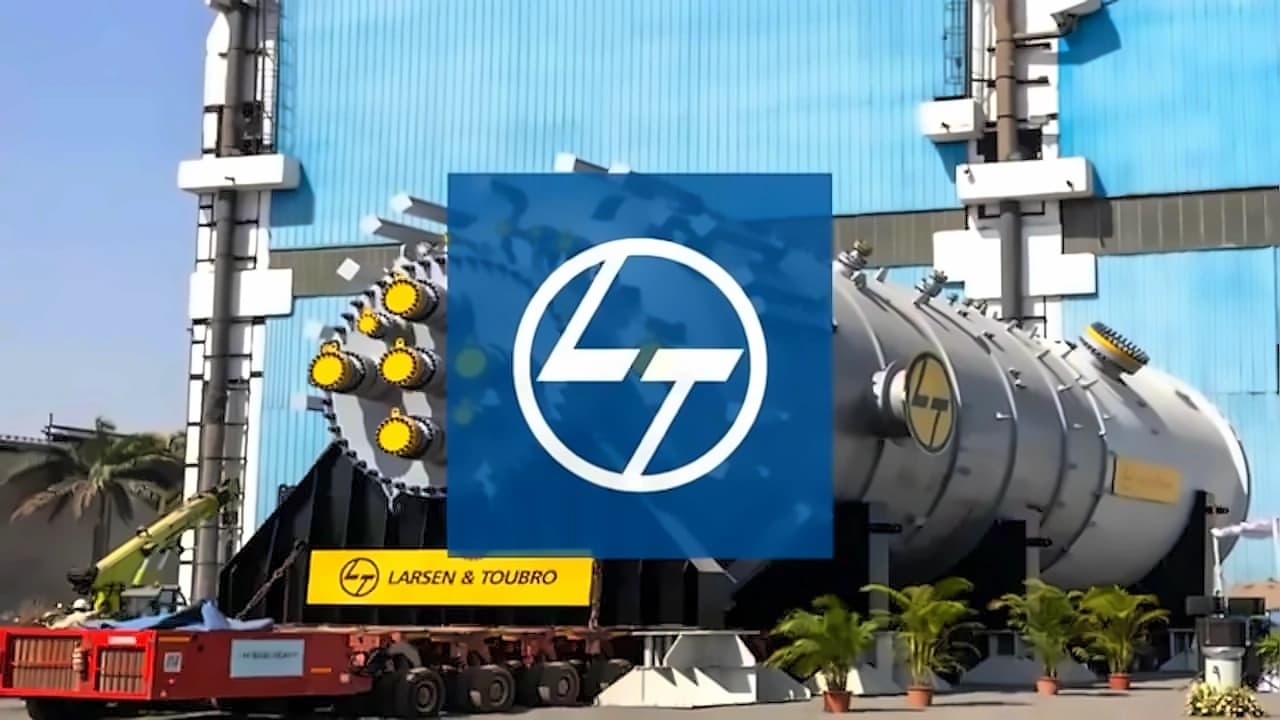
Larsen & Toubro has successfully completed fabrication and delivery of 110 modules weighing approximately 64,000 tonnes for Australia's largest urea plant, Project CERES. The modules were fabricated at L&T's Modular Fabrication Facility at Kattupalli near Chennai over 30 months and shipped to Australia through 23 marine shipments in fully tested, pre-commissioned and ready-to-install condition. According to The Economic Times, the project represents a significant milestone for the engineering major's modular construction capabilities, with the modules delivered after being fully tested, pre-commissioned and made ready for installation, reducing construction activities at the project site. The global modularisation market is projected to grow to $150 billion over the next five years, with L&T targeting opportunities worth $30 billion of this addressable market. As reported by The Economic Times, Deputy Managing Director and President Subramanian Sarma explained that the modularisation market size will grow as skillset availability decreases globally, making modular consumption more propagated and the market opportunity larger.
L&T currently operates 200,000 tonnes of modular fabrication capacity across three centres in Oman, Hazira and Kattupalli, as reported by Essential Business Intelligence. Chairman and Managing Director S. N. Subrahmanyan indicated that after offshore requirements, approximately 100,000 tonnes could be available for onshore modularisation. This capacity is equivalent to roughly three CERES-scale projects running concurrently, positioning the company for significant global expansion. Deputy Managing Director Subramanian Sarma emphasized that modularisation is transforming the execution of large and complex energy projects by shifting significant portions of construction, integration, testing and pre-commissioning activities from project sites to controlled factory environments. The strategy is specifically aimed at addressing India's skilled construction worker shortage, with L&T operating more than 23 training institutes and training approximately 46,000 people annually, while maintaining a database of workers who have worked with the company over the past decade.
The company expects minimal incremental capital requirements to scale its modular business, according to Deputy Managing Director Subramanian Sarma. As reported by Essential Business Intelligence, Hazira is fully depreciated while Kattupalli is approximately 50%-60% depreciated. Sarma emphasized that L&T has "no very high fixed cost" with break-even on the lower side, focusing on increasing utilization and profitability of existing assets. The global modularisation market is projected to grow to $150 billion over the next five years, with L&T targeting opportunities worth $30 billion of this addressable market. Sarma highlighted that modularisation can materially reduce project delays by moving work into controlled fabrication environments, where labour availability, weather and other site-level disruptions can be better managed, with risks substantially mitigated and completion certainty significantly increased. The modularisation business is expected to grow to $150 billion during this period, with L&T aiming for approximately 20% market share.
The modularisation strategy addresses India's skilled construction worker shortage, with L&T operating more than 23 training institutes and training approximately 46,000 people annually, as reported by Essential Business Intelligence. Sarma highlighted that modularisation can materially reduce project delays by moving work into controlled fabrication environments, where labour availability, weather and other site-level disruptions can be better managed. "Those risks will get substantially mitigated," Sarma said. "Naturally, I think the certainty in terms of completion on time increases quite significantly." The CERES project serves as a reference case for competing with Chinese and Southeast Asian suppliers, with L&T utilizing automation and high-productivity measures. Modular construction offers benefits such as geographical flexibility, parallel execution, and improved safety and quality control, with L&T being "agnostic to the geographical location" as it fabricates in India and supplies globally, as long as there is a water body nearby for shipping. The company is uniquely positioned to capitalize on hybrid solutions, especially in extreme conditions, remote locations, or front-end nature projects where workforce shortage is a key constraint.
L&T is exploring equity partnerships for its Kandla green-ammonia project, potentially bringing external capital into the 300,000-tonne-a-year facility, according to Essential Business Intelligence. Japan's ITOCHU has agreed to take the output under a long-term take-or-pay arrangement. Subrahmanyan indicated the Kandla offtake agreement is largely complete, with L&T expecting to conclude remaining clauses within weeks and targeting Final Investment Decision by end of 2026 or early 2027. The company is seeking policy support through higher credit-line facilities, concessional taxation for export projects and export incentives, as reported by Essential Business Intelligence. Sarma said such support would help, but L&T still needs to compete on productivity, emphasizing "We have to learn to become competitive and compete in the global market." The global opportunity is substantial, with Sarma pointing to Canada, Australia and the US Gulf Coast, where labour costs and shortages support modular construction. Project CERES reflects how L&T is elevating India's role in the global project-delivery ecosystem, from a manufacturing base to a source of integrated engineering, technology and execution capabilities.