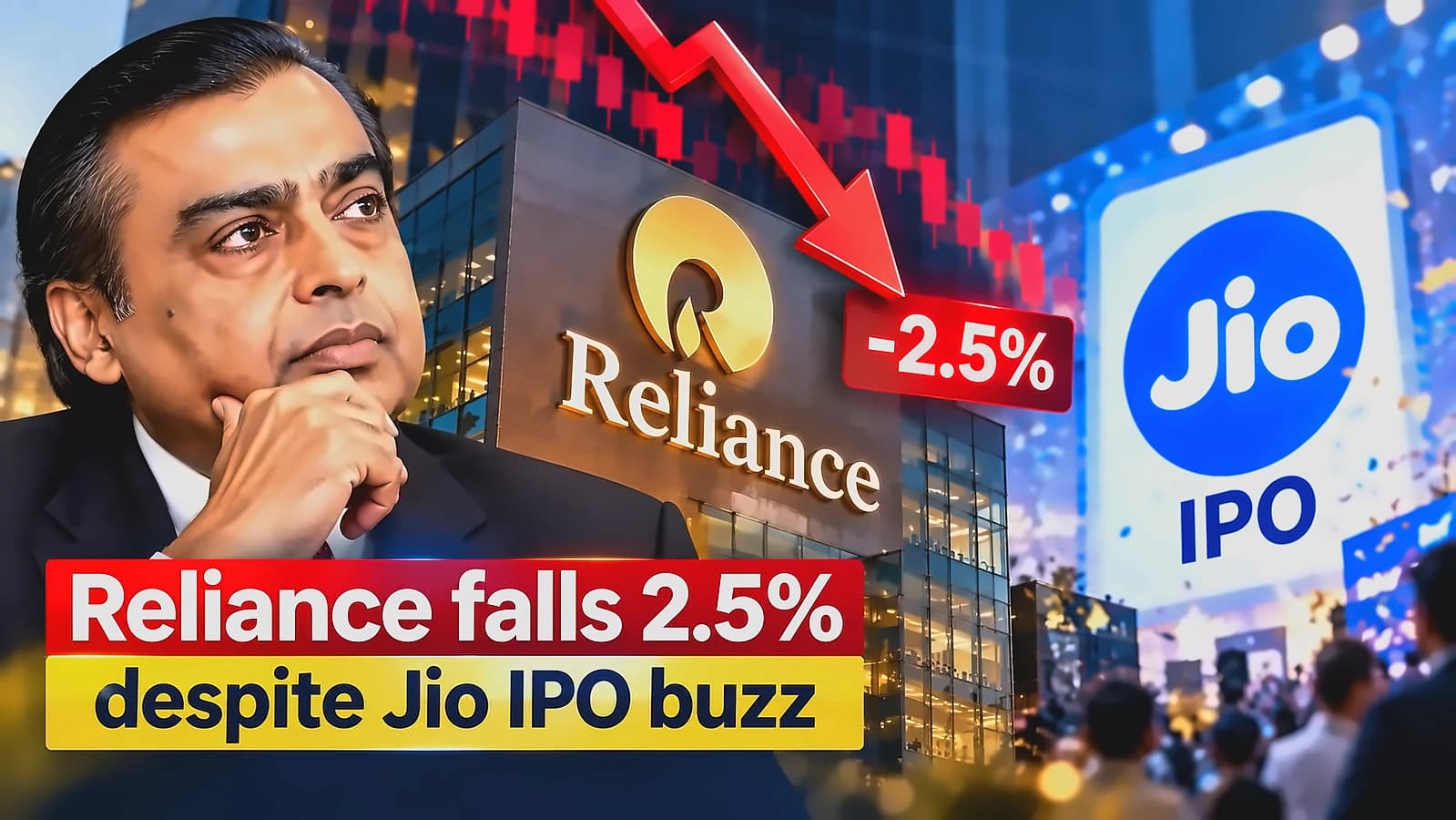
Reliance Jio is set to launch a ₹30,213 crore IPO featuring solely new equity shares, marking a significant departure from recent Indian IPO trends dominated by offers for sale (OFS). According to market reports, this fresh issue approach aims to cut down Jio's debt while bolstering its financial standing, representing a record-breaking offering for domestic public markets. At the upper price band, Jio would command a valuation of about ₹10.3 lakh crore, making it one of India's most valuable listed companies. The company's financial investors, including entities associated with Saudi Arabia's Public Investment Fund, KKR, Vista Equity Partners, Silver Lake, Mubadala, General Atlantic, ADIA and TPG, are expected to collectively hold about 14-15% after the IPO, excluding Meta and Google.

According to reports from ET Now, Reliance Industries has implemented four 1:1 bonus issues since 1989, fundamentally transforming investor holdings. An investor who held one share in 1989 would now own 16 shares through these bonus allotments alone. The company's bonus history includes ratios of 1:1 in 1997, 2009, 2017, and 2024, each time doubling the investor's original holding. The latest bonus issue in 2024 brought the total multiplication to 16 shares from the original single share.
As reported by ET Now, Reliance Industries has delivered substantial dividend payments over more than three decades. The cumulative dividend payout amounted to ₹269.35 per share between FY1990 and FY2026. The dividend distribution showed significant growth over time, with FY1990-FY2000 contributing ₹41.85 per share, FY2001-FY2010 adding ₹80.50 per share, FY2011-FY2020 contributing ₹85.50 per share, and FY2021-FY2026 providing ₹61.50 per share. The latest dividend announced was ₹6 per share for FY2025-26.
According to ET Now, Reliance Industries has delivered substantial share price appreciation since its initial public offering in 1977. The company's IPO was priced at ₹10 per share and was oversubscribed seven times, marking a milestone in India's equity market. At the current market price of ₹1,223.30, the stock has appreciated by approximately 12,133% from its IPO price. This means that a ₹10,000 investment made at the IPO price would have grown to about ₹12.23 lakh at current levels, reflecting the company's long-term wealth creation for shareholders.
The Jio IPO's fresh equity structure stands out in a market where several of India's biggest public offerings have been dominated by offers for sale. An analysis of six large IPOs shows that four delivered positive listing returns, but only two were trading above their issue prices as of October 15, with one nearly unchanged. Market experts note that while issuing new shares would dilute earnings per share by about 2.9%, interest savings from debt repayment could offset part or potentially all of that effect. The IPO's success will ultimately depend on Jio's ability to deploy proceeds productively and execute its growth strategy, with the company's strong fundamentals and market position supporting long-term investor confidence.