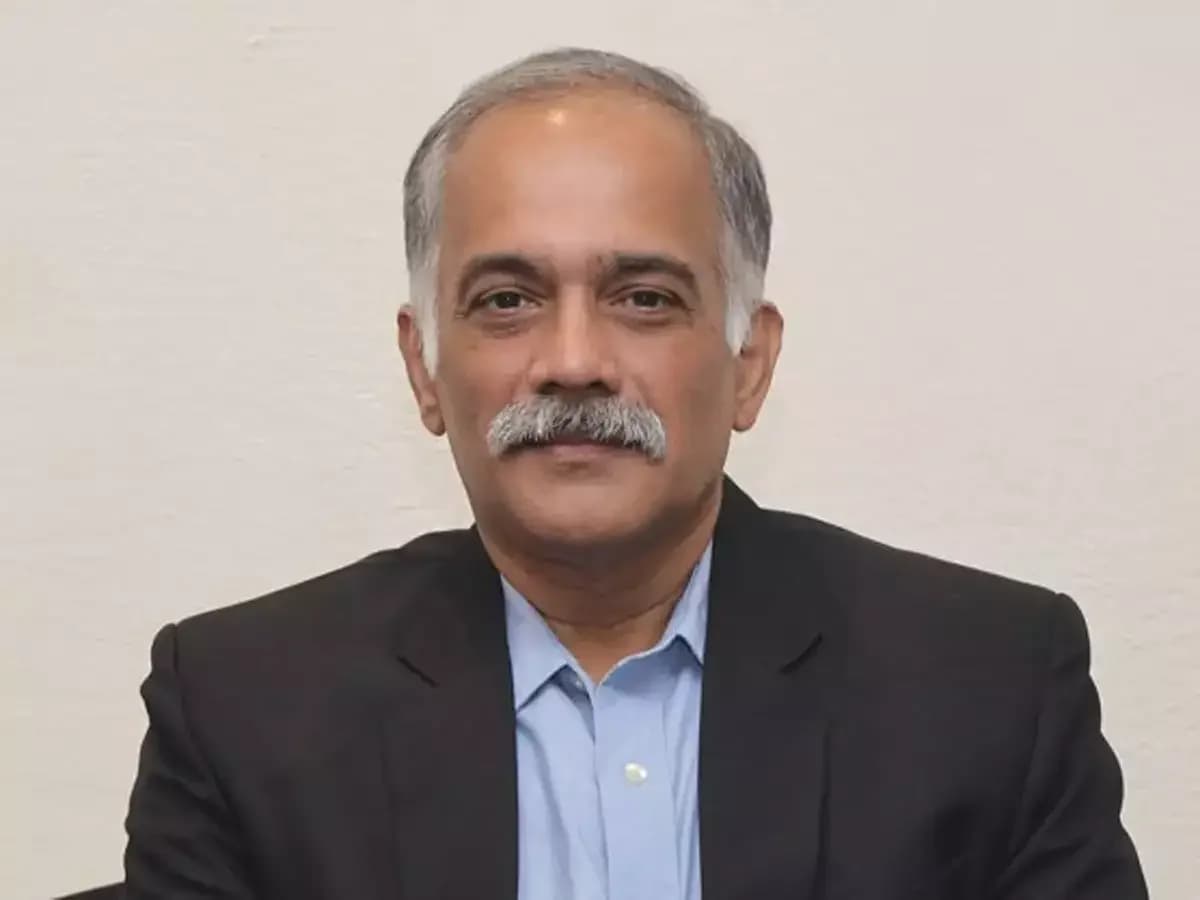
Jio Financial Services is preparing to launch an artificial intelligence-powered 'personal CFO' and membership program on the JioFinance app, as the company scales its lending, asset management and payments businesses while seeking to leverage its digital distribution network to acquire customers at lower costs. According to CEO Hitesh Sethia at the company's annual general meeting, the personal CFO will provide financial advice and actionable recommendations based on a proprietary financial fitness score, offering truly unbiased advisory to users. The membership programme will offer structured value-back rewards for transactions conducted through the JioFinance marketplace, providing additional value to users while deepening engagement with the platform. The company's JioFinance app has evolved into what the company describes as a 'neural agentic marketplace', designed to use AI and machine learning models to offer hyper-personalised financial products and advice.
Jio Financial Services delivered robust financial performance in Q1 FY27, with Jio Credit's gross assets under management crossing ₹30,000 crore marking a 163% year-on-year increase. Quarterly disbursements at Jio Credit rose 173% year-on-year to ₹11,252 crore, while total borrowings stood at ₹28,120 crore and the company's debt-to-equity ratio was 3.9. The company's Jio Payments Bank achieved an operational turnaround with total income rising 7.7 times year-on-year to ₹83 crore, while customer deposits increased 72% year-on-year to ₹617 crore and the customer base reached 3.9 million CASA customers. Jio Payment Solutions also achieved an operational turnaround with total payment value rising 2.5 times year-on-year to ₹19,250 crore. As per Business Standard, JFS has moved beyond the foundation-building phase and is now operating at meaningful scale across its financial services ecosystem.
Jio Financial Services is building a comprehensive full-stack financial ecosystem spanning lending, payments, investments and insurance, with JioFinance at the center of its customer engagement strategy. According to CEO Hitesh Sethia, the strategy combines proprietary financial products with marketplace aggregation and an AI-native interface designed to offer personalised solutions. As reported by CNBC TV18, the approach is built around a 'virtuous flywheel' where high-frequency engagement in transaction and banking layers feeds directly into lending, investment, and protection products. The company's consolidated shareholders' equity stood at ₹1.34 lakh crore as of March 31, 2026, while it deployed around ₹2,900 crore in equity across operating subsidiaries and joint ventures during FY26. The broader ambition is to build a full-stack financial ecosystem in which high-frequency engagement in payments and banking feeds into lending, investments and insurance, creating a virtuous growth cycle for JFS. Sethia emphasized that "Jio Financial Services is in a unique position of strength, where even in an early growth phase we do not need to resort to aggressive cash burn for brand-building and customer acquisition."
The cornerstone of Jio Financial's lending strategy is its partnership with Bank of America, which has been significantly strengthened with a JV agreement under which the US bank will invest up to ₹18,268 crore for as much as a 49.9% stake in Jio Credit. As reported by CNBC TV18, this partnership provides growth capital alongside global banking expertise, advanced risk-management practices, governance standards and technology capabilities. The partnership will provide Jio Credit with significant growth capital, global governance and risk management practices, and an advanced tech stack to support its expansion. The proposed partnership between Jio Credit and Bank of America could provide additional firepower, with the partnership expected to bring additional capital, global risk-management expertise and technology capabilities to support Jio Credit's growth trajectory.
Jio Financial's digital properties have crossed 25 million unique users, with monthly active users averaging around 9 million in the June quarter. The company's recommendation engines currently drive 56% of app conversions through 'Next Best Offer' targeting, while it has deployed around 130 AI agents across its businesses supporting customer journeys, risk management, fraud prevention and regulatory processes. According to Sethia, JFS's existing brand, capital base and distribution network allow it to expand without relying heavily on spending to acquire customers. "Even in an early growth phase we do not need to resort to aggressive cash burn for brand-building and customer acquisition," Sethia said, adding that JFS remains profitable while investing in growth and retaining its core capital base. The company plans to expand an 'agentic-first' customer interface while retaining human oversight, with AI remaining central to its operating strategy. Sethia emphasized that "These structural moats directly power the virtuous flywheel effect we are building across Jio Financial Services."
Jio Financial Services is expanding its insurance ventures through strategic partnerships with Allianz, with its reinsurance joint venture already begun operations while the proposed 50:50 general insurance venture is awaiting regulatory and statutory approvals. The company is also in discussions with Allianz on a life insurance venture, with these businesses expected to help JFS address the broader risk-protection needs of retail and institutional customers. JioBlackRock is widening its distribution beyond digital channels through mutual fund distributors, while its securities-broking platform is expected to be launched in beta during Q2FY27. The company's JioBlackRock Asset Management's closing AUM stood at ₹18,412 crore in Q1 FY27, up 21% sequentially, and subsequently crossed ₹21,000 crore in July 2026, representing one of the fastest AUM build-ups in the country for a new AMC which commenced operations just over a year ago. CEO Sethia emphasizes that JFS remains committed to scaling within strict risk and regulatory guardrails while focusing on unit economics and cost optimisation.