Travel-tech platform ixigo delivered exceptional financial results for Q1 FY27, with consolidated net profit surging 81% year-on-year to ₹34.24 crore compared to ₹18.94 crore in the corresponding quarter last year. However, ixigo shares fell up to 15% to an intraday low of ₹171.48 on Friday, significantly worse than the previous 9% decline, as reported by Moneycontrol. The stock decline followed disappointing margin performance despite strong revenue growth, with EBITDA coming in at ₹24 crore against analyst estimates of ₹30 crore, resulting in a EBITDA margin of 6.8% versus the estimated 9.4%. At 11:22 AM on Friday, ixigo shares were trading at ₹185.32, down 8.56% from their previous close, though they later pared some losses during the session.
The company's total income rose to ₹385.90 crore in Q1 FY27 from ₹323.01 crore a year earlier, while revenue from operations grew 13% to ₹356.75 crore from ₹316.05 crore in Q1 FY26. According to the latest exchange filing, gross transaction value (GTV) rose 19% year-on-year to a record ₹5,524.33 crore during the quarter. The company also achieved profit before tax of ₹44.16 crore, up 68% from ₹26.33 crore in Q1 FY26, demonstrating strong operational efficiency despite margin pressures from growth investments. However, EBITDA declined 65% YoY to ₹24 crore as the company increased investments in hotels and artificial intelligence initiatives.
The company's bus business emerged as the standout performer, becoming ixigo's largest contributor to contribution margin with 39% GTV growth year-on-year. As reported by Business Standard, the bus segment reported 34% year-on-year growth in revenue to ₹102.55 crore in the June quarter, while contribution margin from the segment rose 28%. Group CEO Aloke Bajpai noted during the Q1 FY27 earnings call that "Our bus business is now our largest vertical by contribution margin and continues to grow substantially faster than the broader market." The growth is being driven by structural factors including highway expansion and rising bus capacity, combined with temporary disruptions in aviation and rail travel.
Higher airfares and capacity constraints in aviation are significantly benefiting ixigo's bus business. According to the company, domestic average airfares on ixigo's platform rose 22% year-on-year during the quarter, while internationally values increased 38%. Air India reduced capacity by nearly 20%, while IndiGo cut capacity by around 10%, resulting in negligible domestic passenger growth and a contraction in international travel following the Iran conflict. As Bajpai explained, "When the price gap between flights and trains or buses widens sharply, many first-time flyers defer or reconsider upgrading to air travel." The company reported growth in buses exceeded 60% in 17 states, including Delhi, Odisha, Uttarakhand, West Bengal, Madhya Pradesh and several Northeastern states.
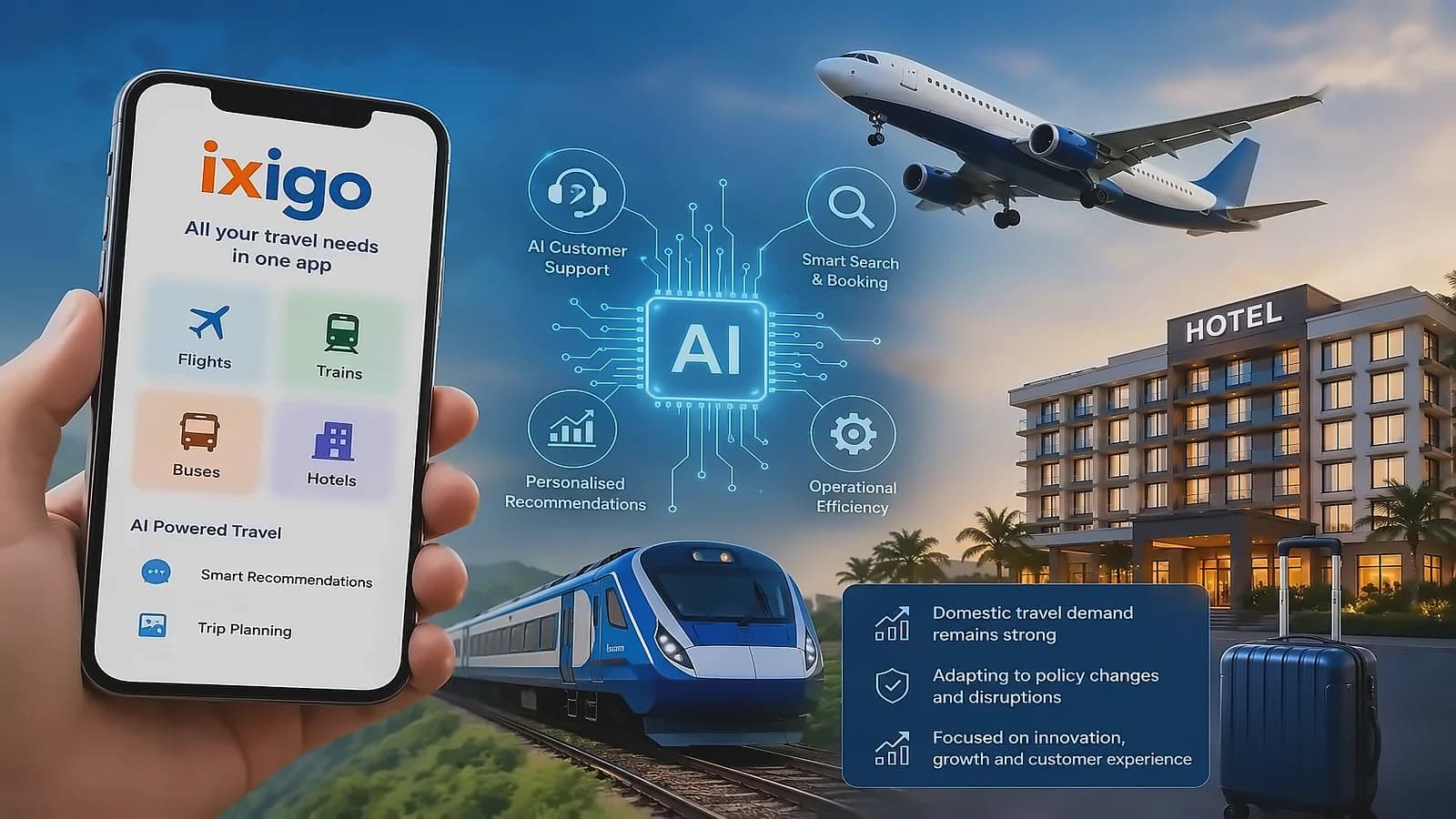
With buses emerging as its biggest profit generator, ixigo is channeling those earnings into scaling its relatively new hotel business and AI capabilities. During Q1 FY27, the company facilitated half a million room nights and expanded its direct hotel network to more than 10,000 hotels across nearly 700 towns. The company recently acquired a 54.66% stake in Brevistay, which it expects will strengthen its direct hotel supply, flexible stay inventory and on-ground supply acquisition capabilities. In the June quarter, ixigo stepped up its long-term strategic initiatives across artificial intelligence, hotels, B2B distribution and ecosystem expansion. The management reiterated that AI remains a core strategic focus and said it continues to invest in Ixigo NEXT, its AI-native travel platform, proprietary Small Language Models (SLMs), and TARA. TARA now handles over 57,000 customer interactions daily, autonomously resolving 81% of voice queries and 92% of chat queries.