The Industrial Transition Accelerator (ITA) has selected 11 Indian projects that will receive tailored support as part of its India Project Support Programme to accelerate critical clean industrial projects. According to reports from The Economic Times, these projects, led by companies including Jindal Steel, JSW Steel, ACME Group, Yamna, Circular Urban Energy (CUE) and ReNew, represent more than $18 billion in potential investment. The selected projects could deliver over 7.8 million tonnes of annual carbon abatement across multiple sectors, with the ITA being a global multi-stakeholder initiative launched at COP28 to fast-track industrial transition across energy-intensive industry and transport sectors.
As reported by The Economic Times, James Schofield, Managing Director of the Industrial Transition Accelerator, emphasized the strategic importance of domestic clean material production. "In a world shaped by geopolitical volatility, the ability to produce clean materials domestically and competitively will be a key driver of both economic resilience and long-term growth," Schofield stated. The projects will produce essential clean materials including steel and concrete for buildings and infrastructure, low-emission fuels for aviation and shipping, and chemicals such as ammonia for agricultural fertilizers. Yash Kashyap, India Lead at ITA, noted that "Many of the projects we are working with are viable but face barriers that sit outside the developers' direct control. ITA works alongside project developers, policymakers and financial institutions to help address these barriers and accelerate progress toward investment decisions."

According to The Economic Times, Jindal Steel is developing a carbon capture, utilisation and storage (CCUS) project at its integrated steel plant in Angul, Odisha. The project will capture carbon that will be utilised in products such as methanol, ethanol, polycarbonates and mineralised materials. This initiative represents a significant step in India's industrial decarbonization efforts through integrated steel manufacturing.
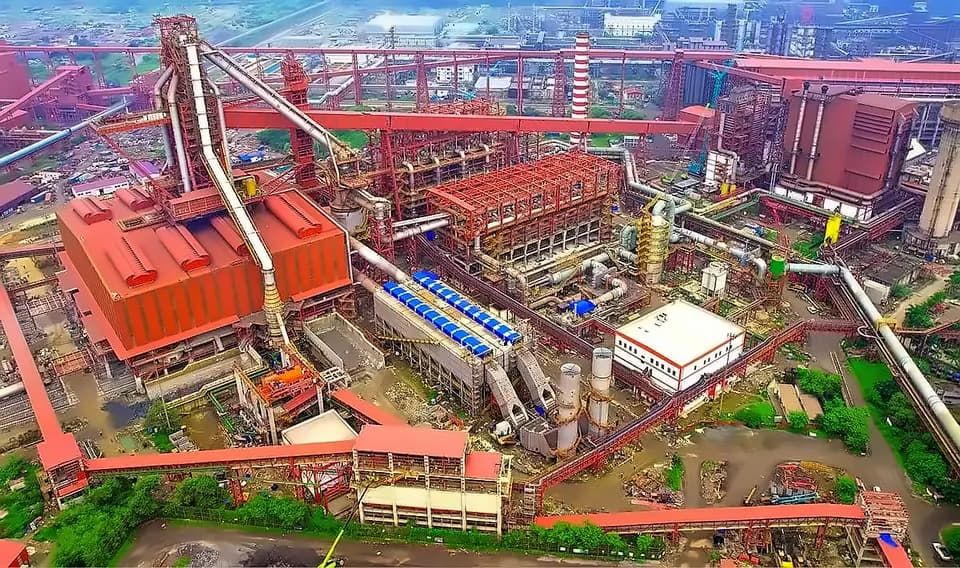
As reported by The Economic Times, JSW Steel, in collaboration with Carbon Clean and BHP, is jointly evaluating the feasibility of deploying Carbon Clean's CycloneCC modular technology to capture up to 100,000 tonnes per year of CO2 emissions at JSW Steel's Vijayanagar site in Karnataka. This collaboration demonstrates the industry's commitment to implementing advanced carbon capture solutions across major steel manufacturing facilities.
According to The Economic Times, ACME Group is developing green chemicals projects at Gopalpur and Paradip in Odisha. The projects include 400 KTA and 800 KTA green ammonia facilities respectively, alongside a 200 KTA green methanol plant at Paradip. The Paradip facilities are targeted for completion by 2029, while the Gopalpur project is expected to be completed by 2030. Additionally, ReNew is advancing a green ammonia project at Paradip, Odisha, with an initial Phase-1 capacity of 300 Ktpa, with the project expected to achieve Commercial Operation Date (COD) by 2029.
As reported by The Economic Times, Yamna is developing a large-scale green ammonia project in Andhra Pradesh, near Krishnapatnam Port, with a planned capacity of up to 1 Mtpa, including 500 Ktpa in Phase 1. This comprehensive green chemicals portfolio represents a significant investment in India's chemical manufacturing transition and demonstrates the scale of industrial decarbonization initiatives across the country.
According to The Economic Times, Circular Urban Energy (CUE) is developing a waste-to-sustainable aviation fuel (SAF) project in Uttar Pradesh's Jewar region within the Noida International Airport ecosystem. Designed to process around 3,500 tonnes of municipal and residual waste per day, the facility will produce approximately 1,000 barrels of SAF per day through an advanced thermochemical process. This innovative project demonstrates how waste materials can be transformed into valuable clean energy products for the aviation sector.