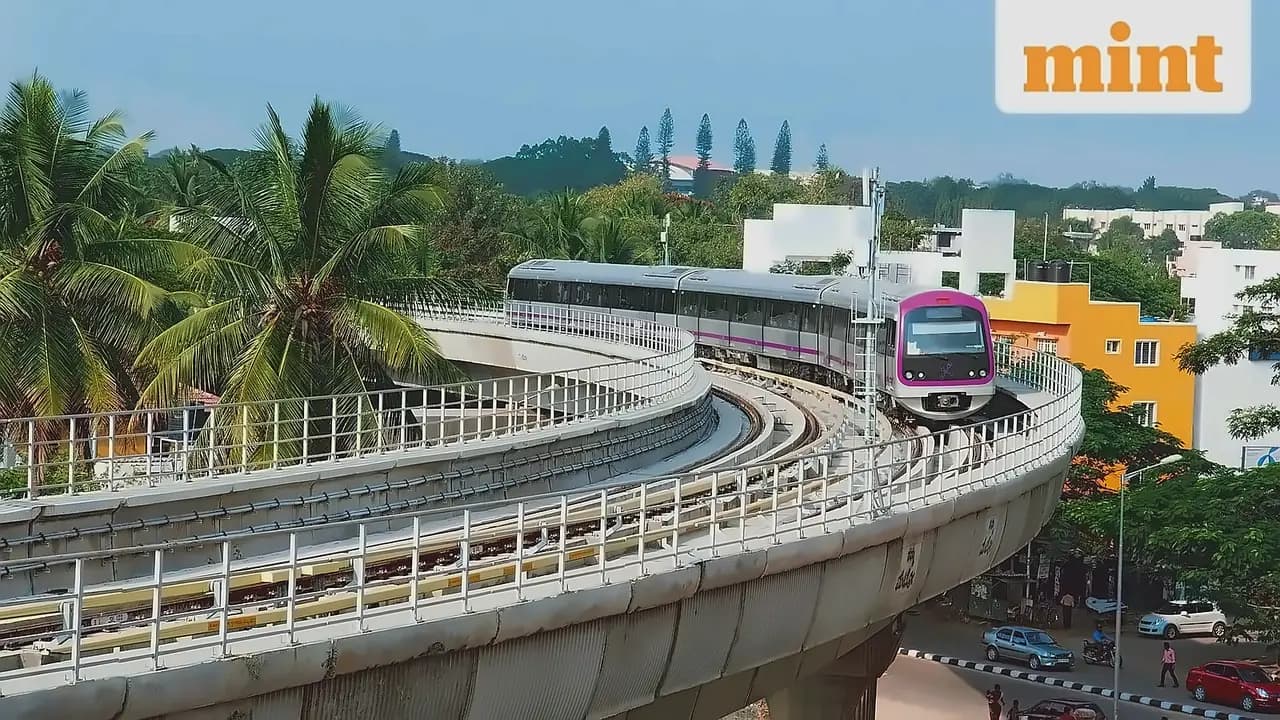
Indian Railway Finance Corporation Ltd (IRFC) has expanded its funding programme beyond Indian Railways by signing a ₹13,527-crore term loan agreement with L&T Metro Rail (Hyderabad) Limited (L&TMRHL) to refinance the debt of the Hyderabad Metro Rail project. According to IRFC's statement, the transaction reflects the Navratna central public sector enterprise's continued evolution into a diversified infrastructure financing institution while leveraging its core strength in long-term transportation finance in alignment with the Indian government's Viksit Bharat vision. The refinancing is expected to substantially reduce the metro's debt servicing obligations and improve the project's financial situation.
The refinancing follows the transfer of 100% ownership of L&TMRHL from Larsen & Toubro Ltd to the Telangana government through Hyderabad Metro Rail Limited (HMRL), transforming the metro network into a strategic public mobility asset under state ownership. As reported by IRFC, the facility will help refinance existing debt obligations, including non-convertible debentures (NCDs), commercial papers and term loans, enabling an orderly exit for existing lenders while significantly improving the project's long-term financial sustainability. The transaction includes the transfer of 100% ownership of the Hyderabad Metro project from L&T to the Telangana government at a total cost of around ₹1,400 crore. Telangana's chief secretary K. Ramakrishna Rao confirmed that the metro system was already operationally profitable but had been posting losses due to expensive debt accumulated under the public-private partnership (PPP) structure.
The refinancing is structured over a 20-year tenure with quarterly repayments and replaces higher-cost debt with competitively priced long-term rupee financing. According to IRFC, the facility carries no processing fees, commitment charges or prepayment penalties, making it efficient and borrower-friendly. The most significant impact is the dramatic reduction in borrowing costs from approximately 10.5% currently to about 7%, which is expected to turn the project profitable within about 1 year. IRFC officials confirmed that the transaction will be funded through a mix of instruments, including external commercial borrowing (ECB), bonds and rupee-denominated loans, with the lending rate being dynamic using a cost-plus model for financing this significant transaction. The facility is supported by a credit enhancement framework including an unconditional and irrevocable undertaking by the government of Telangana for servicing all dues payable to IRFC, a state government guarantee, and an RBI-backed direct debit mandate.
For IRFC, the Hyderabad Metro transaction marks its formal entry into urban metro financing and the company is now open to funding more metro projects across India using similar low-cost financing structures. As reported by IRFC, the financing entity aims to fund around 15 large-scale projects, each requiring at least ₹15,000 crore, over the next three years to help it reach ₹3 trillion in total sanctions within four years of expanding operations beyond Indian Railways, starting in FY26. During FY26, IRFC sanctioned projects worth ₹72,949 crore and disbursed about ₹35,067 crore, exceeding its annual guidance. The Telangana government emphasized that refinancing was strategically important not only for lowering finance costs but also for accelerating Hyderabad Metro's future expansion, with plans to add another 162 km in future phases to the existing 69.2-km network spanning three corridors and 57 stations.