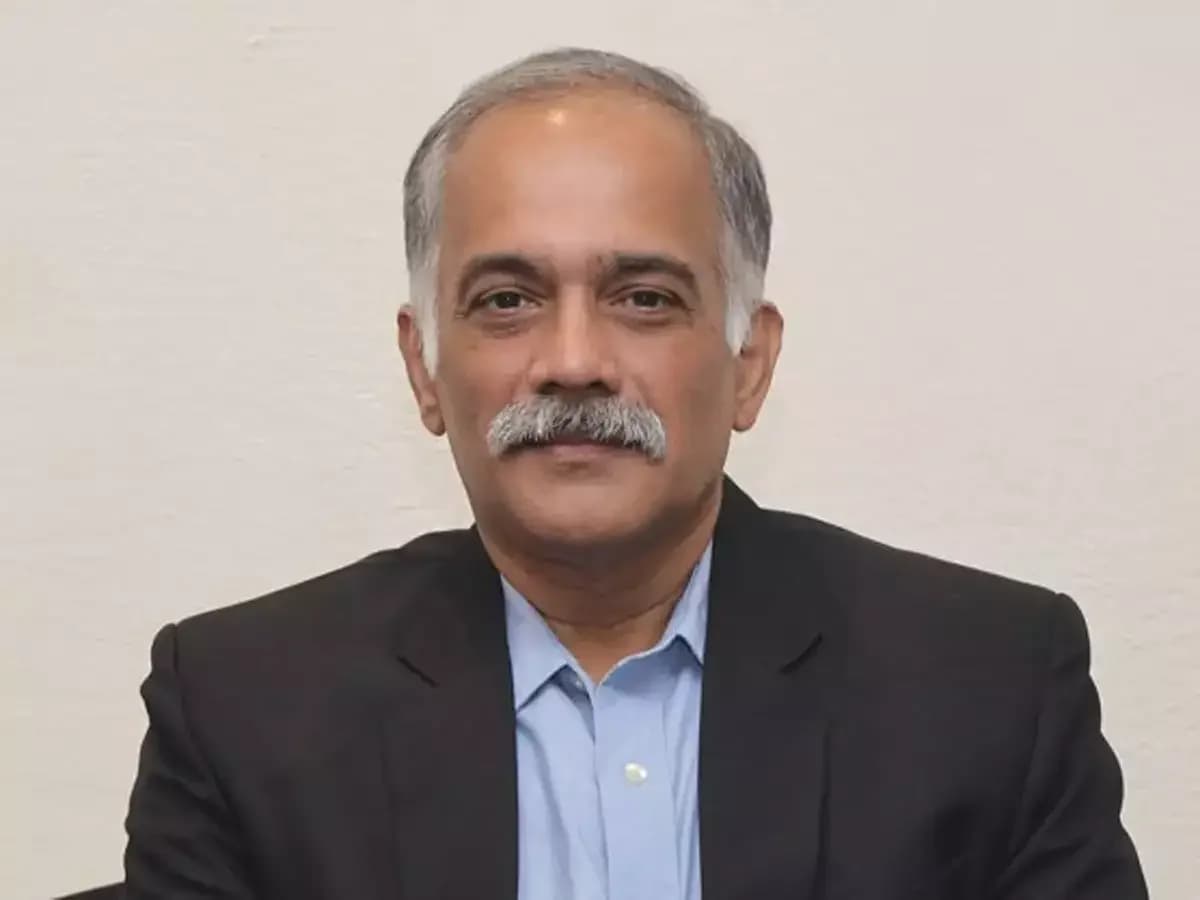
IREDA shares fell over 4% on Monday following the company's Q4FY26 results announcement, with shares dropping to ₹127.81 apiece on the NSE and bucking broader market optimism. The market reaction reflects investor concerns despite the company's record annual performance, as the quarterly results showed mixed signals amid strong full-year fundamentals.
The Indian Renewable Energy Development Agency (IREDA) achieved its highest-ever annual profit of ₹1,873 crore for FY26, marking a significant milestone in the company's growth journey under Chairman and Managing Director Shri Pradip Kumar Das. However, for Q4FY26, the company reported a consolidated net profit of ₹493 crore, representing a nearly 2% year-on-year decline from ₹502 crore in the corresponding quarter of the previous fiscal year. Despite the quarterly profit decline, the company demonstrated strong annual performance with total operating income rising 23% year-on-year to ₹8,337 crore and operating profit increasing 33% during the year, supported by increasing demand for renewable energy financing and expansion into emerging clean energy segments.
IREDA reported revenue from operations of ₹2,175 crore in Q4FY26, marking a 14% year-on-year increase from ₹1,905 crore in the year-ago period. Total income also rose 14% YoY to ₹2,181 crore, while total expenses increased around 21.5% YoY to ₹1,562 crore during the quarter under review. The company's net worth strengthened 34% to ₹13,781 crore, providing stronger financial flexibility for future projects. During the year, LIC acquired a 2.21% stake in the company, while the government's holding declined to 71.76% as institutional ownership increased.
IREDA's loan book crossed ₹93,069 crore during FY26, registering a 22% growth compared to ₹76,282 crore in FY25. During the financial year, the company recorded loan sanctions worth ₹51,883 crore and disbursements of ₹34,946 crore, with sanctions increasing 9% year-on-year from ₹47,453 crore and disbursements posting a 16% rise from ₹30,169 crore in the previous year. The company successfully diversified its funding sources during the year, raising ₹31,914 crore through borrowings, securing a JPY 26 billion funding line from SBI Tokyo, and mobilising ₹2,006 crore through a qualified institutional placement (QIP). This substantial increase reflects the company's strong push towards funding large-scale renewable energy projects across the country and reinforces its role as a major driver of renewable energy financing in India.
The agency successfully improved its asset quality with net non-performing assets declining to 1.29%, highlighting the company's disciplined lending practices and focus on maintaining a healthy financial structure even during rapid expansion. However, gross NPA ratio increased to 3.49% from 2.45% a year ago, though it improved sequentially from 3.75% in the December quarter. The company is currently addressing regulatory challenges, stating that "The company is regularly following up with the Administrative Ministry, i.e., the Ministry of New and Renewable Energy (MNRE), for the appointment of the requisite number of Independent Directors on the Board of IREDA and has requested that MNRE expedite the process for the appointment of Independent Directors (including a woman director)." The Board also requested that stock exchanges waive the fines imposed on the company and refrain from imposing any further fine or penalty, citing that the matter relating to Independent Directors appointment is beyond the company's control.
The Board of Directors recommended a final dividend of ₹0.75 per equity share for FY26, subject to shareholder approval at the Annual General Meeting. The total dividend for the financial year stands at ₹1.35 per equity share, including an interim dividend of ₹0.60 per share. The company currently has a market capitalisation of over ₹35,930 crore and a price-to-earnings (P/E) ratio of nearly 20x. IREDA significantly expanded its presence in emerging clean-energy segments during FY26, with exposure to renewable energy manufacturing nearly doubling to ₹8,984 crore and the Battery Energy Storage Systems (BESS) portfolio reaching ₹611 crore.