Indian benchmark indices started the week on a negative note, with the BSE Sensex falling over 700 points and the NSE Nifty50 testing the 24,000 mark, dragged down by losses in financial, auto, and metal stocks. As of 9:45 AM, the Sensex was down 426.72 points, or 0.55%, at 77,142.67, while the Nifty50 declined 132.85 points, or 0.55%, to 24,074.70. In early trade, the 30-share Sensex fell as much as 712 points to hit an intraday low of 76,857.43, while the Nifty50 touched an intraday low of 24,000.20, down 207 points. The India VIX, the market's fear gauge, jumped 7.67% to 13.19, reflecting heightened investor nervousness and expectations of increased market volatility. Broader markets showed relative resilience with the Nifty Midcap 100 declining 0.36% and the Nifty Smallcap 100 falling 0.33%.
The aviation sector faced significant pressure as Brent crude prices gained 4.30% to trade at $79.28 per barrel, while US benchmark crude oil surged 4.35% to $74.51 per barrel. As reported by PTI, the latest spike was triggered by fighting intensifying in West Asia and Iran claiming to have closed the Strait of Hormuz. International jet fuel prices had climbed to as high as ₹142 per litre in May from pre-war rates of ₹60.50 per litre. The air transport sector contracted nearly 14% in April 2026, according to the National Statistical Office's maiden index of services production (ISP) data, compared to 4.5% growth in April 2025, reflecting the impact of high fare costs due to increased fuel prices. Anil R, senior research analyst at Geojit Investments, noted that the spike in crude prices has once again heightened investor concerns about input costs and airline profitability. VK Vijayakumar, Chief Investment Strategist at Geojit Investments, emphasized that crude oil remains the key variable for Indian equities, stating that "Brent is currently trading around $79. As long as Brent trades below $90, the market is unlikely to be impacted significantly. However, if Brent rises above $90, it could trigger a significant market correction."
Among sectoral indices, IT and Media bucked the broader weakness, gaining 0.51% and 0.52% respectively, while Nifty Metal, Auto, Financial Services, and Realty were among the worst performers, declining by up to 0.9%. On the Sensex pack, TCS emerged as the top gainer, rising 2.17%, followed by HCL Technologies (0.94%), NTPC (0.73%), Power Grid (0.48%), Tech Mahindra (0.31%), and Axis Bank (0.30%). IndiGo led the losers' chart, declining 1.95%, followed by Tata Steel (-1.88%), Maruti Suzuki (-1.61%), HDFC Bank (-1.33%), Asian Paints (-1.21%), BEL (-1.18%), Bajaj Finserv (-1.07%), UltraTech Cement (-1.05%), and Eternal (-1.02%). The IndiGo share had earlier fallen to a low of ₹5,141.50 in morning trade before recovering, showing some volatility throughout the session.
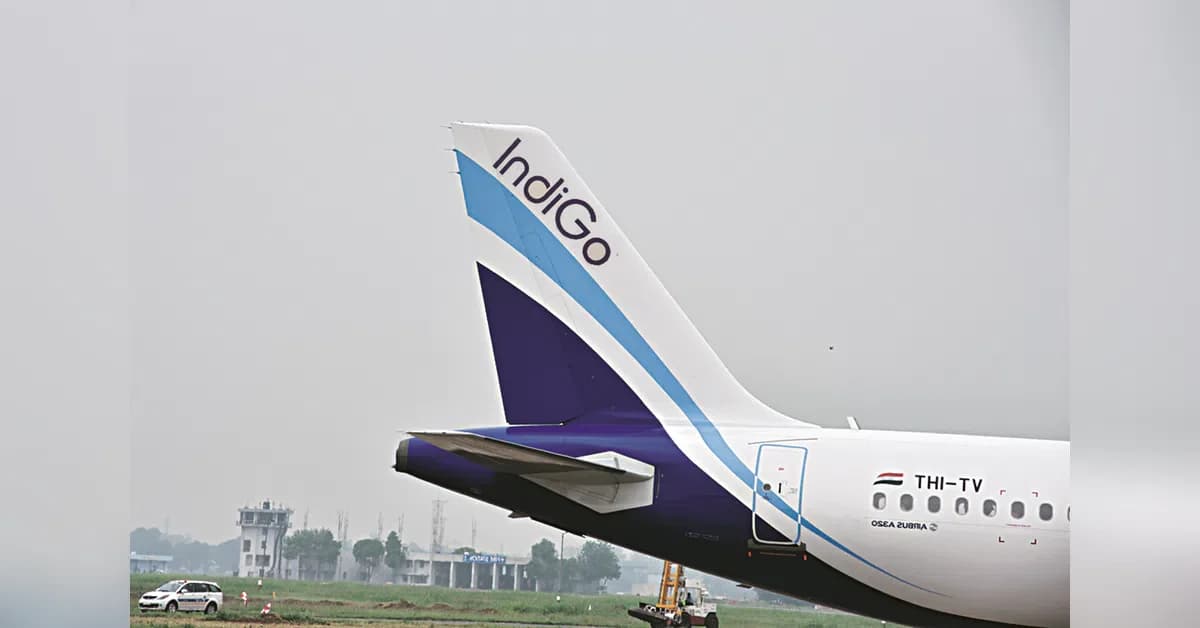
The Directorate General of Civil Aviation (DGCA) issued a warning letter to InterGlobe Aviation over cargo handling lapses detected after a January 2026 flight arrival. The regulator flagged cargo spillage found on the ground after the arrival of a flight in January 2026, along with subsequent audit findings related to deviations from standard operating procedures and certain provisions of the Aircraft (Carriage of Dangerous Goods) Rules. The company has confirmed no significant impact on its financials, operations or other business activities, limiting the immediate earnings risk to the IndiGo share price. As directed by the DGCA, the airline is required to submit an action-taken report detailing the corrective measures implemented.
Despite the current oil price pressures and market volatility, analysts expect Indian corporates to maintain resilience. VK Vijayakumar noted that "Indian corporates have largely absorbed the worst of the global headwinds, and the outlook now depends primarily on rural demand and crude oil prices." He added that if monsoon-related sowing delays don't materially dent rural income and consumption trends, and crude prices remain range-bound, earnings should see a gradual pickup through the rest of FY27. Ajit Mishra from Religare Broking highlighted that investors will closely track domestic macroeconomic data this week, including June CPI inflation, WPI inflation, unemployment figures, the trade balance, and foreign exchange reserves. The Q1 FY27 earnings season is expected to gather pace, with management commentary likely to shape sectoral trends and earnings expectations, while developments in West Asia and their impact on crude oil prices will remain key global triggers.