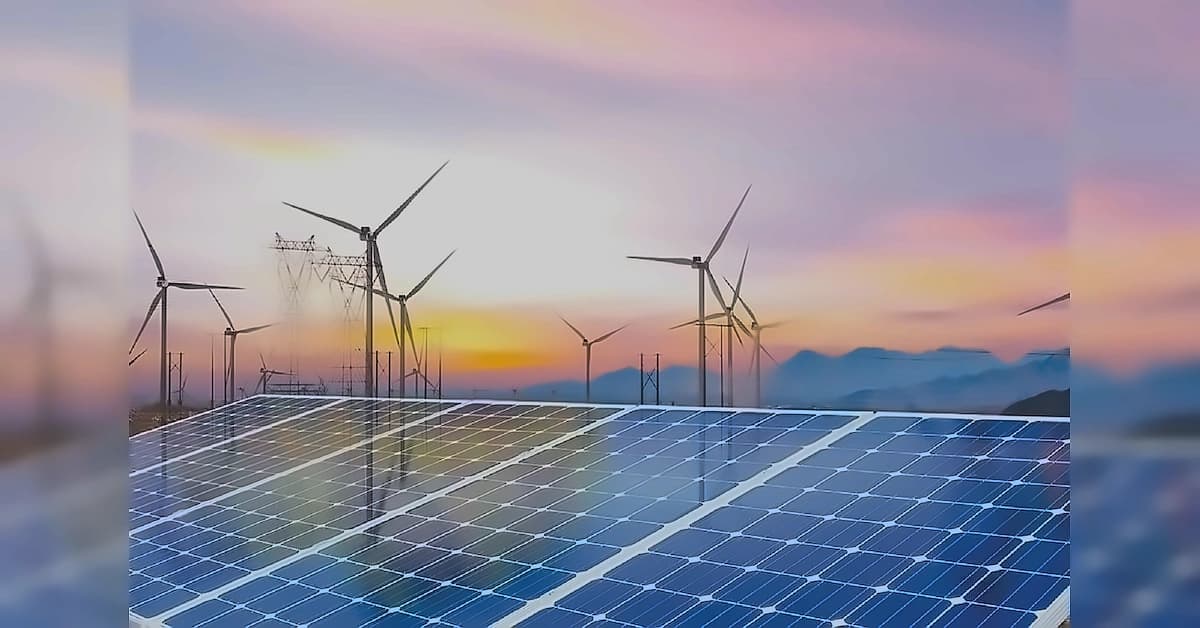
India's renewable energy potential has experienced a remarkable transformation, more than doubling to 4,704,043 megawatts (MW) as of March 31, 2025, from 2,109,655 MW a year earlier, according to Energy Statistics India 2026 data cited by the government in Parliament. This dramatic increase represents a fundamental shift in India's energy landscape, with the country's total primary energy supply also rising to 39,055 petajoules in 2024-25 from 37,936 petajoules in 2023-24. The latest edition of Energy Statistics India 2026 has expanded its coverage to include data on credit flow to the energy sector, international energy scenario, and international marine and aviation bunkers, while aligning end-use consuming sectors with international standards.
India's power sector demonstrated robust performance in the April-June 2026 quarter, with electricity consumption reaching 485 billion units, representing an 8% year-on-year increase. According to a report by 360 ONE Capital, peak power demand climbed to 270.82 GW in May, attributed to extreme heatwave conditions, delayed monsoon onset, and higher cooling requirements. The surge in electricity demand has created favorable conditions for power utilities, with exchange-traded electricity volumes on the Indian Energy Exchange rising 16% year-on-year during the quarter, reflecting increased reliance on short-term markets during periods of tight supply.
India's coal-fired power plants have sufficient coal stocks to run for about two weeks at higher operating rates, easing concerns about fuel shortages amid rising electricity demand and below-average monsoon rainfall. As per the power ministry's parliamentary reply, coal stocks stood at 42.8 million tonnes as of July 12, enough for 14 days of operation at an 85% plant load factor. The ministry confirmed that utilities are receiving sufficient coal supplies to meet their daily requirements, with the government intensifying coordination among coal, power and railway ministries to monitor supplies and prioritize coal transportation to power stations.
India's installed power generation capacity crossed 548 GW by June 30, 2026, with non-fossil fuel sources accounting for around 54% of the total. During the quarter alone, the country added 16.8 GW of fresh capacity, including 13.2 GW from renewable sources, 2.9 GW from coal-based thermal projects, and 650 MW from hydropower. Power generation registered broad-based growth with total generation increasing 8% year-on-year, while renewable generation expanded by 21% and thermal generation grew 7% over the same period. The power sector is expected to benefit from a dual-track energy strategy, with thermal generation continuing to provide reliable base-load power even as renewable capacity expands.
Despite rapid renewable energy expansion, thermal power remains central to India's electricity mix, with coal-fired plants accounting for 69.5% of electricity supplied during April-June and generating about 75% of power during non-solar peak-demand hours. As reported by 360 ONE Capital, coal remains the backbone of India's electricity system, contributing 70% of total power generation and providing dependable base-load power. The government expects peak power demand to reach 280 GW this year due to the absence of stronger monsoon rains, with coal and lignite-fired plants continuing to provide essential grid stability. Energy security priorities and potential El Nino impact could support thermal power demand, while capacity additions are expected to strengthen utility performance across the sector.
The statistics ministry has implemented comprehensive digital and administrative reforms to enhance the quality and timeliness of official statistics. Primary data collection for National Sample Surveys (NSS) is now conducted through digital platforms including Computer Assisted Personal Interview (CAPI) and e-SIGMA, with in-built validation checks, real-time monitoring, artificial intelligence-enabled chatbots and multilingual interfaces. These measures, combined with physical scrutiny by senior officers and regular field staff training, have reduced the release lag for survey data from 8-9 months to 45-90 days. Annual survey results are now released within 90-120 days, quarterly results within 45-60 days, and monthly results within 15-30 days of survey completion. The ministry has also strengthened stakeholder engagement through data user conferences and enhanced data accessibility through revamped digital platforms.