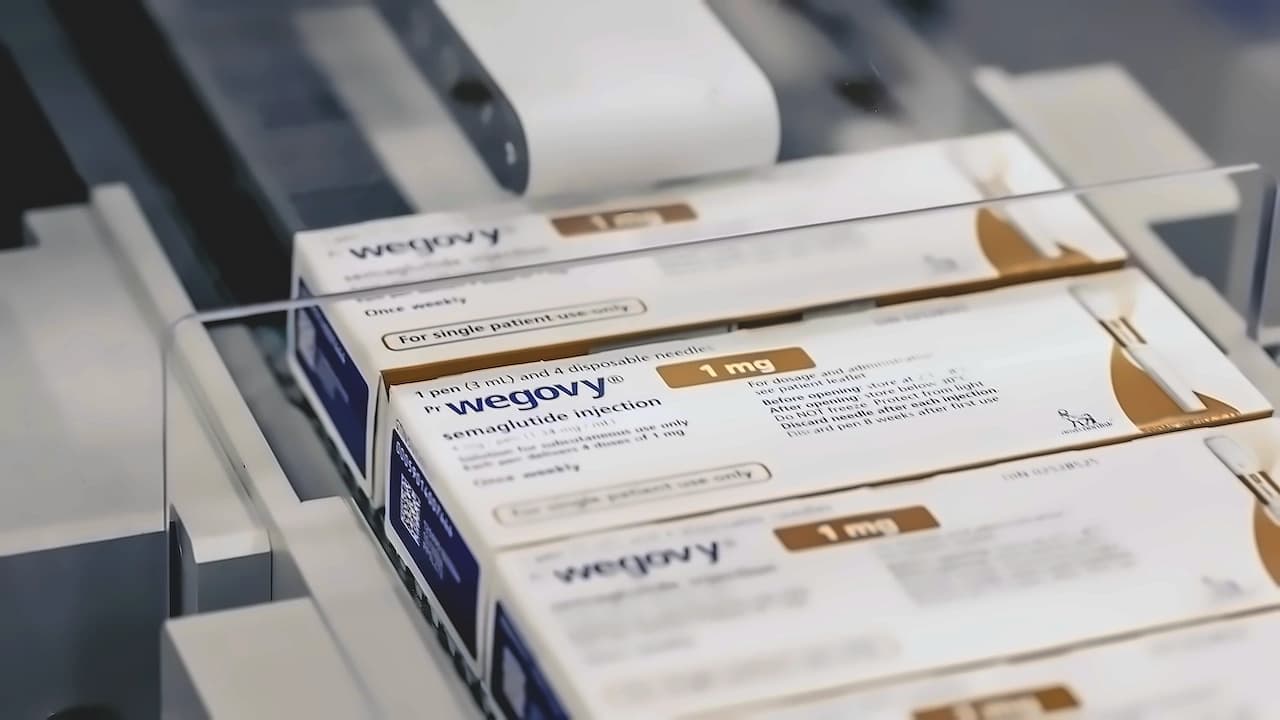
India's anti-obesity drug market is experiencing a dramatic structural shift as floods of ultra-cheap generic alternatives cannibalize the early sales dominance of imported blockbuster drugs. The March 2026 expiration of key patents surrounding semaglutide has triggered a brutal price war that is rewriting the economics of metabolic healthcare. Domestic generic semaglutide vials hit pharmacy shelves at just ₹1,300 (KES 2,040), with injectable pens priced at ₹1,800 (KES 2,820), while premium Mounjaro commands approximately ₹13,000 (KES 20,400) for a month's supply. This pricing disparity immediately disrupted prescribing patterns, forcing original patent holder Novo Nordisk into defensive maneuvers. The Danish multinational abruptly slashed the prices of its flagship products, Ozempic and Wegovy, from an initial high of ₹10,848 to a starting point of ₹5,660 (KES 8,880) effective April 1, 2026.
India's obesity and diabetes drug market is experiencing a significant slowdown in growth, according to market research firm Pharmarack. Monthly sales of GLP-1 drugs rose just 2.3% in June, representing a dramatic decline from 12.1% growth in May and 58.4% in April. This deceleration marks a sharp departure from the initial surge that followed the expiry of semaglutide's patent in March, when India became the first market to see widespread generic versions of the active ingredient used in *Novo Nordisk A/S'*s Ozempic and Wegovy. Early data reveals that overall sales growth for premium GLP-1 therapies slowed significantly in May compared to the initial surge in April, with the battle for market dominance decisively shifting from clinical efficacy to raw affordability.
The growth slowdown reflects market saturation as the initial rush of patients seeking generic semaglutide products has plateaued. "The exponential jump shown by semaglutide generics has now plateaued," said Sheetal Sapale, vice president of commercial at Pharmarack. "All eligible patients have been onboarded on to this drug, and fewer newer patients are starting this therapy." While non-branded versions have helped expand the market, sustained growth will now depend on factors beyond low prices, including patient adherence and physician response patterns. Industry analysts at Avendus Capital project that the broader category will still surpass ₹2,000 crore (KES 31.4 billion) within the year, but the revenue will be driven by high-volume generic sales reaching beyond metropolitan centers into lower-tier cities, rather than high-margin premium prescriptions.
More than 40% of sales come from India's seven metro cities including Delhi, Mumbai and Bengaluru, according to Pharmarack data. The generic GLP-1 drug market is dominated by major pharmaceutical companies, with Torrent Pharmaceuticals Ltd., Dr. Reddy's Laboratories Ltd., Zydus Lifesciences Ltd., Lupin Ltd., and Sun Pharmaceutical Industries Ltd. accounting for the largest share of generic GLP-1 drug sales. This concentration in metropolitan areas suggests that urban centers continue to drive demand for these weight-loss and diabetes management medications despite the overall market deceleration. The democratization of semaglutide production carries immense implications for the African continent, with Indian manufacturers scaling up production to supply weight-loss and diabetes management drugs to East Africa.
The structural shift in India's anti-obesity drug market has far-reaching implications for global healthcare accessibility. India has long served as the "pharmacy of the developing world," supplying the vast majority of generic medications utilized in sub-Saharan Africa. As Indian manufacturers scale up production, export pipelines to East Africa are preparing for a massive influx of affordable weight-loss and diabetes management drugs. In Kenya, where non-communicable diseases like type 2 diabetes and obesity-related metabolic syndromes are rising at alarming rates, the arrival of ₹2,000 generic semaglutide options from Mumbai and Hyderabad could fundamentally alter the standard of care in Kenyan public health facilities. However, medical experts warn that physician training and patient counseling must accompany the cheaper drugs, ensuring they are utilized for legitimate metabolic treatment rather than unregulated cosmetic weight loss.