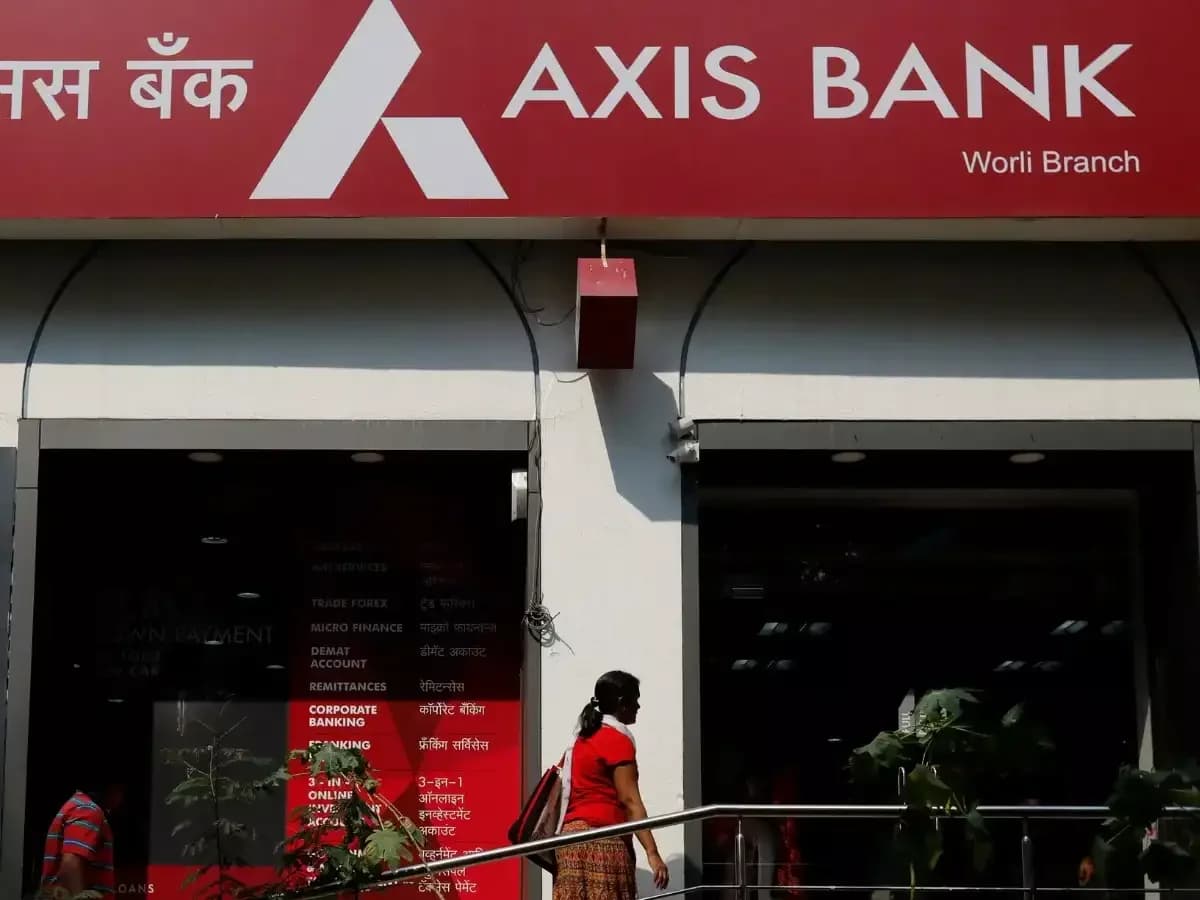
Maharashtra has positioned itself as India's premier data centre destination, receiving more than $300 billion of investment interest and currently accounting for 66% of India's total data centre capacity. As per Business Standard, Kaustubh Dhavse, chief advisor for investments and strategy to the chief minister of Maharashtra, announced that the state is targeting 5.7 GW of data centre capacity by 2032 as part of its pursuit of a $1 trillion economy by 2030. Speaking at the Naredco Real Estate & Infrastructure Investors' Summit 2026 in Mumbai, Dhavse highlighted data centres as among the key opportunities for Maharashtra's next phase of growth, emphasizing that the state is taking advantage of the fundamental requirements of power and water for data centre operations.
India's data-centre industry is gaining significant ground against global markets through substantial cost advantages. According to a Nomura report dated June 2, the cost of setting up a data centre in India is 30-50% lower than in developed markets across Asia, Europe and the US, with building facilities costing $6-7 million per MW versus $10-14 million per MW in the US and Europe. Cheaper land and electricity account for about a third of the total setup cost, while lower labour and construction costs, cheaper materials and a growing domestic supply chain further widen the gap. Wholesale colocation rentals in India, particularly Mumbai, range from $78-100 per kilowatt per month compared to as much as $205 in Europe and the US, and $343 in other Asian markets. The cost advantage extends beyond construction, with electricity costs about 8.4 US cents (approximately ₹7.8) per kilowatt-hour in Chennai, less than half Singapore's 18.1 cents, while Mumbai at 12.8 cents remains cheaper than Sydney and Tokyo.
Four of India's biggest data-centre operators delivered exceptional financial results in FY26, with Nxtra Data reporting 17.1% year-on-year revenue growth to ₹2,434 crore, marking its fastest growth in three years. According to reports from Mint, Sify Infinit Spaces achieved 23.2% revenue increase to ₹1,760.5 crore, while AdaniConneX posted revenue of ₹1,084 crore, its fastest growth in two years. ESDS Software Solutions reported 30.7% jump in revenue to ₹472.2 crore, with more than two-thirds of incremental revenue coming from a single client contributing about ₹75 crore. The sector is experiencing unprecedented growth with India's data centre footprint projected to surge from approximately 27 million square feet today to more than 100 million square feet by 2030, potentially attracting nearly $300 billion in investment. India's data centre IT load stood at 1.4 GW during April-June 2025, with another 1.4 GW under construction, and more than 5 GW of additional IT load is expected to come online by 2030.
The data-centre sector is experiencing unprecedented investment flows, with technology companies announcing close to $300 billion of investments in India's data centre infrastructure over the past two years. According to BloombergNEF, Reliance Industries and the Adani Group have collectively committed $210 billion to data centre development, while Google, Amazon and Microsoft together have announced $84 billion of investment. The sector is positioned to benefit significantly from sovereign AI and data localisation trends, with PwC estimating that data centres globally could attract $31.6 trillion in capital expenditure through 2050. India's data centre capacity is set to surge to 12GW by 2030, according to research firm Wood McKenzie, up from the current 1.5GW, with the country adding 387MW of capacity in 2025, more than double the 191MW added in 2024. The industry is evolving from conventional server hosting toward AI factories capable of supporting large-scale training, inference and agentic AI workloads.
Despite strong financial performance, India faces significant power infrastructure challenges that could limit its AI hub potential. According to S&P Global, India's data centre electricity consumption was around 13 TWh in 2024, accounting for 0.8% of the country's total electricity demand, but this is expected to rise almost fivefold to 57 TWh by 2030, taking the sector's share to around 2.6% of India's electricity demand. A March 2026 parliamentary reply cited the Ministry of Power putting electricity demand from data centres at 13.56 GW, while an August reply from the Central Electricity Authority estimated it at around 17 GW. Operators can significantly reduce costs through open-access arrangements, renewable power purchase agreements and captive sourcing to lower effective power costs to 6-7 US cents per kWh, bringing India closer to global benchmarks. S&P Global estimates that 15-30 GW of additional renewable capacity will be needed over the next five years to meet projected data centre power demand, representing less than 10% of expected renewable capacity additions.
The operators demonstrated significant margin improvements across the board. As reported by Mint, Nxtra achieved 40.3% operating margin, up 250 basis points, while Sify Infinit Spaces reported 45.1% margin, up 70 basis points. AdaniConneX recorded the most dramatic improvement with 62.6% margin, up 2,570 basis points, and ESDS Software Solutions posted 49.6% margin, up 670 basis points. The gains came as companies sold more capacity and power while costs remained largely flat, with Nxtra, Sify, and AdaniConneX having operational capacity of 250MW, 188MW, and 55MW respectively as of March. The industry is evolving from conventional server hosting toward AI factories capable of supporting large-scale training, inference and agentic AI workloads, with companies investing in high-density GPU clusters, liquid-to-chip cooling architectures, and advanced cooling systems.
The data-centre sector is experiencing significant expansion with India currently having about 1.5GW of installed capacity and projections reaching 7GW by 2030, according to Nomura analysis. The industry has an announced pipeline of more than 15GW, with the Indian data-centre market valued at $5.55 billion in 2025 and projected to reach $13.11 billion by 2034. The sector is expected to see a 10.01% CAGR between 2026 and 2034, supported by digitalization and rising cloud and AI adoption. Major technology companies including Google, Amazon, Microsoft, and Meta have committed more than $250 billion to new data centre capacity in India over the past year. However, according to Moody's report, despite massive investments, the industry may add just 0.13% to India's GDP by 2030. The next phase of growth is being shaped by AI-focused and sovereign-cloud infrastructure, with companies like Yotta committing $6 billion over the next 12-24 months and CtrlS targeting more than 4 GW of AI-ready infrastructure. Operators are increasingly expanding into smaller cities like Bhubaneswar, Patna, Jaipur and Kolkata, helped by capital subsidies and tax incentives, as land prices rise in major cities and infrastructure constraints emerge.